Ghana’s economy grew by 6% in real terms in the second quarter of 2026, but the pace of expansion slowed from the 6.6% recorded in the same period last year, pointing to a moderation in economic activity despite improving price conditions.
This is according to the latest GDP data released by the Ghana Statistical Service.
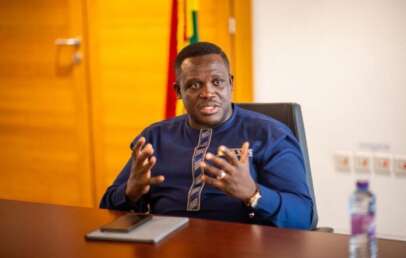
Presenting the data, Government Statistician Dr. Alhassan Iddrisu says the economy produced GH¢51.3 billion worth of goods and services in real terms, up from GH¢48.4 billion in the second quarter of 2025.
The slowdown was more pronounced in the non-oil economy, which expanded by 5.4%, down from 8.5% a year earlier.
Services remained the main engine of growth, accounting for 45.9% of GDP and contributing 57.6% of total growth despite easing from 9.5% to 8%.
Industry, which represents 33.1% of GDP, grew by 4.3%, up from 2.4%, with oil and gas providing the main boost. The sector contributed 23.5% of overall growth.
Agriculture, representing 21% of the economy, expanded by 3.9%, significantly below the 7.1% recorded a year earlier, contributing 13.3% of growth.
A key positive development, however, was the sharp moderation in economy-wide price pressures. The GDP deflator fell from 18.6% in Q2 2025 to 5.5%, a 13.1 percentage-point decline.
Dr Iddrisu says the combination of continued economic expansion and significantly calmer prices is a notable development for households and businesses.
Meanwhile, the 30.9% surge in ICT signals growing momentum in Ghana’s digital economy, although the 24.7% contraction in fishing raises concerns for fishing communities and food security.
Overall, the Q2 figures point to an economy that is still expanding strongly, but at a slower pace, with the sharp improvement in price conditions emerging as one of the most significant features of the latest GDP performance.