Shaykh Dr Mustapha Abdul-Hamid has rejected calls for Muslims to behead people who insult Prophet Muhammad, saying there is no explicit command in Islamic law authorising such action.
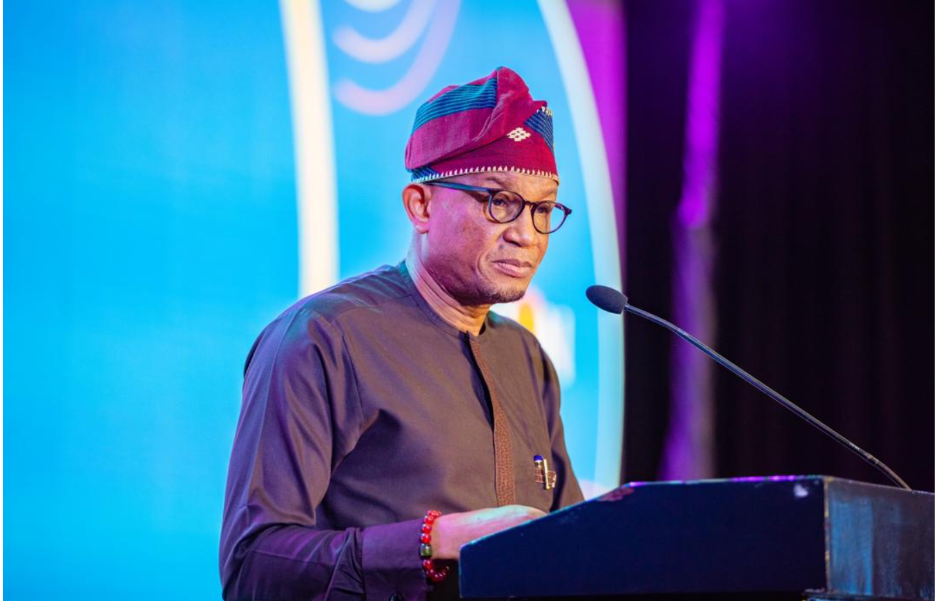
Speaking at the Danquah Institute’s 2026 Liberty Lecture at the Alisa Hotel on Tuesday, Dr Abdul-Hamid said the Prophet was known as Nabi Rahma — the Prophet of Mercy — and that calls for violent punishment had no basis in the Qur’an or authentic sources of Islamic jurisprudence.
His comments followed a viral video in which a Muslim cleric reportedly called on Muslims to behead anyone who insulted the Prophet, apparently in response to a pastor who described Prophet Muhammad as “a false prophet and a porn star.”
“Is there an explicit commandment in Islam to behead those who insult the Prophet? None that I have seen in any of the sources of Islamic law,” Dr Abdul-Hamid said.
He cited Qur’an 21:107, which describes the Prophet as a mercy to all creatures, and Qur’an 9:128, which refers to him as kind and merciful to believers, arguing that mercy is a defining attribute of both Allah and His Prophet.
Prophet’s response to insults
Dr Abdul-Hamid cited historical accounts to illustrate what he described as the Prophet’s restraint in the face of provocation.He recalled an incident in which a companion, Abdullah bin Dhil Khawaisira, accused the Prophet of dishonesty.
When Umar bin Al-Khattab sought to confront the man violently, the Prophet restrained him, warning that such an action could lead people to say that “Muhammad kills his people.”
He also cited an account involving a man who attempted to kill the Prophet with a sword but was overpowered.
After gaining possession of the weapon, the Prophet asked the man who would save him.
The man reportedly appealed to Muhammad’s generosity and magnanimity, prompting the Prophet to release him.
For Dr Abdul-Hamid, such examples underscored the need for Muslims to respond to religious provocation with restraint rather than violence.
Respect for other faiths
The scholar also used the lecture to highlight Islam’s teachings on relations with other religious communities, particularly Christians and Jews.
Citing Qur’an 5:82, he said the Qur’an recognises the closeness of Christians who are devoted to learning and are not arrogant.
He also referenced a saying attributed to Prophet Muhammad that he was the closest of all people to Jesus, son of Mary, both in this world and the hereafter.
He noted that Islamic jurisprudence permits Muslims to consume food prepared by Christians and Jews and permits marriage to women from those faith communities under specified conditions.
On relations with Jews, Dr Abdul-Hamid cited the Madinan Charter, which established a framework for peaceful coexistence among Muslims, Jews, Christians and other groups in Medina.
He said the charter recognised the religious identity of different communities and promoted mutual assistance, consultation and charity rather than aggression.
Religious tolerance
Dr Abdul-Hamid, who described himself as a devout Muslim but also said he was “a Muslim by accident of birth,” argued that religious experience was deeply personal and should not be imposed on others.
“I believe that if I was born in India, I would probably be a Hindu. My view, therefore, is that the light is one, but the lamps are many,” he said, quoting the Sufi mystic Rumi.
He urged Ghanaians to protect the country’s secular constitutional framework and resist religious exclusivism, warning that attempts to impose one religious worldview on society could undermine national cohesion.
Quoting former Anglican Archbishop Desmond Tutu that “God is clearly not a Christian.
God is bigger than Christians,” he argued that Ghana’s unity should be anchored in shared values rather than religious dominance.
He linked this position to the philosophical writings of Ghanaian statesman J.B. Danquah, after whom the Liberty Lectures are named, particularly Danquah’s description of the Akan conception of God as Onyame or Onyankopon.
“Religious belief is neither verifiable nor falsifiable,” Dr Abdul-Hamid concluded, arguing that people should focus on defending the validity of their own beliefs rather than seeking to invalidate the beliefs of others.
He said the peaceful coexistence of different faiths was essential to Ghana’s democratic and constitutional order.