Interior Minister Muntaka Mubarak Mohammed has disclosed that Ghana removed 2,281 migrant beggars and 774 other immigrants without papers involved in transnational organised crime in 2025.
Updating the public at the Government Accountability Series on Monday, August 24, 2026, the minister provided a detailed account of ongoing efforts by the Ghana Immigration Service to address irregular migration and related criminal activities across the country.
He emphasised that the service had maintained a consistent focus on identifying and removing foreign nationals found engaging in unlawful practices, particularly those contributing to street begging and organised crime networks that transcend national borders.
“By the end of 2025, the Ghana Immigration Service had 2,281 migrant beggars on our streets and 774 other immigrants without papers involved in transnational organised crime that had been removed from Ghana,” Muntaka said.
These figures, he noted, reflected a concerted national response to growing concerns about public order, security, and the strain irregular migration places on urban centres.
The minister explained that the enforcement exercise did not conclude at the close of 2025 but has continued vigorously into the current year. By July 2026, the Ghana Immigration Service had removed an additional 960 migrant beggars from the streets of Accra and Kumasi, alongside another 186 immigrants without papers linked to similar unlawful activities.
Muntaka stressed that these operations are being conducted with careful regard for regional frameworks and bilateral relationships.
“We are pursuing this removal fully conscious of Ghana’s obligation under the ECOWAS Protocol on free movement of persons as well as the diplomatic relations and long-standing ties we and other countries have,” he said.
The government remains mindful that free movement within the West African sub-region is a foundational principle, yet this does not permit unrestricted engagement in activities that undermine national laws or public safety. He underscored that removals target only those involved in irregular migration and associated criminality, not lawful travellers or residents exercising their rights under the protocol.
“Our objective is to reduce irregular migration and unlawful activities associated with it to the barest minimum, while ensuring that enforcement actions are lawful, undertaken by the appropriate authorities and carried out in a manner that is respectful of human dignity,” Muntaka said.
This balanced approach, he argued, reflects Ghana’s dual commitment to hospitality and the rule of law. The minister further clarified that the primary obstacle in managing irregular migration is neither political resolve nor deficits in intelligence or leadership. “Let me be clear that the challenge before us is not a lack of political will, security, intelligence or leadership. It is principally a question of skill,” he said.
To address this capacity gap, authorities have identified the need for enhanced training and resources.
“And I can assure the public that there is a high-level consensus that with earmarked logistical support to increase the scale of the removals and strengthen our bodies, evidence of that will soon be apparent,” he said. Muntaka concluded by reaffirming that Ghana will continue to uphold its tradition of welcoming visitors while maintaining a firm stance on national security, public order, and the consistent application of immigration laws.
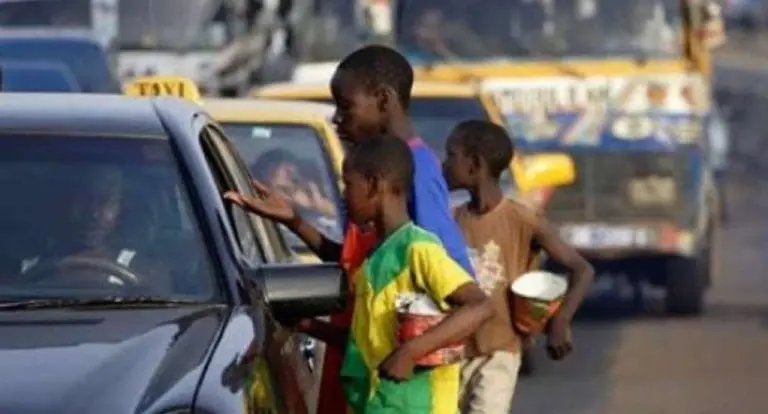
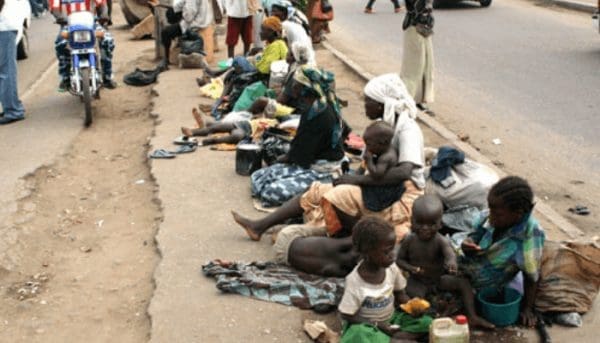
Street begging in Accra is not a new phenomenon, but its scale and visibility have grown significantly. A drive through busy areas such as Kwame Nkrumah Circle, Kaneshie Market, as well as Ashaiman and Madina, reveals clusters of individuals soliciting alms from motorists and pedestrians.
Many are children, often seen weaving through traffic or approaching vehicles at red lights, while others are persons with disabilities or people older than 70 who appear to have limited means of survival.
Several factors contribute to this growing challenge. Poverty remains a key driver, particularly among migrants from rural communities who move to the capital in search of better opportunities but end up struggling to make ends meet.
In some instances, organised networks are believed to exploit vulnerable individuals—especially children—forcing them into begging as a source of income. This raises deeper concerns about human trafficking and child labour.
Another major factor is the gap in social support systems. Although institutions such as the Department of Social Welfare are mandated to address issues of vulnerability, limited resources and constrained outreach have reduced their effectiveness.