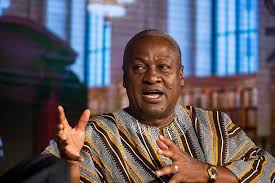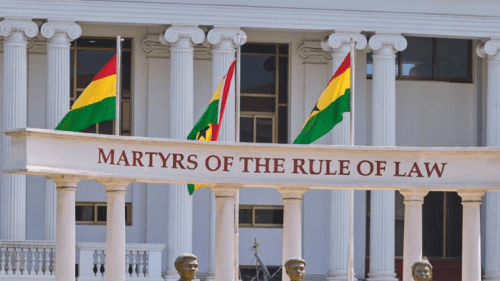
The Supreme Court has rejected an attempt by Member of Parliament Kojo Oppong Nkrumah to suspend criminal proceedings being heard by specialised High Courts during the current legal vacation.
Justice Gabriel Pwamang, sitting as a single judge, dismissed an application for an interlocutory injunction filed by the MP, who is challenging warrants issued by the Chief Justice permitting judges of specialised courts to sit during the vacation.
Mr Oppong Nkrumah filed the substantive case on August 14, 2026, arguing that the warrants were unconstitutional and amounted to selective justice.
He contended that the decision violated the constitutional guarantees of equality before the law, administrative justice and the proper exercise of discretionary powers.
He also challenged Order 79 of the High Court (Civil Procedure) Rules, 2004 (C.I. 47), and argued that allowing the criminal cases to proceed could cause irreversible harm if the warrants were later declared unconstitutional.
The Attorney-General opposed the application, arguing that the warrants did not target specific cases but authorised the hearing of cases pending before the relevant specialised courts.
The State further argued that Mr Oppong Nkrumah had failed to demonstrate any personal inconvenience or sufficient grounds for the injunction.
In his ruling, Justice Pwamang first addressed a preliminary objection concerning the Attorney-General’s representation of the Chief Justice.
Relying on Tastsu Tsikata v Chief Justice [2001-2002] SCGLR 437, he held that the Attorney-General was the proper party to defend official acts of the Chief Justice under Article 88(5) of the Constitution.
On the substantive application, the Court said an applicant seeking an interlocutory injunction must establish a serious issue to be tried with a strong prospect of success, demonstrate the likelihood of irreparable harm and show that the balance of convenience favours the injunction.
Justice Pwamang said Mr Oppong Nkrumah had failed to satisfy those requirements.
The Court rejected the argument that the vacation sittings violated Article 17 of the Constitution, holding that prioritising certain cases for hearing during the vacation did not amount to inequality before the law.
The Court noted that there was no allegation that the selection of the specialised courts was based on prohibited grounds such as race, gender, religion or ethnic origin.
Justice Pwamang also took judicial notice of the specialised nature of the courts, which handle cases involving narcotics, cybercrime, illegal mining, corruption and other serious offences.
The Court rejected claims based on Articles 24 and 36(10), noting that judges who sit during the vacation ordinarily take their leave when normal sittings resume.
It further held that court staff would retain their leave entitlements, while lawyers, as independent practitioners, remained responsible for managing their schedules.
On Order 79 of C.I. 47, the Court held that the provision applies to civil proceedings and does not prohibit the Chief Justice from authorising criminal hearings during the legal vacation.
Justice Pwamang noted that neither the Courts Act, 1993 (Act 459), nor the Criminal and Other Offences (Procedure) Act, 1960 (Act 30), prevents such sittings.
The Court also emphasised Article 19(1) of the Constitution, which guarantees accused persons a fair hearing within a reasonable time.
Justice Pwamang said the vacation sittings served the public interest by facilitating the expeditious determination of serious criminal cases.
He therefore concluded that stopping the proceedings would not advance the administration of justice.
The interlocutory injunction application was dismissed, while the substantive constitutional case challenging the Chief Justice’s warrants remains pending.