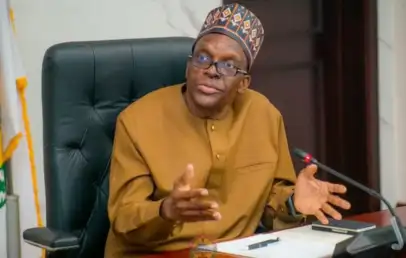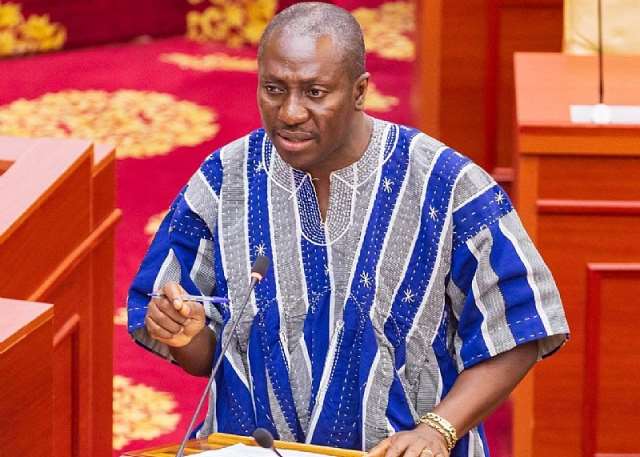
Growing public disagreement among President John Dramani Mahama, Speaker of Parliament Alban Bagbin and Majority Leader Mahama Ayariga over the Human Sexual Rights and Family Values Bill has triggered fresh political controversy, with the Minority Caucus in Parliament accusing the governing National Democratic Congress (NDC) of lacking commitment to the legislation and deliberately frustrating its passage.
The New Patriotic Party (NPP) Minority says the conflicting positions from the top levels of government and Parliament expose deep inconsistencies within the NDC regarding the controversial bill, popularly known as the anti-LGBTQ+ Bill.
According to the Minority, the contradictions suggest an attempt by the government to distance itself from a law it once strongly championed while avoiding political backlash associated with abandoning it entirely.
In a statement signed by Minority Leader Alexander Kwamena Afenyo-Markin, the caucus said recent developments raise serious questions about the government’s sincerity in pushing the bill to its final stage.
Minority questions NDC commitment
The Minority argues that the NDC’s posture has shifted significantly from its opposition days, when it strongly supported the bill.
It noted that the reintroduced version has undergone 31 amendments, describing it as a major departure from the version earlier defended by the party.
According to the caucus, Ghanaians who supported the NDC based on its earlier position now expect the government to honour that commitment.
“The New Patriotic Party believes these contradictions reflect an attempt to frustrate the Bill’s enactment while managing the political consequences of abandoning a position that the NDC once vigorously championed,” the statement said.
The Minority insists the original version passed by the Eighth Parliament in 2024 should be approved without alteration and forwarded for presidential assent.
Mahama calls for legal scrutiny
At the centre of the controversy is President Mahama’s position that the bill must undergo full legal and constitutional review before assent.
Speaking at Chatham House in London, he said the Attorney-General and legal advisers at the Presidency must examine the bill to ensure compliance with constitutional requirements.
He stressed that parliamentary approval alone does not automatically make a bill ready for assent, especially since this one originated as a Private Member’s Bill.
President Mahama also said the Council of State may be consulted where necessary.
He identified outstanding concerns including parliamentary quorum, legislative procedure and constitutional compliance, adding that some issues were already under review.
Speaker orders fresh consideration
Speaker Alban Bagbin has also directed Parliament to revisit the bill at the consideration stage, citing concerns about inconsistencies between the committee report and proceedings on the floor of the House.
He explained that the approval process appeared to have moved beyond what was initially expected and that a bill of such national importance required broader scrutiny.
The Speaker noted that consultations with both Majority and Minority leadership revealed expectations that Parliament would only begin consideration rather than complete passage.
He also pointed out that international partners, including the United Nations, had submitted memoranda on the bill prior to its passage.
His directive effectively reopens parliamentary scrutiny of a bill already passed, deepening political tension around the legislation.
Ayariga rejects Speaker’s position
However, Majority Leader Mahama Ayariga has rejected the Speaker’s directive, insisting Parliament validly passed the bill.
He argued that the Speaker has no authority to reverse or reopen a decision already taken by the House.
According to him, the legislative process fully complied with Parliament’s Standing Orders, and claims of irregularity are unfounded.
His position directly contradicts both the Speaker’s directive and the President’s call for further legal review.
Minority points to contradictions
The Minority says the differing positions of the President, Speaker and Majority Leader demonstrate confusion and lack of coordination within the governing party.
It argues that while the President focuses on constitutional and quorum issues, the Speaker has ordered fresh consideration, and the Majority Leader insists the bill is already validly passed.
According to the caucus, these contradictions support its claim that the government is attempting to delay or frustrate the bill rather than ensure its passage.
It also insists that the extensive amendments to the reintroduced bill show a clear departure from the NDC’s earlier position.
Uncertain future for Bill
The Human Sexual Rights and Family Values Bill remains one of Ghana’s most contentious legislative proposals, dividing opinion across political, legal and civil society lines.