Eleven years after Ghana’s worst peacetime disaster claimed more than 150 lives at the Kwame Nkrumah Circle, survivors and bereaved families have made an emotional appeal to President John Dramani Mahama to ensure that justice for victims becomes a central pillar of his government’s “Resetting Ghana” agenda.
The victims say the promise of a national reset cannot be complete if hundreds of survivors and families affected by the June 3, 2015 fire and flood disaster continue to wait for accountability, compensation and closure more than a decade after the tragedy.
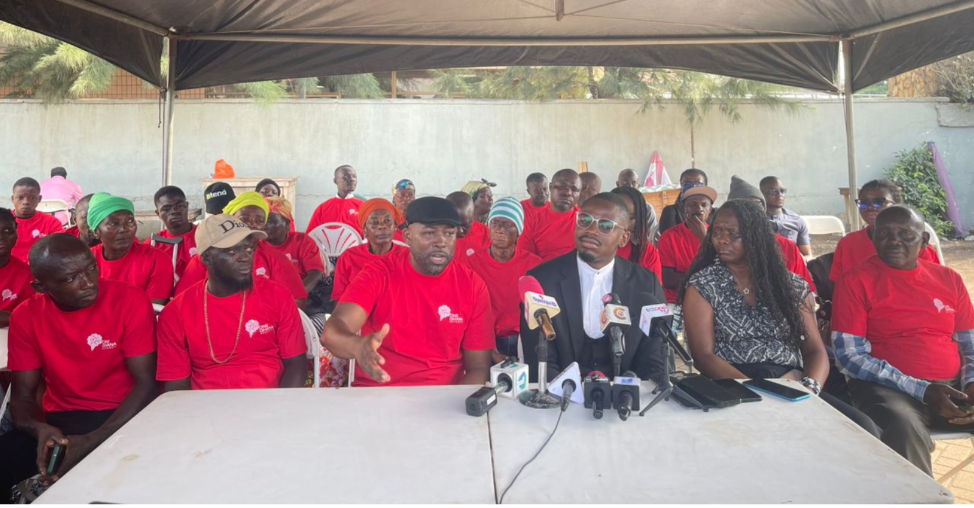
Their appeal was made during the 11th anniversary commemoration of the disaster, organised by the OneGhana Movement in collaboration with the Coalition of June 3 Victims under the theme: “June 3: Where Is Justice?”
For many gathered at the memorial grounds near the site of the disaster, the anniversary was not merely an occasion for remembrance. It was a renewed call for action from a government that has pledged to restore public confidence in state institutions and strengthen accountability across all sectors.
A nation must not forget
Addressing survivors, relatives of victims, civil society activists and members of the media, Convener of the OneGhana Movement, Mr. Senyo K. Hosi, said the June 3 tragedy remains one of the most painful reminders of what can happen when institutions fail in their responsibilities.
According to him, evidence emerging from an ongoing court case suggests that the disaster was not an unavoidable act of nature but a preventable tragedy that occurred because of failures in planning, regulation and enforcement.
“The disaster of June 3 was needless. It ought to have been avoided if those entrusted with the responsibility to take care and exercise duty of care to all and sundry were up to their task,” he said.
His remarks struck a chord with many survivors, some of whom continue to live with permanent injuries and trauma eleven years after the catastrophe.
“We gather here because the question that has haunted this nation for more than a decade still hangs in the air: June 3, where is justice?” Mr. Hosi said.
Scars that have never healed
For survivors, the pain of June 3 did not end when the floodwaters receded and the fires were extinguished.
Many continue to suffer physical disabilities, hearing impairments, psychological trauma and severe economic hardship.
Some lost their ability to work. Others lost family breadwinners. Several families were completely shattered by the tragedy.
Mr. Hosi noted that while the country moved on, many victims remained trapped in a cycle of pain, uncertainty and financial distress.
“For over 11 years, the victims of this tragedy have carried scars — physical, emotional and economic scars. Some lost their hearing, some lost their livelihoods, and yet the justice they deserve remains painfully out of reach,” he said.
The survivors argue that while numerous promises have been made over the years, meaningful compensation and accountability remain elusive.
Court battle enters 8 year
The victims’ quest for justice has largely shifted to the courts.
In 2018, sixty-nine victims filed a class action suit against GOIL, the National Petroleum Authority (NPA), the Accra Metropolitan Assembly (AMA) and the then station manager, seeking accountability and compensation.
The lawsuit alleges that negligence and regulatory failures by the institutions contributed significantly to the disaster.
According to Mr. Hosi, testimonies heard during the proceedings have strengthened the argument that the tragedy could have been prevented.
He disclosed that witnesses who testified in court had acknowledged that stronger regulatory oversight and enforcement of safety standards could have averted the disaster.
“GOIL’s own witness admitted under cross-examination that the disaster could have been avoided. The NPA’s witness confirmed that stronger regulatory oversight could have prevented the tragedy,” he stated.
Such revelations, he argued, make the continued delay in achieving justice even more painful for victims and their families.
Questions over institutional accountability
Mr. Hosi expressed concern over what he described as the inconsistent participation of some public institutions in the legal proceedings.
He singled out the Accra Metropolitan Assembly, which he said bears responsibility for enforcing planning and safety regulations within the city.
According to him, the Assembly had on occasions failed to appear before the court and had faced sanctions as a result.
“Yet 11 years on, the victims still wait. The trial continues. The suffering continues. The silence, of all things, also continues,” he lamented.
For the victims, accountability is not merely about assigning blame but about restoring confidence in public institutions and ensuring that similar tragedies never occur again.
A direct appeal to President Mahama
The strongest message from the anniversary event was directed at President Mahama.
Mr. Hosi urged the President to demonstrate that the “Resetting Ghana” agenda extends beyond political rhetoric and translates into meaningful action for citizens who have suffered due to institutional failures.
According to him, the administration has a unique opportunity to show that accountability remains a cornerstone of national governance.
“Reset must mean something. Reset must mean justice for victims, accountability for institutions and relief for citizens who have suffered for far too long,” he declared.
He argued that ensuring justice for June 3 victims would send a powerful signal that the state is prepared to stand with vulnerable citizens rather than abandon them to lengthy legal battles and bureaucratic delays.
“This is the moment to rebuild. A moment to rebuild trust, strength and accountability and prove that the resetting agenda for Ghana is not just a slogan, but a commitment that reaches the most vulnerable and the most wounded amongst us,” he said.
Victims seeking GH¢40m compensation
Lead counsel for the victims, Mr. Etornam Caleb Afutu, disclosed that the plaintiffs are seeking GH¢40 million in damages.
The compensation, he explained, is intended to address the loss of lives, destruction of property, medical costs and the long-term impact suffered by survivors.
Many victims, he said, have been unable to return to gainful employment because of injuries sustained during the disaster.
Mr. Afutu noted that significant progress has been made in the case since it was filed in 2018.
All witnesses for the victims have completed their testimony, while the case against the GOIL station dealer, Mr. Thompson Obeng-Anane, was discontinued following his death.
The remaining defendants are GOIL, the National Petroleum Authority and the Accra Metropolitan Assembly.
According to the lawyer, the AMA’s witness is currently testifying before the court, with additional hearings scheduled for June 15 and June 18.
He expressed optimism that the matter could finally be concluded before the end of the year.
Turning remembrance into justice
As candles were lit and prayers offered for those who perished, survivors insisted that annual commemorations must not become mere rituals of remembrance.
For them, the true memorial to the victims would be justice delivered, accountability enforced and meaningful support provided to those whose lives were permanently altered by the disaster.
“Let this anniversary not be another ritual of remembrance without responsibility,” Mr. Hosi said.
“Let it be a turning point.”
Eleven years after one of Ghana’s darkest days, survivors and bereaved families say they are still waiting for that turning point—and they are now looking to President Mahama to ensure that the promise of a reset finally delivers the justice they have sought for more than a decade.