The Bank of Ghana (BoG) has announced an ambitious new package of policy and institutional reforms aimed at accelerating innovation, deepening financial inclusion, and strengthening the regulation of digital finance as Africa’s fintech ecosystem enters a new phase of growth.
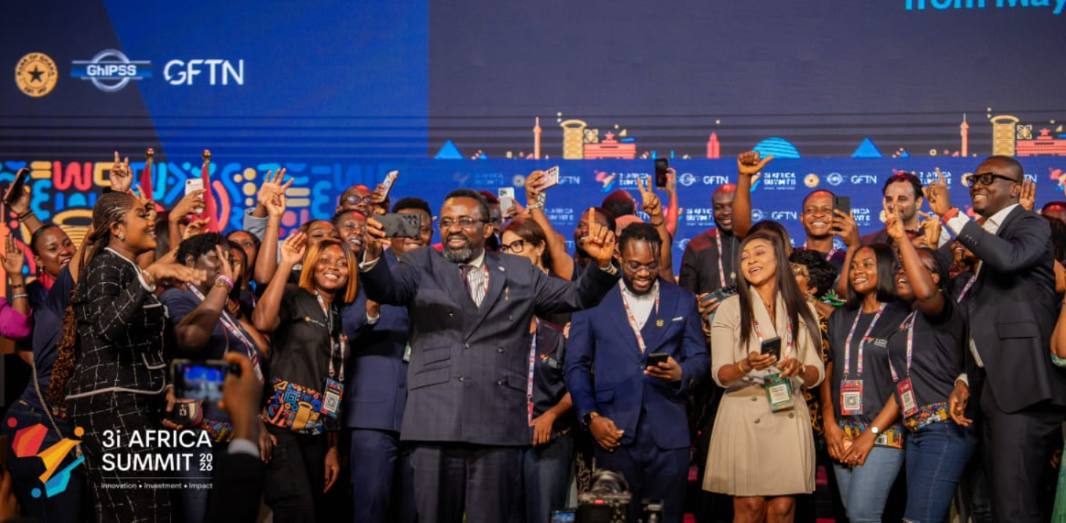
At the closing ceremony of the 3i Africa Summit 2026 in Accra, Governor Dr Johnson P. Asiama outlined a series of major initiatives, including the establishment of an Innovation Hub to incubate and scale financial technologies, the creation of a dedicated legal framework for fintech regulation, the launch of a Continental FinTech Sandbox, and the operationalisation of a National FinTech Inclusion Programme.
He said the measures reflect Ghana’s and Africa’s determination to move beyond experimentation into structured implementation of digital financial systems that are safe, scalable and inclusive.
According to him, the ecosystem presents “a compelling opportunity” that must be carefully nurtured and strategically guided to deliver sustainable economic growth across the continent.
Dr Asiama stressed that Africa is no longer a passive observer of the global financial transformation but is actively shaping its direction through innovation, policy development and cross-border collaboration.
“The summit is not an end, but the continuation of innovation, advancement of our digital financial ecosystem, deepening of continental trade integration, and responsible use of emerging technologies,” he said.
From dialogue to implementation
This year’s summit was held under the theme “The Next Frontier: Shaping Africa’s Integrated Fintech Future”, building on the 2024 and 2025 editions which focused on unleashing fintech potential and promoting a unified African digital market.
Dr Asiama explained that the 2026 edition marked a shift from dialogue to structured implementation.
“In 2024, our aim was to unleash Africa’s fintech and digital economic potential. In 2025, we deepened that charge under One Africa, One Market. In 2026, we arrive at the next frontier—structured implementation,” he said.
He added that discussions across plenary sessions, technical tracks, policy dialogues, the Governor’s Roundtable and the Capital Meets Policy forum all pointed to what he described as a “rebirth of Africa’s digital and financial ecosystem.”
According to him, this rebirth represents both opportunity and challenge, driven by rapid technological advancement, a youthful ecosystem and expanding financial access across the continent.
Call for coordinated action
While acknowledging the richness of discussions over the three-day summit, the BoG Governor stressed that dialogue alone was not enough.
“It is imperative that deliberate and coordinated actions follow, to translate dialogue into tangible outcomes,” he said.
He called on regulators, policymakers, fintech investors, institutional investors, start-ups, government officials, global partners and students—whom he described as “co-architects of Africa’s next financial chapter”—to sustain momentum beyond the summit.
Dr Asiama also emphasised the need for continued regulatory cooperation across African countries, particularly in areas such as harmonisation of financial systems, licensing passporting and supervisory convergence.
“We have to continuously champion and support the advancement of these reforms,” he said.
Ghana’s macroeconomic gains highlighted
The Governor used the platform to highlight Ghana’s recent macroeconomic performance, describing it as evidence of strengthened financial stability and effective policy coordination.
He cited the stability and appreciation of the cedi against major currencies, inflation falling to 3.4% in April 2026—one of the lowest levels under Ghana’s inflation targeting regime—and real GDP growth of six per cent in 2025.
He also pointed to significant regulatory and legislative reforms, including amendments to the Bank of Ghana Act to enhance independence and accountability.
Other milestones include the passage of the Virtual Asset Service Providers Act, 2025 (Act 1154), which provides a legal framework for digital assets; the issuance of a directive regulating digital credit providers; and amendments to cyber and information security directives to strengthen resilience against emerging threats.
“These reforms have contributed to safeguarding trust and confidence within the financial ecosystem,” he noted.
Renewed investor confidence
Dr Asiama said one of the most important outcomes of the summit was the renewed confidence in Africa’s financial systems, innovation capacity and policy direction.
“For us, the most important indicator is what was reflected in every conversation over the past three days: renewed confidence,” he said.
He added that the confidence of investors, innovators and policymakers signals a turning point for Africa’s digital financial future.
Investment appeal to global partners
The Governor also made a strong appeal to global investors to take advantage of Africa’s evolving fintech landscape.
“To our investor partners, the moment to engage the African opportunity is now,” he said, urging the need for patient capital and long-term partnerships.
He stressed that Africa was seeking not just funding, but “enduring partnerships” that share in the continent’s long-term value creation.
Message to innovators and regulators
Dr Asiama further urged fintech founders and innovators to engage early with regulators and prioritise governance alongside growth.
“Treat consumer trust as the strategic asset it truly is,” he said.
He also reminded regulators and government officials of the need to sustain efforts towards harmonisation of financial systems across the continent.
Summit partners and sponsors commended
The BoG Governor expressed appreciation to all stakeholders who contributed to the success of the summit, describing it as a collective effort rather than an institutional achievement.
He acknowledged the support of co-hosts including the Ghana Interbank Payment and Settlement Systems (GhIPSS) and the Global Finance and Technology Network (GFTN), as well as development and private sector partners.
Platinum sponsor Mobile Money FinTech Limited (MTN MoMo) was commended alongside Tazama and Mojaloop, while PwC and Jumo were recognised as gold sponsors.
Silver sponsors included Fidelity Bank, Stellar Development Foundation, Yellow Card, Npontu and PawaPay.
Bronze sponsors such as Wewire, Paystack, OA Markets, Fincra, Nsano, KNET and Optasia were also acknowledged for their support.
Dr Asiama also thanked Bel Aqua, Fresh Drop and JP Petroleum for providing hydration and energy support for the summit.
The work has just begun
Closing the summit, the Governor declared that while the 3i Africa Summit 2026 had officially ended, its impact was only beginning.
“The work it has set in motion is only just beginning. Let us carry forward its outcomes from Accra into our central banks, ministries and boardrooms,” he said.
He urged participants to sustain momentum into future editions of the summit, describing the vision as one that must extend beyond Accra to the entire continent.
The summit ended with a call for stronger collaboration between governments, regulators, investors and innovators to build a more integrated, resilient and inclusive African financial system