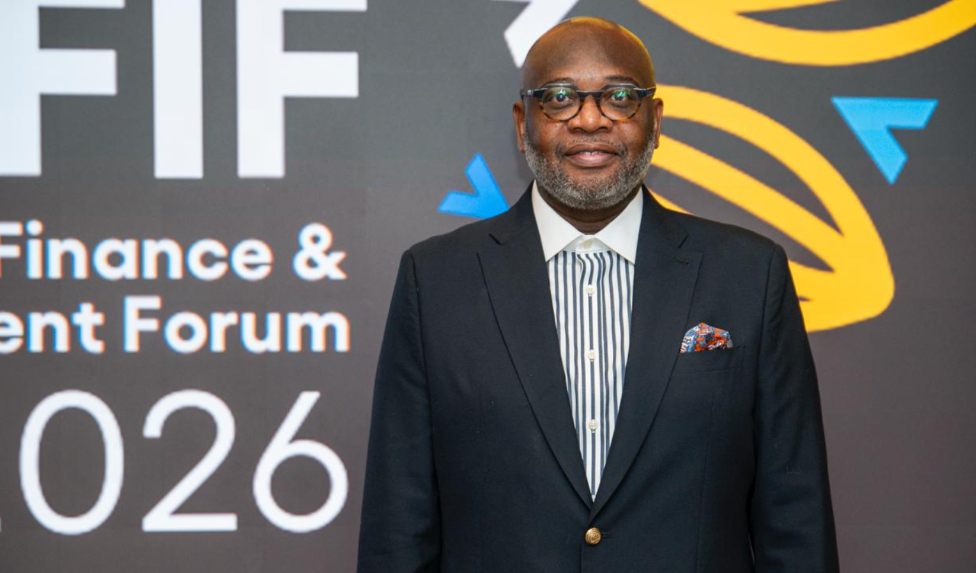
The Chief Executive of Ghana Cocoa Board (COCOBOD), Dr. Ransford Abbey, has disclosed that modalities for a new funding model for Ghana’s cocoa sector are nearing completion ahead of its implementation in the 2026/2027 crop season.
He said the new model marks a major shift in Ghana’s cocoa financing strategy and seeks to ensure price stability and sustainable farmer income.
Dr Abbey made this known during a high-level panel discussion on Pre-Export Liquidity & Long-Term Capital at the Africa Cocoa Finance & Investment Forum (ACFIF 2026), held at the London Stock Exchange.
Dr Abbey explained that Ghana’s cocoa sector has, for over three decades, relied on syndicated loans backed by forward cocoa sales to finance annual crop purchases. According to him, although the model ensured access to liquidity, it also required between 70% and 92% of the cocoa crop to be collateralised to offshore financiers, underscoring the urgent need for a paradigm shift in policy.
“The new funding model will come with a new pricing mechanism which will involve periodic reviews, maybe quarterly .. and will be used for the entire crop, ” he said.
According to the Chief Executive, the model focuses on mobilising capital through instruments such as commercial paper and commercial notes, while tapping into domestic liquidity, including institutional investors.
He further explained that the proposed reform would maintain the policy of paying farmers 70 per cent of the Free-On-Board (FOB) price, while introducing periodic price reviews to respond to movements in global cocoa prices and exchange rates. The objective, he said, is to strike a careful balance between income stability for farmers and the financial sustainability of the cocoa sector.
The model is also expected to broaden participation in the cocoa economy by creating greater financing access for local processors and indigenous Ghanaian companies, strengthening value retention within the country.
The COCOBOD CE expressed confidence in the strength of Ghana’s financial ecosystem to support this transition, citing improving macroeconomic conditions and growing investor interest in structured financial instruments.
Dr Abbey further acknowledged the need for clarity among stakeholders, particularly Licensed Buying Companies (LBCs), and the investor community regarding the structure and scale of funding support under the new model.
He indicated that a detailed prospectus outlining participation opportunities for financial institutions and investors is being firmed up, adding that its contents will be fully explained to key stakeholders ahead of the opening of the 2026/2027 crop season.
He expressed optimism that the incomes of Ghanaian cocoa farmers would be better protected from global cocoa price volatility in the years ahead.
Meanwhile, the Africa Cocoa Finance and Investment Forum (ACFIF) 2026 was convened by Cocoa Trade and Invest Africa, in partnership with the International Cocoa Organization (ICCO) and the United Kingdom office of the Cocoa Marketing Company (CMC UK) and brought together policymakers, investors and industry stakeholders to advance reforms and unlock investment across Africa’s cocoa sector.