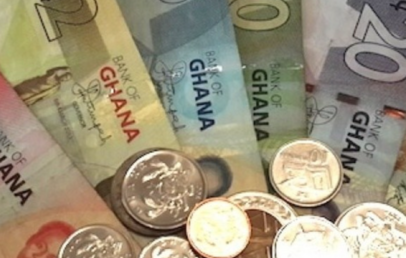
The Association of Ghana Industries (AGI) has commended the Bank of Ghana (BoG) for its firm and costly interventions to stabilise the cedi, describing the move as a necessary step to restore confidence in an economy that had been severely shaken by uncertainty.
According to the Chief Executive Officer (CEO) of AGI, Seth Twum Akwaboah, the stabilisation of the local currency has provided critical relief to businesses, even though it came at a significant financial cost to the central bank.
Ghana’s recent macroeconomic recovery has been anchored on one key pillar—the stabilisation of the cedi.
For policymakers and industry leaders alike, the consensus is that restoring confidence in the local currency was not optional, but essential, regardless of the cost involved.
Crisis that demanded decisive action
Ghana’s economy went through a period of intense turbulence between 2022 and 2023, marked by soaring inflation, a rapidly depreciating currency, and declining investor confidence.
The sharp weakening of the cedi eroded purchasing power and created a highly unpredictable business environment.
For many firms, particularly those dependent on imports, exchange rate volatility made it extremely difficult to plan, price goods, or commit to long-term investments.
Reflecting on the period, Mr Akwaboah said the economy had reached a point where confidence had nearly collapsed.
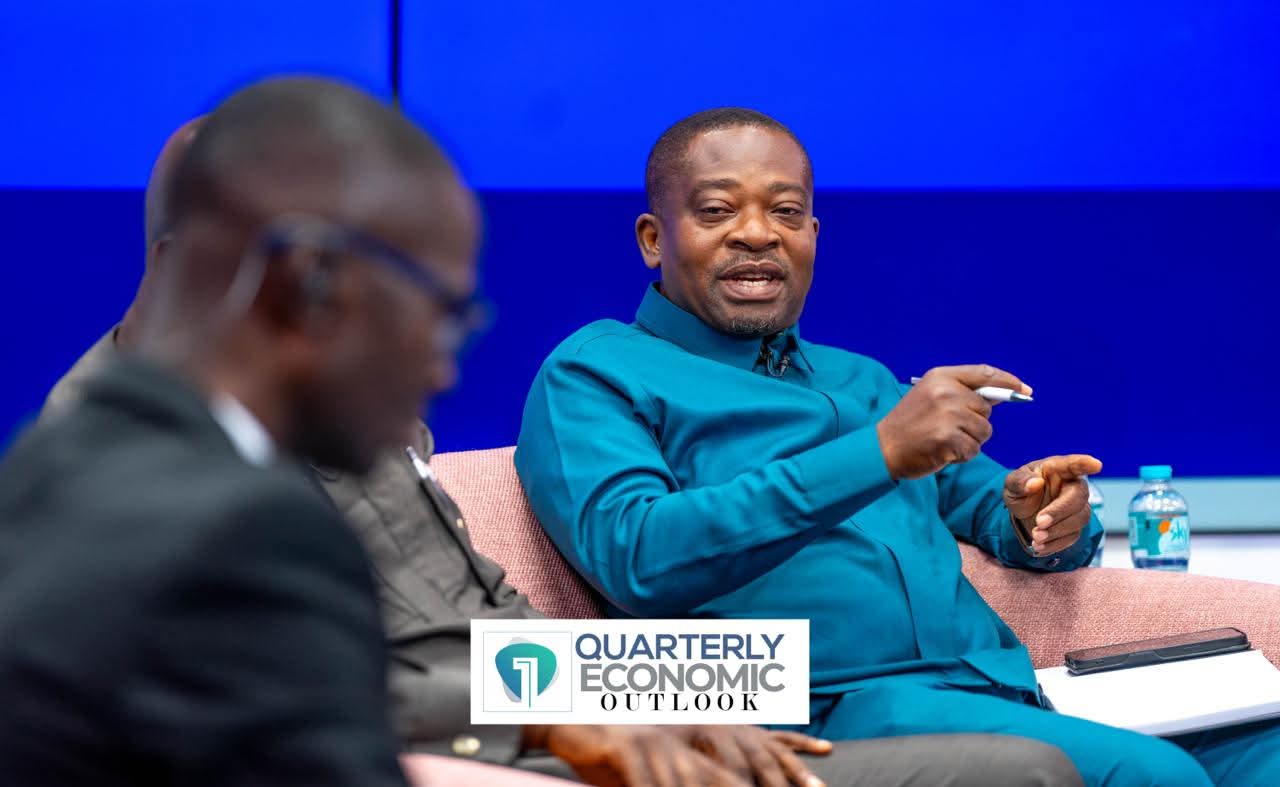
“We were in crisis, confidence level was so low, people investing their own resources became an issue. There was so much uncertainty in the system that required that level of stability,” he said during a Quarterly Economic Outlook discussion organised by Channel 1 TV.
Why cedi stability became non-negotiable
In an import-driven economy such as Ghana’s, fluctuations in the exchange rate quickly translate into domestic price increases.
A weakening cedi raises the cost of fuel, food, machinery, and raw materials, feeding directly into inflation.
At the peak of the crisis, this dynamic intensified the cost of living pressures and placed enormous strain on businesses and households.
Companies struggled to manage inventories and maintain margins, while consumers faced rapidly rising prices.
Under such conditions, stabilising the currency became central not only to controlling inflation but also to restoring predictability in the economy.
Mr Akwaboah noted that the recent stability of the cedi has provided a much-needed anchor for industry, allowing businesses to plan operations with greater certainty and reduced risk.
Heavy interventions, high cost
The path to stabilising the cedi required aggressive and expensive interventions by the central bank.
The Bank of Ghana, working alongside government, injected over $11 billion into the foreign exchange market to support the local currency.
These efforts led to a sharp appreciation of the cedi—from about GH₵14.70 to the US dollar in December 2024 to around GH₵10.45 by the end of 2025—helping to ease imported inflation and stabilise prices.
However, such interventions come with considerable financial risks.
Sustained participation in the foreign exchange market exposes the central bank to valuation losses and puts pressure on foreign reserves.
In addition, the BoG deployed innovative policy tools such as the gold-for-forex initiative, implemented in collaboration with the Ghana Gold Board.
The programme, which sought to reduce reliance on foreign currency by leveraging gold resources, supported exchange rate stability but reportedly resulted in losses estimated at about $300 million.
Despite these costs, AGI maintains that the interventions were justified given the scale of the economic threat.
Restoring confidence and reducing speculation
Beyond direct interventions, stabilising the cedi also required tackling speculative behaviour in the foreign exchange market.
During periods of instability, expectations of further depreciation often lead to hoarding of foreign currency and widening gaps between official and parallel market rates.
Mr Akwaboah said the recent stability has helped reverse this trend, reducing speculative pressures and allowing genuine market participants—importers, manufacturers, and traders—to operate more efficiently.
This shift has played a key role in restoring normalcy to the market and rebuilding confidence among investors and businesses.
Industry backs BoG despite trade-offs
While acknowledging the financial burden placed on the central bank, AGI has thrown its support behind the BoG’s strategy, emphasising that the alternative—continued currency instability—would have been far more damaging.
The association noted that without decisive action, inflation could have remained elevated, business confidence would have deteriorated further, and the broader economy might have faced deeper disruption.
Mr Akwaboah also commended the central bank’s broader monetary policy stance, particularly its efforts to rein in inflation and stabilise financial conditions.
However, he stressed that the next phase of economic management must focus on translating stability into growth.
Call for productive credit to drive growth
AGI is urging policymakers to ensure that improved macroeconomic conditions lead to increased lending to the productive sectors, especially manufacturing.
According to Mr Akwaboah, this is critical for industrial expansion, job creation, and value addition.
He argued that while stabilisation has laid a solid foundation, sustainable economic growth will depend on whether businesses can access affordable credit to invest and expand.
This reflects a broader view within the private sector—that stability, while necessary, must be complemented by policies that stimulate real economic activity.
Currency strength and debt dynamics
The impact of cedi stabilisation is also evident in Ghana’s public debt profile.
In dollar terms, the country’s debt rose by $11.9 billion—from $49.4 billion in December 2024 to $61.3 billion by the end of 2025.
However, the appreciation of the cedi led to a decline in debt when measured in local currency terms, falling from GH₵726.7 billion to GH₵641 billion over the same period.
With the economy valued at about $111 billion, Ghana’s debt-to-GDP ratio in dollar terms stands at approximately 55%, illustrating how exchange rate movements influence fiscal indicators.
Stability at a price, but worth it
Ghana’s experience underscores a fundamental economic truth: achieving stability often requires difficult trade-offs.
In this case, the cost was reflected in large-scale financial interventions, policy risks, and pressures on the central bank’s balance sheet.
Yet for AGI and much of the private sector, the outcome justifies the means.
The stabilisation of the cedi has restored a degree of confidence and predictability that the economy desperately needed.
It has provided relief to businesses, reduced inflationary pressures, and created a platform for recovery.
As Ghana transitions from stabilisation to growth, the challenge will be to sustain currency stability while easing the financial burden of past interventions.
For now, however, industry leaders are clear: the cost of stabilising the cedi was high—but the cost of failing to do so would have been far greater.