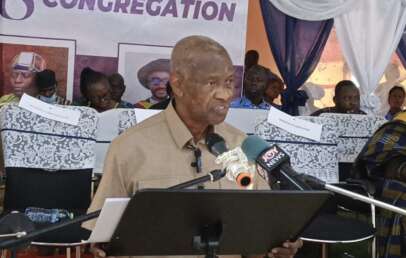
A powerful call for a fundamental reset of Ghana’s education system has emerged from the Mfantsipim Old Boys’ Association, with its Ebusuapanin, Moses Kwesi Baiden Jr, warning that the country risks losing the quality, discipline and prestige that once defined its most respected secondary schools.
Consequently, he made a bold call for a fundamental remodelling of Ghana’s education system, arguing that the country’s once globally respected secondary schools have lost their historical quality, discipline and prestige and must urgently be restructured to reclaim their former standing.
Mr. Baiden Jr said the current system—particularly after the state assumed full control of school administration—has weakened the original mission of Ghana’s mission-founded schools, which were built to produce disciplined, value-driven and globally competitive graduates.
He argued that the time had come for a new hybrid governance model that brings together government, school authorities, the church and mosque, as well as old students’ associations, in managing the country’s Category A schools.
According to him, such a reform is necessary if Ghana is to restore academic excellence and rebuild elite institutions that can compete globally while still serving national development needs.
“We have lost our way,” Mr. Baiden Jr said emphatically. “My son and the sons of other MOBA executives did not attend Mfantsipim, and it is something that pains me greatly. They went to SOS because SOS offers better academic value.”
He added that even alumni loyalty, once strong enough to keep generations within the Mfantsipim system, is now being eroded, pointing out that many old boys today prefer alternative schools for their children due to perceived declines in quality.
Non-profit limited liability structure
Mr. Baiden Jr proposed a bold pilot model that would place leading schools such as Mfantsipim under a non-profit limited liability structure, allowing greater participation by alumni and institutional partners in financing and management.
He argued that this approach would help relieve the state of some financial burden while restoring efficiency, discipline and standards.
“I think we should agree to put schools like Mfantsipim—starting as a pilot—into a non-profit structure, and let MOBA contribute the funds to kickstart the transition,” he said.
He further suggested a mixed-access model combining merit-based admission, scholarships for needy but brilliant students, and a controlled fee-paying system for those who can afford it.
According to him, such a system would not exclude the underprivileged but would instead create a balance between access and excellence.
“Let the people who can pay and meet entry requirements do so, while we ensure that brilliant but needy students are supported through scholarships,” he said.
He stressed that the model should not replicate existing private school systems but should reflect Ghanaian values, culture and developmental aspirations.
“We must build a modern education system that is not just the SOS brand, but one that reflects who we are as Africans and Ghanaians,” he added.
Infrastructure limits and educational optimisation
Mr. Baiden Jr said modern planning tools can determine the optimal number of students schools can safely accommodate based on infrastructure.
He insisted that overcrowding must not be allowed to compromise safety or quality.
“Why would you want to build an unsafe, hazardous, inefficient environment when there are models that show exactly what a school can take?” he asked.
He said proper optimisation would ensure a balance between Free SHS beneficiaries and other categories of students, allowing efficient use of resources without sacrificing standards.
Rejecting elitism criticisms
While acknowledging concerns that his proposal could be interpreted as elitist, Mr. Baiden Jr strongly rejected such claims, arguing that Ghana needs designated leadership-focused institutions that nurture excellence without compromising broader access to education.
“Secondary education is important for everybody,” he said. “But there must be schools earmarked to train leaders. That does not mean access is closed to the masses.”
He argued that a restructured funding model could allow government to redirect resources to build more basic schools, thereby expanding access at lower levels while allowing elite institutions to maintain global competitiveness.
“Government can stop spending the same level of money on a few schools and instead build more schools under trees into proper facilities,” he said.
MOBA marks 150 years
The 150 years anniversary of the school has been launched.
As part of preparations for the anniversary in November 2026, Mr. Baiden Jr outlined several major legacy projects being undertaken by the Old Boys’ Association.
He revealed that MOBA is constructing what is expected to become the largest sports infrastructure project in Ghana’s secondary education history—the Kwabotwe Centre of Sports Excellence.
The facility will include an Olympic-sized swimming pool and a fully equipped hospital for students, designed to improve both academic life and student welfare.
He also disclosed that MOBA has published a comprehensive book documenting the school’s long and distinguished history, which will be launched as part of anniversary activities.
Old boys must have a seat at the table
Beyond infrastructure and policy reform, Mr. Baiden Jr emphasised the need for greater inclusion of alumni associations in the governance of leading schools.
He argued that old students, who often carry lifelong emotional and financial attachment to their alma mater, should be formally integrated into decision-making structures.
“It is time for old boys to be given a seat at the table regarding the development and affairs of the school at the governmental level,” he said.
He described Mfantsipim as a foundational pillar of Ghana’s education system, noting that its boarding system and early Methodist Church influence helped shape disciplined, patriotic and globally competitive citizens.
MOBA’S role in Mfantsepim @150 Celebrations
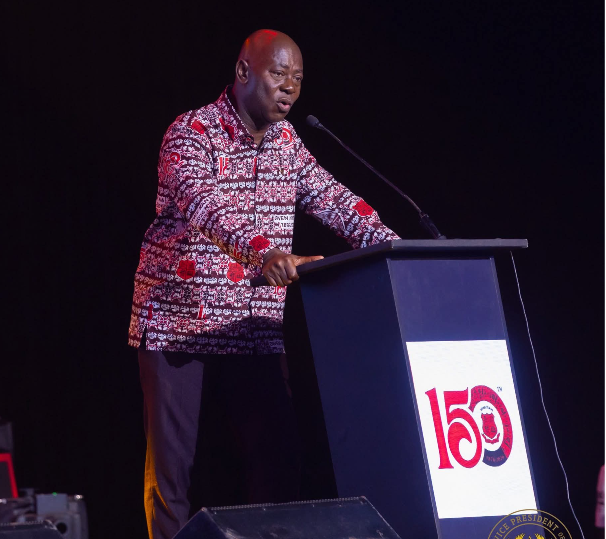
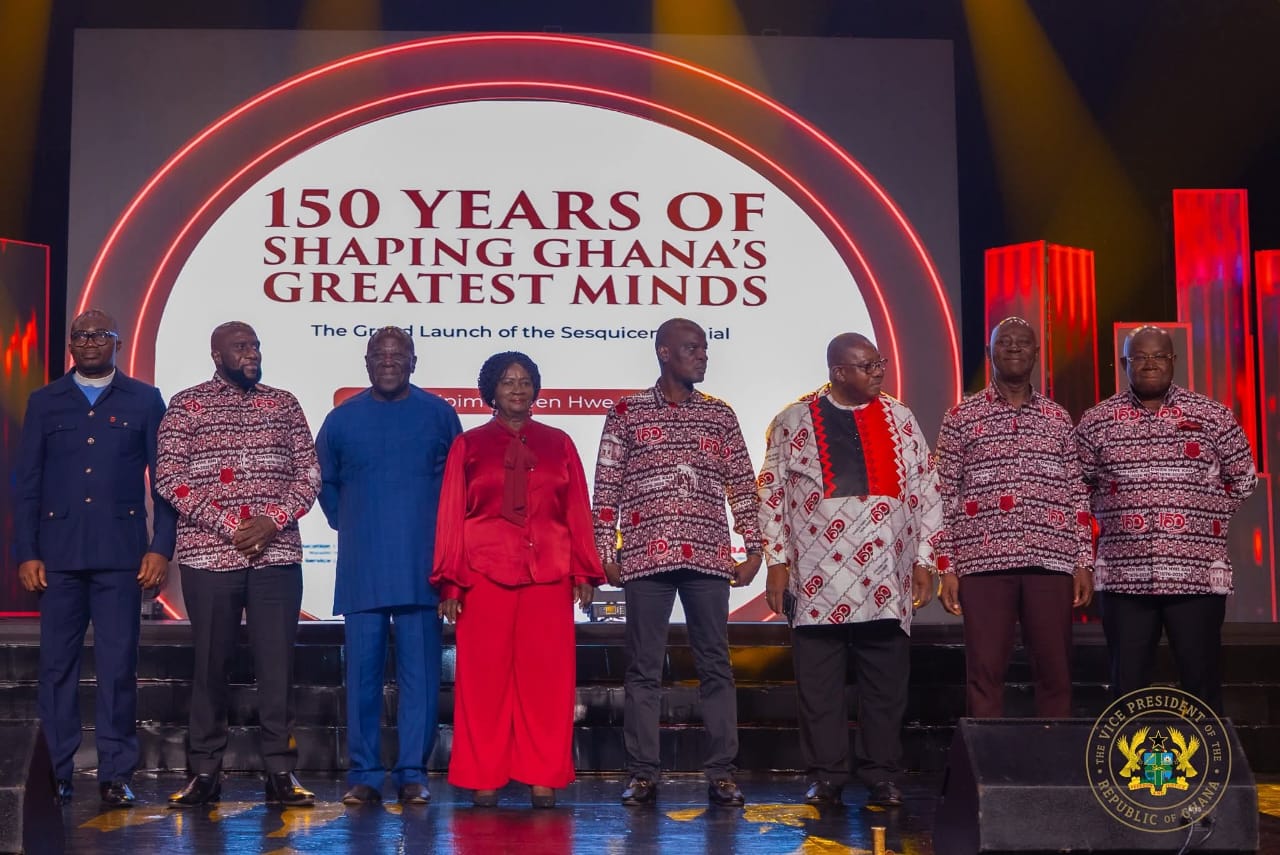
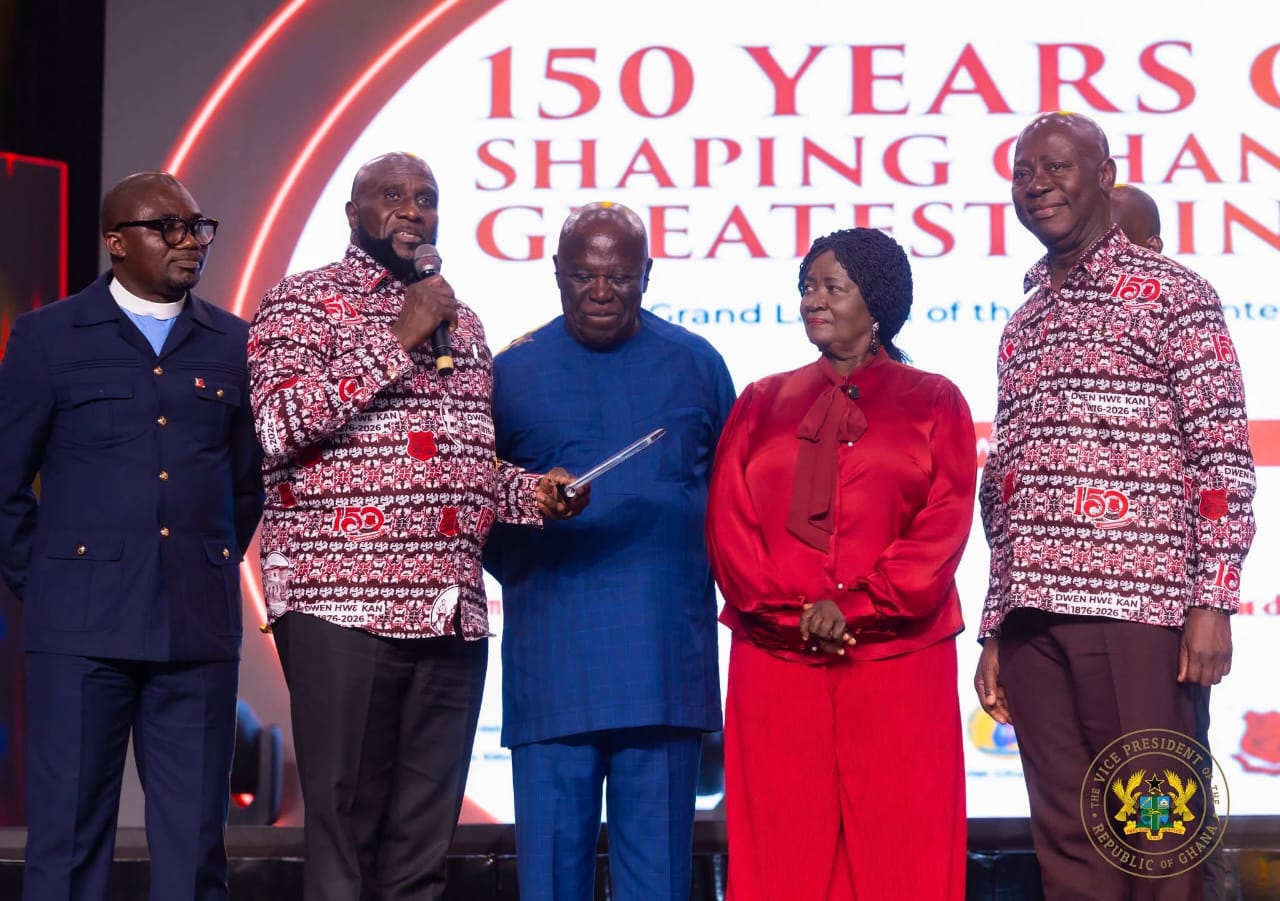
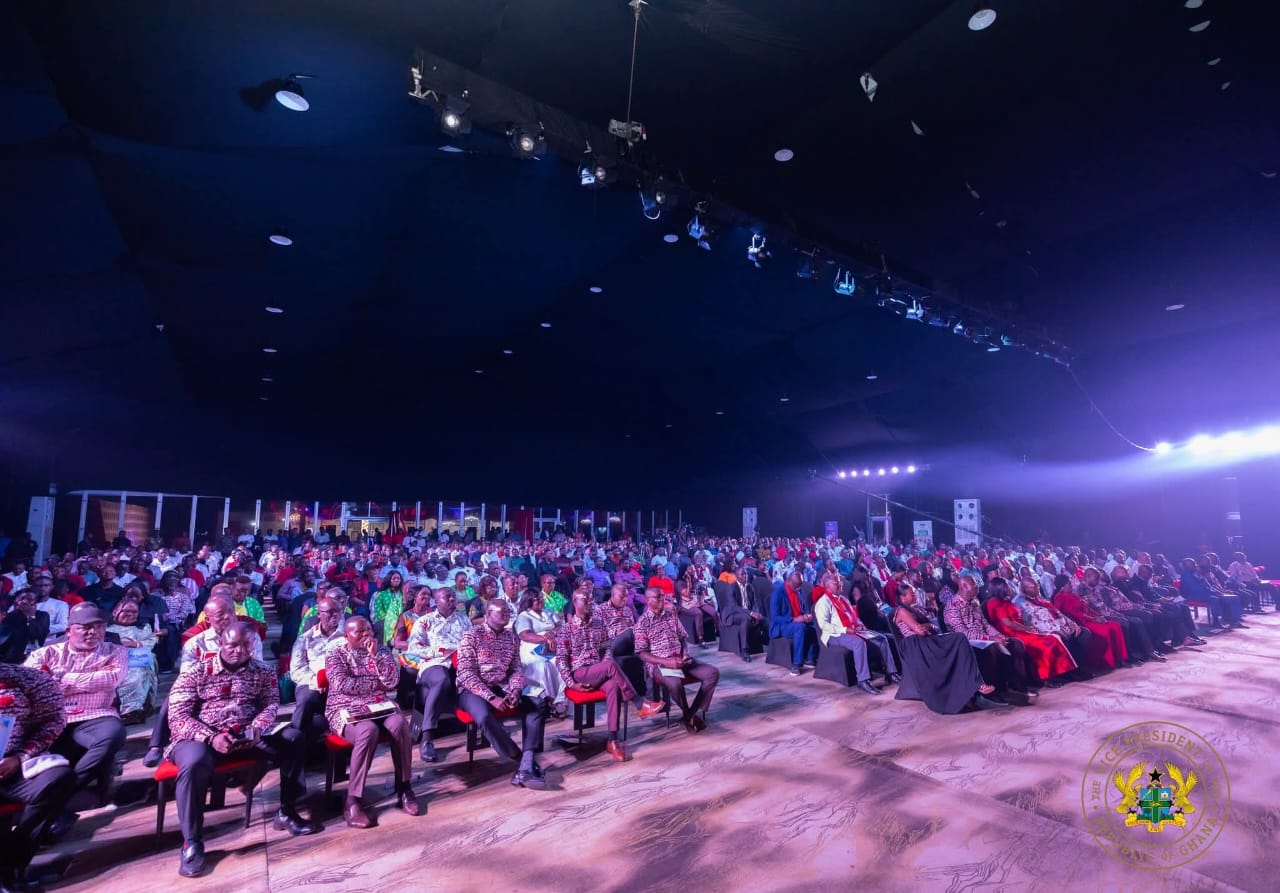
The Mfantsipim Old Boys’ Association is playing a central role in the school’s 150th anniversary celebrations, which officially commenced with a grand launch in Accra.
The event, held under the theme “Mfantsipim @150: Shaping Ghana’s Greatest Minds”, marked the beginning of a year-long programme of activities leading to the climax in November 2026.
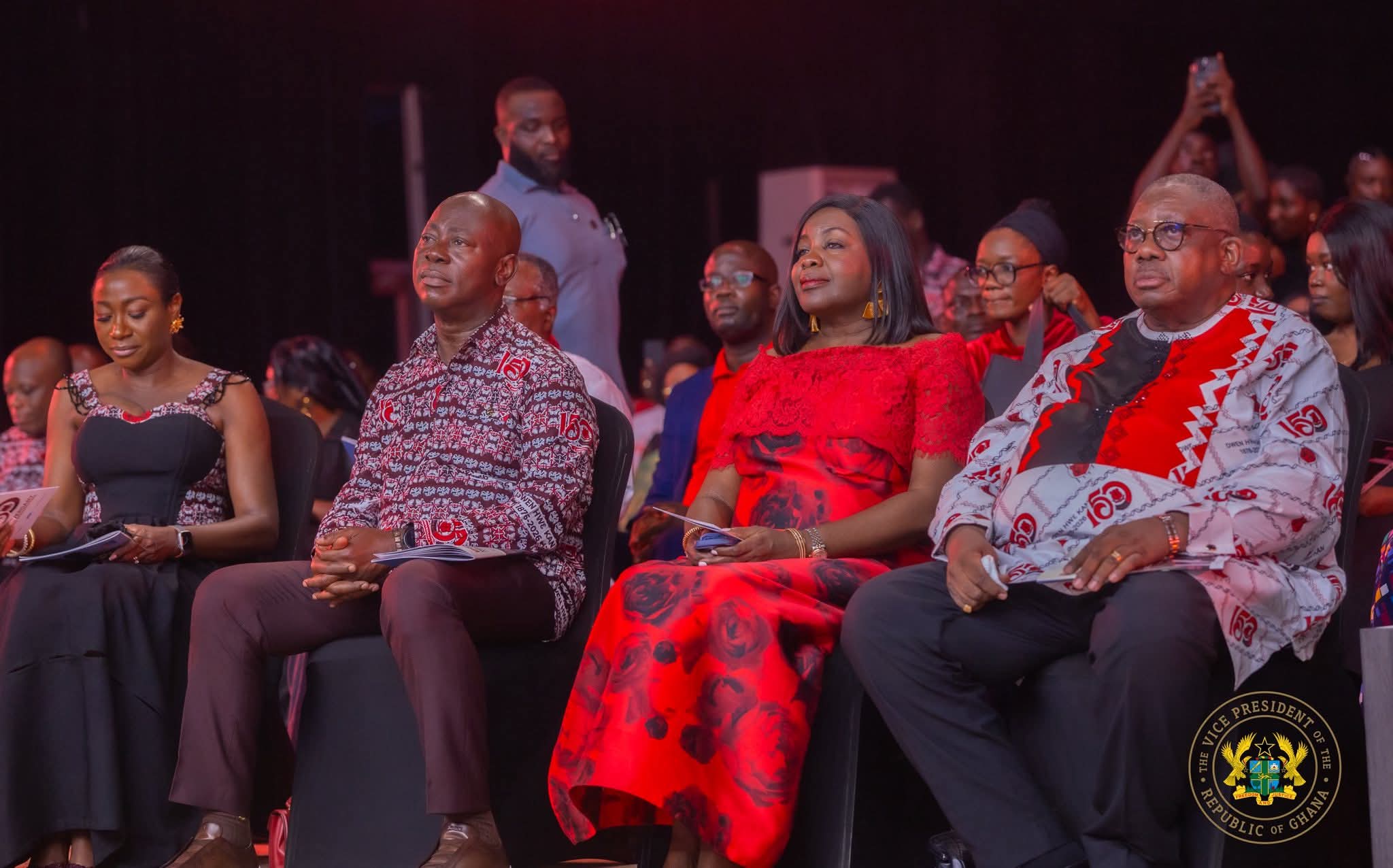
The launch was attended by high-profile dignitaries, including Vice President Professor Naana Jane Opoku-Agyemang and the Minister of Education, underscoring the national significance of the anniversary.
Established in 1876 by the Methodist Church, Mfantsipim is widely recognised as Ghana’s first secondary school and has produced some of Africa’s most distinguished leaders, including former United Nations Secretary-General Kofi Annan.
Education, legacy and national development
Chairman of the anniversary planning committee, Capt. John B. Yamoah, traced the school’s origins to its founding mission of producing educated citizens who would serve both God and country.
He noted that Mfantsipim has evolved into a “bastion of excellence,” producing statesmen, diplomats, academics, sportsmen and innovators who continue to shape national and global development.
Chairman of the Grand Launch, entrepreneur Nana Sam Brew-Butler, highlighted the enduring influence of the “Mfantsipim Man” in Ghana’s national life, describing it as a symbol of discipline, excellence and leadership.
Friendly rivalry with Adisadel College celebrated
Adding colour to the celebrations, businessman and Adisadel College old student, Sam Jonah, reflected on the historic rivalry between Mfantsipim and Adisadel College.
He described it as a healthy competition rooted in mutual respect that has helped both institutions maintain high standards over decades.
“Rivalry at its best is respect wearing a competitive mask,” he said, noting that the competition between the two schools has been a key driver of excellence in Ghanaian secondary education.
Line-up of 150th Anniversary activities
Organisers have outlined a packed programme of events leading up to the climax of the sesquicentennial celebrations in November 2026.
Activities include a lecture series featuring distinguished alumni and education experts, Founder’s Day commemorations, corporate social responsibility initiatives across communities, sports competitions, alumni reunions and cultural showcases.
The celebrations will culminate in a grand durbar scheduled for November 14, 2026, which is expected to bring together past students, government officials, traditional leaders and international guests.
A school at a crossroads
As Mfantsipim approaches its 150th anniversary, the debate sparked by Mr. Baiden Jr’s intervention has reopened broader national conversations about the future of Ghana’s education system.
At the heart of his argument is a call for balance—between access and excellence, tradition and modernisation, and state control and stakeholder participation.
Whether Ghana embraces this proposed hybrid model or not, the discussion has once again placed Mfantsipim at the centre of a national reflection on what quality education should look like in the 21st century.