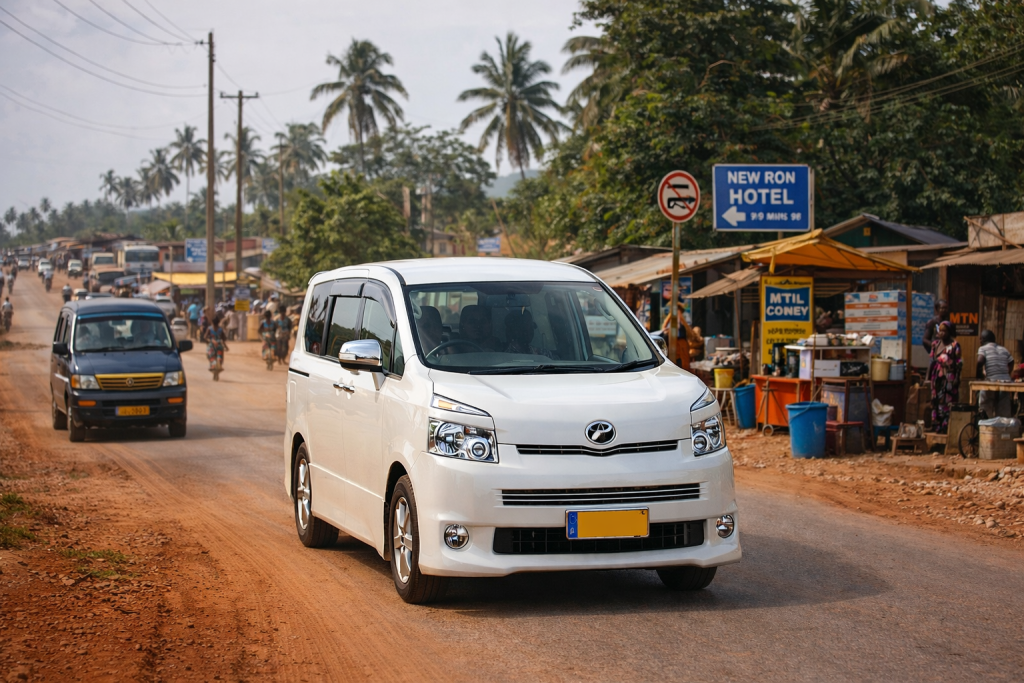
The National Road Safety Authority (NRSA) says Toyota Voxy vehicles are not designed for long-distance or commercial passenger transport, describing their current use on inter-city routes as a significant road safety risk.
Mr Abraham Amaliba, the Director-General of the Authority, said Toyota Voxy vehicles were not originally manufactured in left-hand drive configuration, therefore, any such vehicle found in Ghana was not intended for use on the country’s roads.
“At the very least, if there is one message the public should take away, it is that Toyota Voxy vehicles are not meant for long-distance travel. They are designed for intra-city use,” he said.
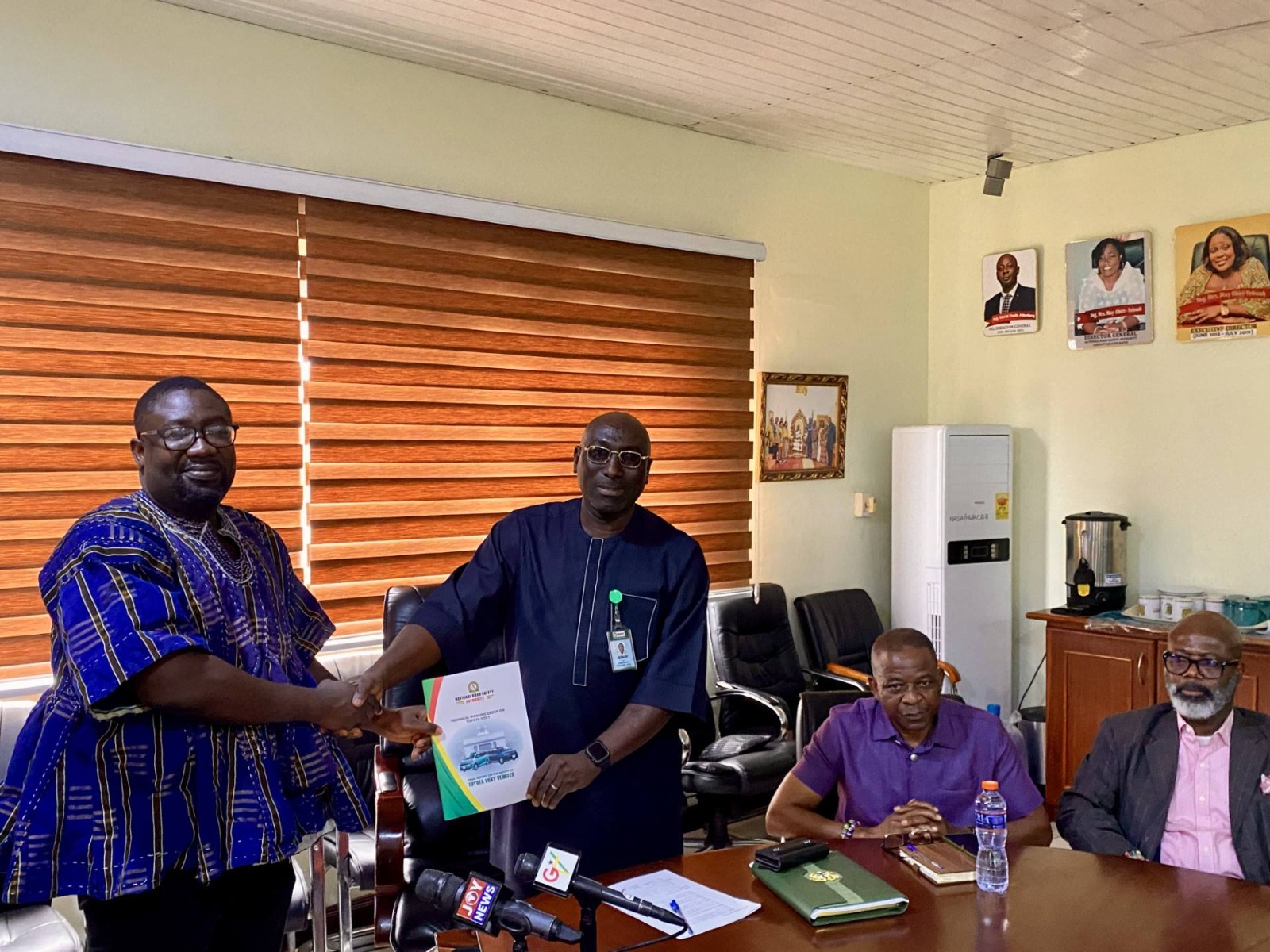
Mr Amaliba was speaking on Wednesday at the presentation of a 14-member technical committee’s report in Accra.
The Committee, chaired by Dr Godwin Kafui Ayetor, an automobile engineer, was tasked to assess the engineering integrity, safety implications, and suitability of Toyota Voxy vehicles for commercial passenger transport in Ghana.
The formation of the technical committee followed growing public concern over the increasing involvement of these vehicles in road traffic crashes across the country.
In February 2026, the NRSA announced the establishment of the committee after receiving petitions from concerned citizens and stakeholders, highlighting safety risks associated with the vehicles.
The Authority had earlier assured the public of a thorough investigation into the matter and pledged to implement appropriate measures based on the findings.
Mr Amaliba said the NRSA, in collaboration with key stakeholders, would begin implementing the recommendations immediately.
“Lives are at stake, and we cannot delay action. The report has given us a clear roadmap, and we will ensure that the necessary steps are taken,” he said.
Dr Ayetor, during the presentation of findings, explained that the Toyota Voxy was originally manufactured as a family minivan for the Japanese market, intended for low mileage and operation on well-paved urban roads, and not for commercial passenger services or long-distance travel.
“The vehicle is not designed for high payload and high mileage operations. Using it for long-distance commercial transport stretches its structural integrity and compromises safety,” he said.
Dr Ayetor noted that all Voxy vehicles operating in Ghana had been converted from right-hand drive to left-hand drive, either locally or abroad, with about 90 per cent of such conversions taking place within the country and about 10 per cent in Dubai.
“These modifications are carried out by artisans without standardisation, raising serious concerns about safety and engineering integrity,” he said.
The committee observed that most conversions involved altering suspension systems, tyres and structural components to adapt the vehicles for Ghanaian conditions, often compromising their stability and balance.
The committee found that the importation of right-hand drive Toyota Voxy vehicles into Ghana contravened Section 58 of the Customs Act, 2015 (Act 891), which prohibited such imports without ministerial approval.
Dr Ayetor disclosed that there was no evidence of approval for the more than 7,257 Voxy vehicles currently registered in Ghana.
The committee identified lapses across key institutions, including the Ghana Revenue Authority (Customs Division), the Driver and Vehicle Licensing Authority (DVLA), the Ghana Standards Authority (GSA), and the NRSA itself.
It noted that Customs failed to prevent the importation of right-hand drive vehicles, while the DVLA registered converted vehicles without adequate inspection and, in some cases, approved them for commercial use.
The GSA was also cited for not fully enforcing standards requiring pre-shipment inspection of imported vehicles.
Dr Ayetor said crashes involving Voxy vehicles could not be attributed to a single factor but rather a combination of risks, including unsafe modifications, economic pressures on drivers, and inexperience.
He noted that many drivers were under pressure to meet unrealistic sales targets, often resulting in reckless driving behaviours.
Assistant Commissioner of Police (ACP) Alexander Kwaku Obeng, Director of Education, Research and Training at the Motor Traffic and Transport Department (MTTD) of the Ghana Police Service, said the findings provided critical guidance for enforcement.
He said the Police would work with the NRSA to ensure that the recommendations were implemented, particularly in restricting the use of Voxy vehicles to intra-city operations.
“It is not every vehicle that is suitable for every purpose. If a vehicle is not designed for commercial inter-city transport, then it should not be used for that purpose,” he said.
Mr Samuel Owusu-Kwarteng, Manager of the DVLA Weija District Office, assured that the Authority would align its processes with the committee’s recommendations.
Henceforth, the DVLA would ensure that Voxy vehicles were no longer registered for commercial purposes but strictly for private use, he said.
“We have a team that goes out for enforcement and anytime we go on the road, we will also advocate that Voxy vehicles are not for commercial purposes… so that the public will be informed as to what mode of transportation they choose whenever they are traveling,”he added.
GNA