The Minority Caucus in Parliament has raised serious concerns over the apparent abandonment of more than 80% of over 1,000 road projects inherited from the previous administration, warning that halting these works could result in far higher costs due to deterioration and variation claims.
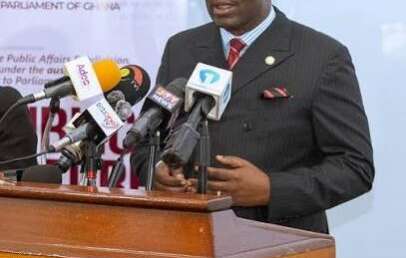
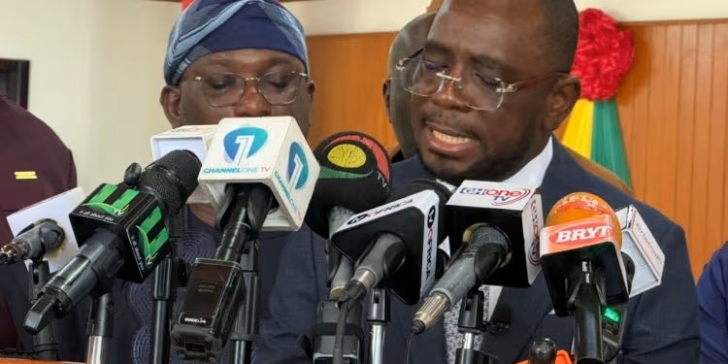
At a press briefing in Parliament, Accra, Kennedy Nyarko Osei, Ranking Member on the Roads and Transport Committee, disclosed that contractors nationwide have vacated sites, often fully demobilizing equipment, despite substantial public funds already invested.
“At the point of transition, the Akufo-Addo administration left over 1,000 road projects actively ongoing across all 16 regions and 261 Metropolitan, Municipal and District Assemblies. These were properly documented in the official handover notes,” he said.
“However, fifteen months into the Mahama administration, more than 80% of these projects have been completely abandoned. Across the country, contractors have left sites, with many fully removing machinery and materials,” he added.
Advanced projects left idle
According to the Minority, the abandoned projects span key agencies, including the Ghana Highway Authority, the Department of Urban Roads, and the Department of Feeder Roads.
Many works had reached advanced stages before being halted.
Mr. Osei cited the eight bypasses along the Accra–Kumasi Highway corridor as a prime example. Key sections—including Osino, Anyinam, Enyiresi, and Konongo dual carriageway bypasses—had completion levels ranging from 57% to 93% as of December 2024.
“Despite this substantial progress, these projects have been completely abandoned,” he noted, emphasizing that failure to continue ongoing works is economically inefficient.
Deterioration and escalating costs
The Minority warned that partially completed roads are particularly vulnerable to damage from weather and neglect, which will drive up costs if they are to be rehabilitated and completed in the future.
Variation costs due to inflation, material price increases, and contract renegotiations could significantly inflate the original budget.
“A change in government should never mean discontinuing taxpayer-funded projects. Abandoning these works not only leads to physical deterioration but also imposes higher future costs for rehabilitation and completion,” Mr. Nyarko Osei said.
He criticized what he described as a political shift toward new projects under the “Big Push” initiative, arguing that resources would have been better spent completing inherited infrastructure to maximize returns on prior investments.
Payment delays compound challenges
The press conference also highlighted challenges with the Ghana Road Maintenance Trust Fund, where arrears are estimated at approximately GH₵20 billion.
Only GH₵1 billion has been released from the GH₵5.8 billion allocation for 2025 and 2026.
“Many contractors have already executed significant portions of work that require continuity to prevent deterioration. Due to delayed and insufficient payments, a large number have abandoned project sites while awaiting settlement of outstanding claims,” the Minority noted.
Call to action
The Minority is urging the government to prioritize clearing arrears, restore contractor confidence, and ensure that infrastructure projects continue regardless of political transitions.
“Continuity in road construction is critical. Without it, Ghana risks not only wasting previous investments but also incurring significantly higher costs to bring partially completed projects back on track,” Mr. Nyarko Osei concluded.