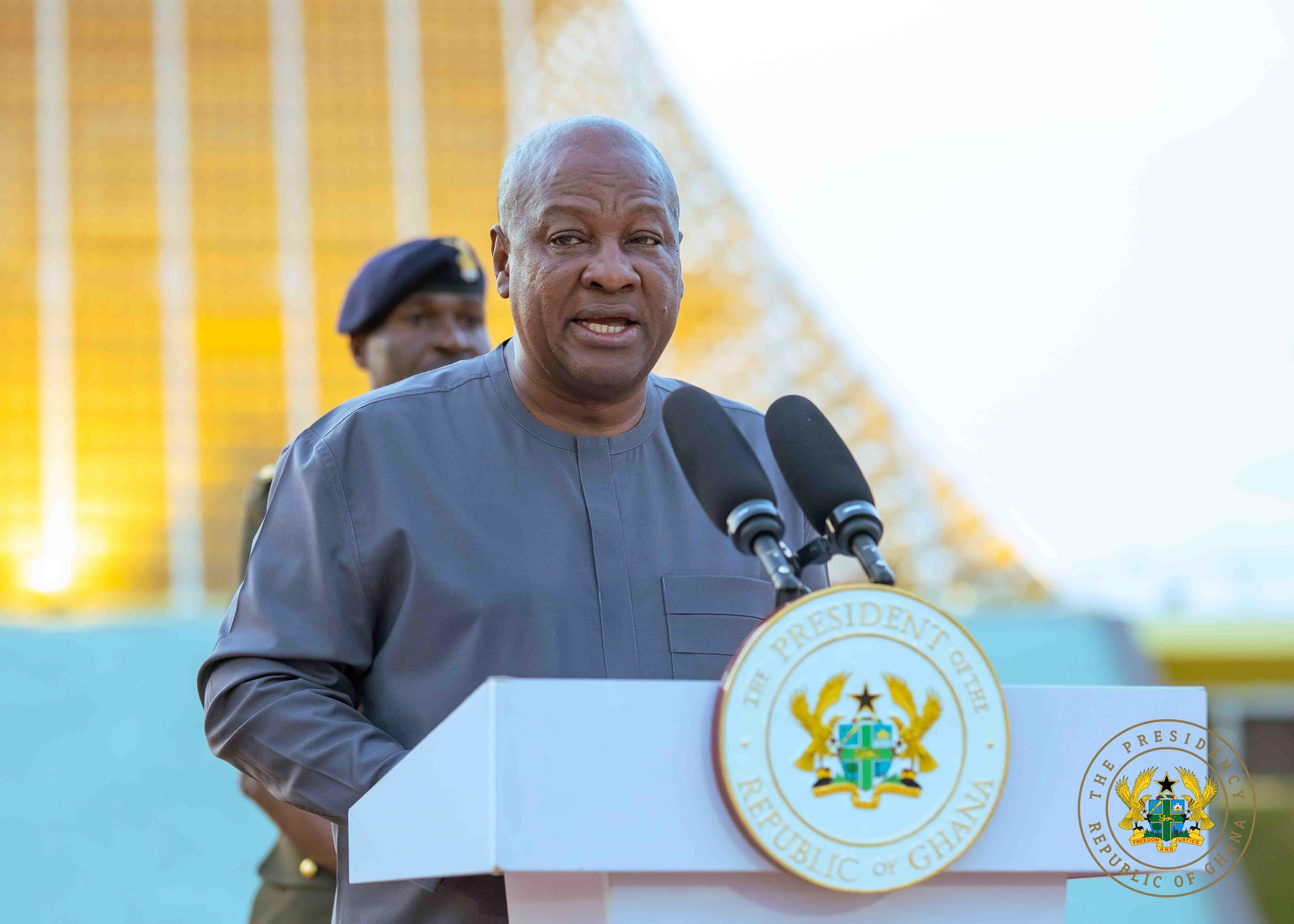
President John Dramani Mahama has called on tenants to report landlords who demand excessive rent advances, as he pushes for stricter enforcement of housing laws to curb widespread abuse in the rental market.
Speaking during a meeting with organised labour at the Jubilee House in Accra on Tuesday, March 17, the President said the rising cost of accommodation was placing a growing strain on household incomes and worsening access to decent housing.
“Housing is a major problem, and for households, it is consuming their income. We need to have a national housing dialogue and decide how, between the private sector, government, and labour, we can come together and come up with a social housing policy to make sure that we provide affordable housing for workers to purchase on a mortgage or to be able to rent at a favourable cost,” he stated.
President Mahama linked the persistent demand for high rent advances to Ghana’s housing deficit, noting that the imbalance between supply and demand had created room for exploitation by some property owners.
“The reason why the private house owners are taking advantage is because of the deficit in housing. We have the rent court, and we say do not take more than six months of rent advance, but the one who is renting and the house owner are both not prepared to go to the rent court,” he added.
He urged tenants to take advantage of existing legal mechanisms by reporting offending landlords, assuring that sanctions would be applied where necessary.
“You can go and report him to the rent court, and we will hold that landlord accountable,” he emphasised.
The President’s remarks come against the backdrop of increasing public concern over the widespread practice of landlords demanding up to two years’ rent in advance, despite legal limits. The situation has been widely criticised as exploitative and a major barrier to affordable housing, particularly for low- and middle-income earners.
President Mahama indicated that a broader national conversation on housing would be necessary to address the structural challenges in the sector, including the development of a comprehensive social housing policy that balances the interests of tenants, landlords and the state.