The Minister for Communication, Digital Technology and Innovations, Samuel Nartey George, has announced that a new SIM registration exercise to be undertaken later this year will deliver a more robust and secure national database to help curb fraud and strengthen national security.
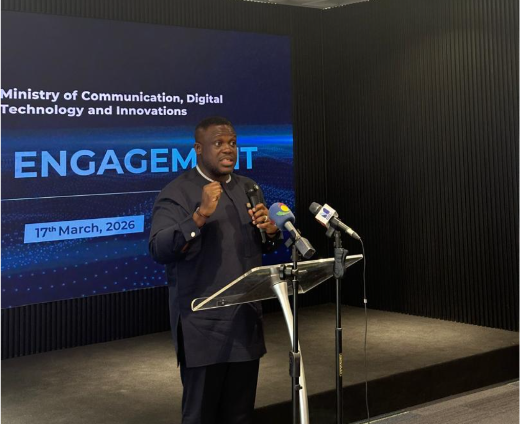
Speaking at a stakeholder engagement in Accra, he said the upcoming exercise would mark a significant departure from previous registration efforts, as it would, for the first time, incorporate biometric verification.
“What we are about to do has never been done before. This will be the first time we are introducing biometric verification into the SIM registration process,” he stated.
Extensive preparations underway
The Minister explained that extensive preparatory work had been undertaken over the past year, covering both policy formulation and the development of regulatory frameworks to support the exercise.
He noted that the initiative had been outlined during his vetting, where he indicated the government’s intention to embark on a comprehensive SIM re-registration programme.
He commended the efforts of the National Communications Authority (NCA), led by its Director-General, for preparing the rollout.
He stressed that the success of the exercise would largely depend on public confidence in the integrity and credibility of the process.
Learning from past mistakes
Acknowledging concerns from previous registration exercises, particularly the 2017 process, Sam George assured that lessons had been learned to improve transparency and efficiency.
He underscored the importance of stakeholder engagement, noting that consultations had been held with key industry players, including the Ghana Chamber of Telecommunications.
Describing the media as a critical partner, the Minister urged journalists to use the engagement to clarify outstanding issues. “Consider this stakeholder engagement as your one-on-one opportunity to ask all the questions,” he said.
Institutional collaboration for the first time
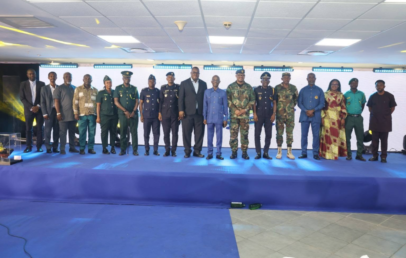
Sam George highlighted that for the first time, the heads of both NCA and the National Identification Authority (NIA) were jointly involved in SIM registration discussions.
“At no point in our national history, whether during the 2010 registration or the 2021 to 2023 exercise, have you seen the heads of these two critical institutions sit together to discuss SIM registration,” he noted.
“This is not the old system. Clearly, this is a different process — behold, all things have become new,” he added.
NCA outlines new framework
Director-General of the NCA, Rev. Ing. Edmund Y. Fianko, said SIM registration remained critical in linking verified identities to mobile numbers, thereby helping address national security concerns and identity-related fraud.
He explained that weaknesses in previous exercises, particularly between 2021 and 2023, stemmed from the absence of robust identity verification and biometric validation, which allowed individuals to register SIM cards using other people’s identification details.
He also cited the non-enforcement of limits on the number of SIM cards per individual as a major challenge.
To address these gaps, Rev. Fianko said the new framework would strengthen biometric verification and improve convenience in the registration process.
Audit reveals urgent need for reforms
A sample verification exercise conducted in June revealed significant discrepancies in existing records.
Out of 2.3 million SIM records analysed, about 1.8 million could not be verified through facial matching, while fingerprint verification recorded no matches due to system incompatibility. These findings highlighted vulnerabilities in the system that could be exploited for fraud or criminal activity.
Legal and technological reforms
Rev. Fianko indicated that the government, in collaboration with NIA, was updating the legal framework to support the new registration regime.
The revised regulations would make real-time biometric verification a legal requirement and provide a secure digital registration system anchored on a centralised national SIM database.
The new law will also introduce clear rules on ownership transfer and make provisions for minors, businesses, foreigners, and tourists.
Additionally, a Central Equipment Identity Register will be established to block stolen phones and prevent unauthorised devices from accessing mobile networks.
Enhanced access and public responsibility
To enhance convenience, the exercise will offer multiple registration channels, including self-service options, assisted registration, and deployment of mobile teams to serve rural and hard-to-reach communities.
Unlike previous exercises where self-service was offered only as a paid premium option, the new system allows Ghanaians to register their SIM cards from anywhere in the world using their phones or other handheld devices
Consumers will be required to register their SIM cards using the Ghana Card, report lost or stolen devices promptly, refrain from registering SIM cards for other individuals, and safeguard their personal identification information.
He emphasized that the exercise is designed to be stress-free, convenient, and free for all subscribers, addressing frustrations observed during the 2022-2023 registration drive.
Unlike the previous exercise, where self-service was only available as a paid premium option—often with multiple debits for failed transactions—this upcoming drive will be fully free and accessible to all.
Sam George concluded that the new exercise represents a complete transformation of the SIM registration process and will provide a secure, efficient, and stress-free experience for all Ghanaians.
By DANIEL NONOR, Accra