The decision by the governing National Democratic Congress (NDC) to impose admission quotas on nursing training institutions has triggered controversy after the policy reduced admissions in some schools by as much as 72.73%, raising accusations that the party has reneged on a key campaign promise made ahead of the 2024 elections.
The sharpest example emerged at the Nurses and Midwifery Training College in Nalerigu in the North East Region, where admissions were cut from 2,750 students to a quota of 750, effectively slashing intake by nearly three-quarters.
The development marks a dramatic policy reversal by the NDC, which had repeatedly promised during the election campaign to abolish the quota system governing admissions to nursing training colleges.
Broken campaign pledge
During the campaign for the 2024 elections, President John Dramani Mahama pledged that an NDC government would abolish the quota system that restricts admissions to nursing training institutions.
Addressing student nurses in December 2023 at the Nursing and Midwifery Training College at Esiama in the Ellembelle District as part of his campaign tour, Mahama assured members of the Tertiary Education Institutions Network (TEIN) that the quota system would be scrapped to allow training institutions to admit students based on capacity.
The promise resonated strongly among thousands of aspiring health professionals who had long complained that admission quotas unfairly restricted opportunities for young people seeking careers in healthcare.
However, less than a year after assuming office, the government has taken the opposite direction by imposing strict admission quotas across public nursing training colleges, universities offering nursing programmes and even private training institutions.
The quotas have led to dramatic cuts in admissions, with some schools experiencing reductions exceeding 70%.
Govt cites financial constraints
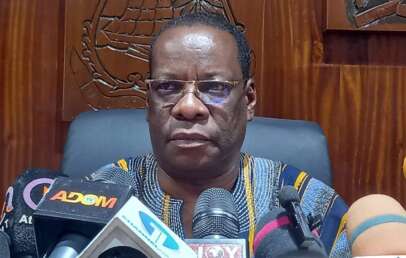
Minister for Health Kwabena Mintah Akandoh defended the policy, saying government lacks the financial capacity to sustain high enrolment levels.
According to him, the main concern is the cost of paying allowances to student nurses during their training.
He disclosed that the Nalerigu training college had exceeded the government-approved quota by admitting 2,750 students instead of the authorised 750, prompting authorities to take disciplinary action.
The Minister subsequently ordered the immediate suspension of the school’s principal for defying the directive.
Akandoh explained that the government had barely managed to implement the “no fees stress” policy for first-year university students, making it impossible to simultaneously sustain large nursing intakes while paying allowances to trainees.
He argued that if institutions were allowed to admit students to their full capacity, government would not have the financial resources to pay allowances to nursing students for the two to three years they remain in school.
“There is simply no money to sustain such numbers,” the Minister said, lamenting that the country is already struggling with a growing backlog of unemployed health professionals.
A return to a controversial policy
The reintroduction of strict quotas represents a return to a policy first introduced in 2015 under an NDC administration.
At the time, the quota system cut admissions to nursing training colleges by about 50%, with government arguing that training numbers had to be controlled to match employment opportunities in the health sector.
However, critics pointed out that the decision contradicted the government’s own justification for restoring trainee allowances earlier, which was to encourage more students to enrol in health training institutions.
When the New Patriotic Party (NPP) assumed office in 2017, it retained the quota system but reduced admissions by about 30% in a bid to manage the growing number of unemployed health workers.
At the time, the NPP said it inherited nearly 100,000 unemployed health professionals, including several batches of nurses trained between 2013 and 2016 who had not yet been absorbed into the public health system.
Over its eight years in office, the NPP said it recruited 202,527 health workers, including medical officers, house officers, specialists, nurses, midwives, pharmacists, allied health professionals and administrative staff.
Despite these recruitments, several cohorts of health workers trained between 2021 and 2024 remain unemployed.
Opposition stance reversed
The current policy shift has drawn criticism partly because the NDC had previously fiercely opposed quotas when the NPP implemented them.
At the time, Akandoh—then the Ranking Member on Parliament’s Health Committee—criticised the quota system and urged government to reverse it immediately.
That position formed the basis for the NDC’s campaign promise to scrap the policy if elected into office.
Critics now argue that the party’s decision to impose even stricter quotas than those it previously condemned represents a clear betrayal of its earlier commitments to students and training institutions.
Growing unemployment crisis
Akandoh said the quota system has become necessary because of the rapidly growing number of unemployed health professionals.
Current estimates indicate that about 74,000 trained health workers remain unemployed.
If the trend continues, projections suggest the number could rise dramatically in the coming years.
Available forecasts indicate that an additional 23,000 graduates could join the unemployment pool by 2026, followed by 35,000 in 2027 and 47,000 by 2028.
Without urgent intervention, the total number of unemployed health professionals could exceed 180,000 by the end of the decade.
Nurses represent the largest share of the unemployed workforce, numbering 48,878 from the 2021, 2022 and 2023 graduating batches.
Beyond nursing, 21,570 allied health professionals and 1,621 pharmacists are also currently without employment, with no financial clearance issued for their recruitment since 2019.
Experts say absorbing all 74,000 currently unemployed health workers into the public sector would require at least GH¢6 billion annually, placing a heavy burden on the national budget.
Policy dilemma
The situation presents the government with a difficult policy dilemma: balancing the need to train more health professionals with the financial realities of employing them after graduation.
However, critics maintain that the issue is not merely about policy choices but also about political credibility, arguing that the NDC should have been transparent about these constraints during the campaign.
For many aspiring nurses who expected expanded opportunities under the new administration, the dramatic admission cuts now raise questions about whether one of the NDC’s most widely publicised promises has been quietly abandoned.