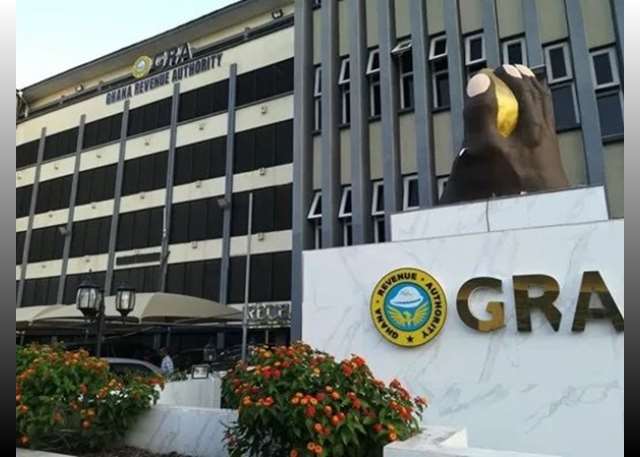
The Ghana Revenue Authority (GRA) has rejected concerns raised by spare parts traders about the new tax regime, saying the fears are based on a misunderstanding and that the changes will actually lower business costs and consumer prices.
In a press release dated February 10, 2026, the GRA responded to claims by the Abossey Okai Spare Parts Traders Association that the new Value Added Tax (VAT) system under Act 1151 would increase prices, distort the market, and impose an unfair burden on traders.
The authority said it takes taxpayers’ concerns seriously and is open to engagement, but maintained that the association’s claims stem from a misinterpretation of how the revised VAT system works.
According to the GRA, the main issue lies in the treatment of input VAT—the tax businesses pay on their purchases. Under the scrapped Flat Rate Scheme, traders paid a 21.9 per cent input VAT that could not be recovered, making it a permanent cost. Under the new standard VAT system, businesses charge a 20 per cent output VAT on sales but can fully deduct the 20 per cent input VAT they paid, effectively reclaiming it from the tax authority.
To demonstrate the difference, the GRA compared the pricing of an item with a base cost of GH¢500 and a 20 per cent profit margin. Under the old system, the final consumer price was GH¢760.66. Under the new regime, after deducting input VAT, the price drops to GH¢720—about GH¢40.66 cheaper.
The authority said the belief that prices will rise comes from traders applying the new 20 per cent output VAT on top of costs that still include the old, non-deductible input tax.
The GRA also addressed concerns about the increased VAT registration threshold, now set at GH¢750,000. It described the change as a relief measure for smaller traders, explaining that the final price of goods should remain the same whether sold by registered or unregistered traders, since registered traders can reclaim input VAT.
Among the benefits of the new system, the GRA cited a lower overall tax rate, the removal of the COVID-19 Health Recovery Levy, and the elimination of cascading taxes. It concluded that the reform would reduce the cost of doing business, estimating that a trader’s cost base on a GH¢500 purchase would fall by nearly 18 per cent.