Ghana’s agricultural transformation agenda is gaining tangible ground as Nobi Agriculture emerges as a leading example of how private investment is redefining farming through scale, technology and integration.
The high-tech rice farming enterprise, spearheaded by Ghanaian entrepreneur Kwame Awuah-Darko, is rapidly advancing in the Afram Plains, positioning itself as a model for modern, commercial agriculture in the country.
With a long-term plan spanning 21,000 acres, the project is already making significant progress, with about 7,000 acres currently under active development in its first phase.
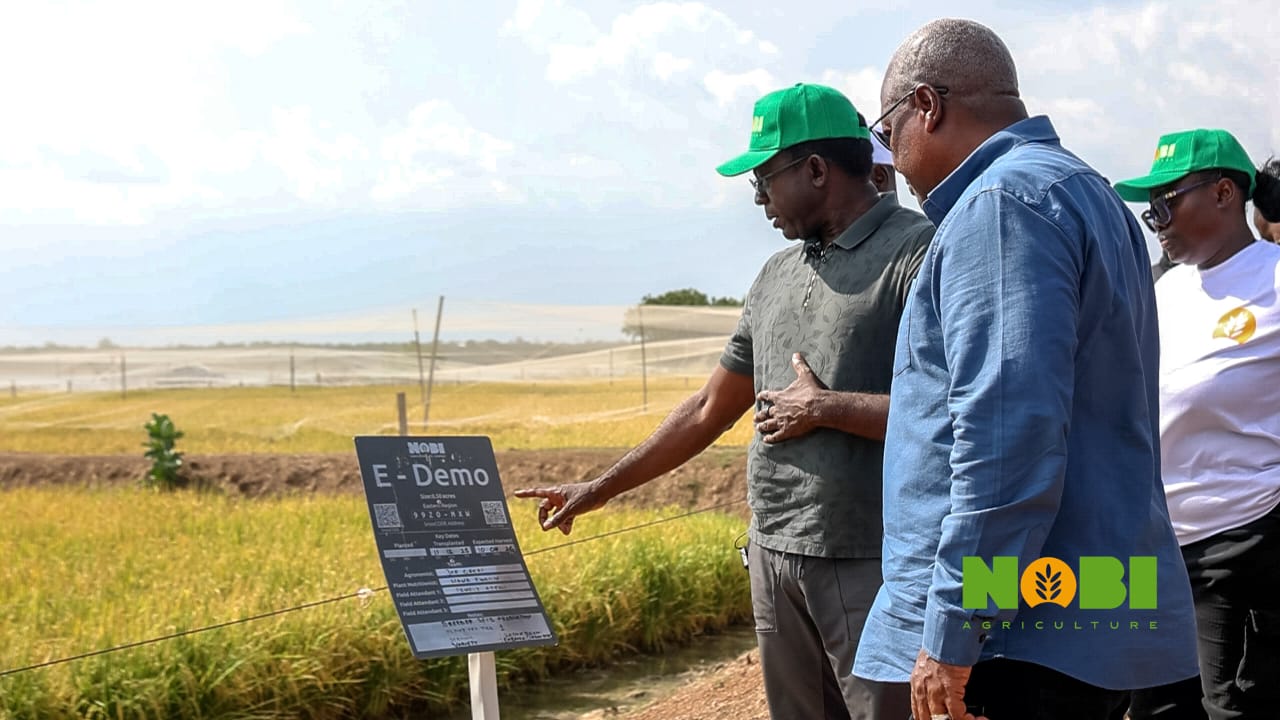
The scale and pace of development have attracted national attention. On March 21, 2026, John Dramani Mahama paid a working visit to the Sikasu farm alongside the Minister for Food and Agriculture, Eric Opoku, underscoring growing government interest in private-sector-led agricultural transformation.
During the visit, the delegation toured key components of the project, including expansive rice fields, advanced irrigation systems, research facilities, warehouses, silos and processing units.
The inspection provided firsthand evidence of how coordinated, large-scale investment is transforming agricultural practices from subsistence to industrial production.
At the heart of Nobi Agriculture’s progress is a strong focus on infrastructure development.
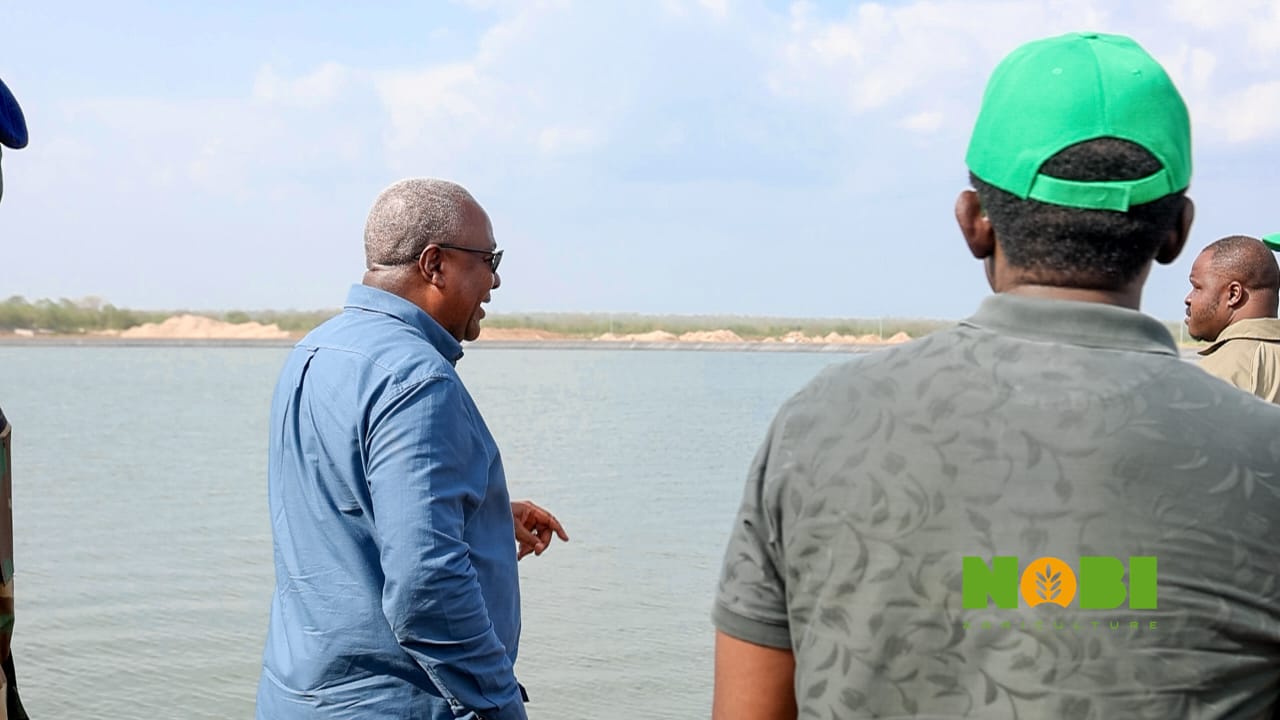
A 23-acre reservoir with a storage capacity of 1.2 million cubic metres of water has been constructed to support year-round irrigation, effectively reducing reliance on rainfall and mitigating the risks posed by climate variability in the Afram Plains.
The project has also made substantial strides in post-harvest management—an area that has historically undermined agricultural productivity in Ghana.
Its integrated processing complex features a modern rice mill with a capacity of three tonnes per hour, complemented by drying facilities, warehouse systems and silo storage capable of holding up to 1,300 metric tonnes.
These investments are already helping to reduce post-harvest losses while improving value addition along the supply chain.
Early results from the farm point to impressive gains in productivity.
Average rice yields have reached approximately 3.5 tonnes per acre, reflecting the impact of improved seed selection, irrigation and the application of modern agronomic techniques.
Beyond production, Nobi Agriculture is investing in research and innovation to sustain long-term growth.
A dedicated rice research institute within the farm is working to develop indigenous seed varieties tailored to Ghana’s climate and soil conditions—an initiative expected to strengthen local seed systems and reduce dependence on imports.
For Awuah-Darko, the project represents more than farming; it is a strategic attempt to reposition agriculture as a fully integrated industry driven by science, infrastructure and long-term planning.
The economic impact is already being felt at the local level.
The project has created over 150 direct jobs for Ghanaian youth, while also providing training in modern agricultural practices, thereby building a new generation of skilled agribusiness workers.
Nobi Agriculture aligns with broader national development priorities, including the government’s 24-hour economy agenda and the Volta Economic Corridor initiative, both of which emphasise industrialisation, productivity and job creation within key sectors such as agriculture.
The visit by President Mahama and Minister Opoku further highlighted official recognition of the project’s growing importance.
Both leaders expressed admiration for the scale of investment and the integrated model being developed, describing it as a blueprint for the future of agriculture in Ghana.