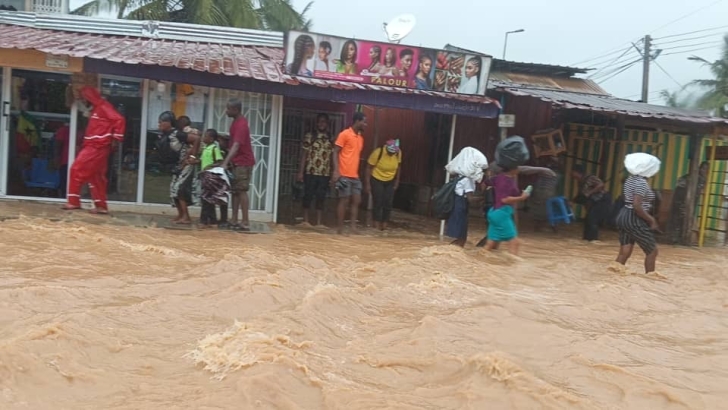
At least 18 people have died and hundreds displaced after devastating floods, collapsed buildings, mudslides, drowning incidents and falling trees wreaked havoc across the Central Region over the weekend.
The National Disaster Management Organisation (NADMO), which disclosed this, said it had ordered the evacuation of unsafe buildings in affected communities.
The organisation said nearly 9,000 residents had been affected by the multiple disasters.
The Central Regional Director of NADMO, Emmanuel Kwesi Dawood, said the disasters, triggered by torrential rain that pounded the region over the weekend, affected 13 metropolitan, municipal and district assemblies (MMDAs), with the Cape Coast Metropolis emerging as the hardest-hit.
According to him, Cape Coast alone recorded six deaths, five of which resulted from building collapses, while one person drowned.
Post-disaster assessment
Addressing journalists during a post-disaster assessment tour yesterday, Mr Dawood disclosed that the region recorded 58 building collapses, leaving 377 people internally displaced and forcing many affected families to seek shelter with relatives, friends, churches and traditional authorities.
He explained that assessments conducted by NADMO and the Regional Disaster Management Committee identified 8,981 flood victims across the affected districts and municipalities.
The affected areas include Cape Coast, Komenda-Edina-Eguafo-Abrem, Mfantseman, Abura-Asebu-Kwamankese, Upper Denkyira East, Upper Denkyira West, Awutu Senya West, and several other districts.
Mr Dawood said the fatalities recorded were linked to a combination of building collapses, flooding, mudslides, landslides, drowning incidents and falling trees.
He stated that the magnitude of the disaster had placed enormous pressure on NADMO’s relief resources, especially after a series of emergency interventions undertaken by the organisation in recent months.
“We have recorded 18 fatalities and thousands of victims. Our contingency stocks have been heavily depleted, and we urgently require support to assist affected families,” Mr Dawood said.
He appealed to corporate organisations, non-governmental organisations, faith-based groups, traditional authorities and philanthropists to support affected victims with food items, mattresses, blankets, roofing sheets, medical supplies, hygiene kits and educational materials.
Plight of students
Mr Dawood expressed concern about the plight of students whose hostels and educational materials were destroyed by floodwaters in parts of Cape Coast, particularly around the University of Cape Coast and Cape Coast Technical University.
He said many students had lost books, mattresses, laptops and other personal belongings to the floodwaters.
Demolitions
As part of measures to prevent further loss of life, Mr Dawood announced that occupants of identified weak and unsafe buildings across the Cape Coast Metropolis had been given a final 14-day ultimatum, effective Sunday, June 21, to vacate the structures.
He explained that inspections conducted by NADMO, the Cape Coast Metropolitan Assembly and building inspectors had identified several dangerous structures that posed a serious threat to lives and property.
Many of the buildings are over 100 years old and have deteriorated considerably due to age, poor maintenance and prolonged exposure to harsh weather conditions.
He warned that authorities would proceed with demolition exercises after the expiration of the grace period and that owners, landlords or occupants who failed to comply would bear the cost of demolition.
Cause of flooding
Mr Dawood attributed the recurring flooding in Cape Coast to indiscriminate dumping of refuse into watercourses, blocked drainage systems and the illegal reclamation of wetlands and natural water channels.
He explained that plastic waste and unregulated developments had obstructed the natural flow of stormwater, worsening flooding in communities such as Amamoma, Ayensu, Kwaprow, Apewosika and surrounding areas.
With more rainfall expected in the coming weeks, the NADMO Regional Director urged residents living in low-lying and flood-prone communities to relocate to safer ground immediately.
“What we witnessed over the weekend is just the tip of the iceberg. More torrential rains are expected, and we must act now to protect lives and property,” Mr Dawood cautioned.
Meanwhile, NADMO, the Ghana National Fire Service, the Ghana Police Service, National Security, the Ghana Health Service, the Department of Social Welfare and other members of the Regional Disaster Management Committee continue to undertake rescue, assessment and relief operations across affected communities.
GraphicOnline