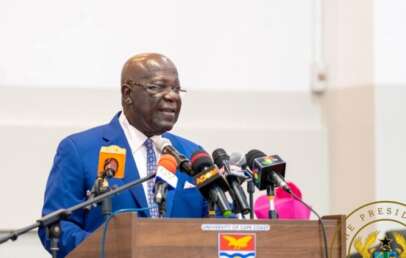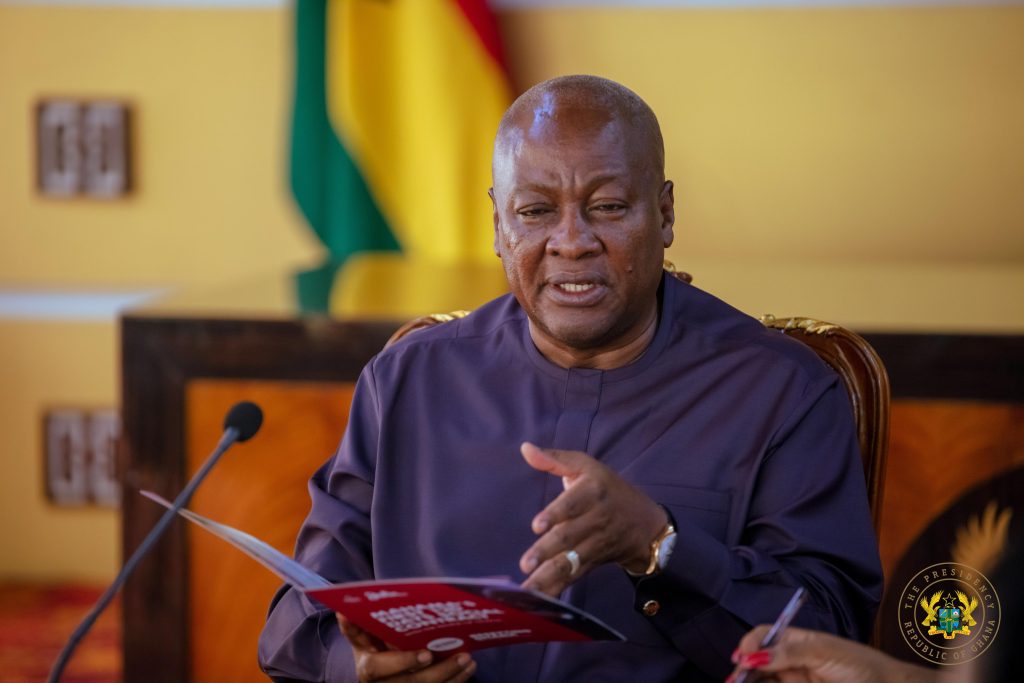
President John Dramani Mahama has disclosed that about 119 people died during the period of mediation in the protracted Bawku conflict.
He made the revelation when he received the Upper East Regional House of Chiefs, led by its President, Pe Ditundini Adiali Ayagitam III, during a courtesy call at the Presidency in Accra.
President Mahama explained that the government initially supported traditional mediation led by the Asantehene, Otumfuo Osei Tutu II, in an effort to achieve a customary settlement. However, when the expected reconciliation failed, the process reverted to the legal position.
“Unfortunately, that did not happen, and once it didn’t, the mediator had no option but to revert to what the law says,” he noted.
The President stressed that he was bound by his constitutional oath to uphold the laws of the country, adding that sentiment could not override legal decisions.
He reiterated that the gazetted Chief of Bawku, Naba Asigri Abugrago Azoka II, remains the legally recognised authority, emphasising that the law must prevail to avoid nationwide instability.
To support peace and development in the area, President Mahama announced a GH¢1 billion Bawku Restoration Fund. The fund is intended to finance infrastructure, healthcare, education and irrigation projects across the six affected districts.
In his remarks, Pe Ayagitam congratulated the President and thanked him for his commitment to restoring peace in Bawku.
The House of Chiefs also presented key development priorities, including the urgent completion of major road projects such as the Bolgatanga–Bawku–Pulmakom and Navrongo–Sandema–Fumbisi corridors to boost trade and agriculture.
They further called for the upgrading of the regional hospital into a teaching hospital, the completion of the stalled Navrongo Youth Resource Centre, and the construction of a modern stadium in Bolgatanga.
Pe Ayagitam assured the President of the House’s support, pledging to facilitate land acquisition and mobilise their people behind policies that promote unity and development. He also noted that they were encouraged by the gradual return of stability in the Kusaug Traditional Area.