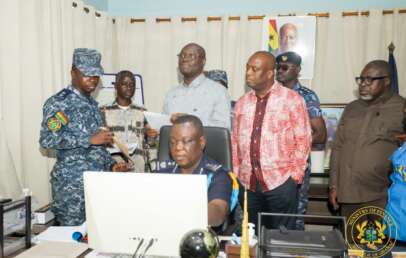
Chief Executive Officer (CEO) of Ghana Integrated Aluminium Development Corporation (GIADEC), Reindorf Twumasi Ankrah, insists that strategic investors secured to turnaround the fortunes of the Volta Aluminium Company (VALCO) is a rescue effort rather than a divestiture.
He warned that VALCO faces a bleak future — including possible job losses — unless urgent steps are taken to attract private capital.
The announcement of strategic investors has drawn criticism, including protests from VALCO workers who fear the company is being sold.
But, Ankrah strongly rejected this narrative saying failure to attract credible strategic investors would lead to the slow death of one of Ghana’s most important industrial assets.
He explained that out of various options, strategic Investor approach as approved by Cabinet is the most viable solution.
According to him, without strategic investors, VALCO faces prolonged shutdown, deteriorating assets, mounting debt and inevitable job losses.
With them, the company gains immediate financial relief, technological modernisation, operational restructuring and integration into global value chains.
GIADEC CEO Ankrah noted that the proposed joint venture structure is not a fire sale.
Rather, it is a safeguarded, performance-based partnership designed to revive a strategic national asset and unlock Ghana’s US$48 billion bauxite potential.
In economic terms, the choice is not between sovereignty and partnership. It is between stagnation and transformation.
The argument of GIADEC is that for Ghana to realise its long-delayed ambition of building an integrated aluminium industry, attracting credible strategic investors is no longer optional.
It is essential and VALCO’s survival—and the future of Ghana’s aluminium dream—depends on it.
The hard truth is that VALCO, in its current financial and operational condition, cannot survive without substantial private capital, technical expertise and balance sheet restructuring.
Any alternative that ignores this reality is not patriotic—it is economically reckless.
Today, VALCO’s valuation stands at approximately US$113 million.
Against this, the company carries total debts of about US$450 million.
On paper and in practice, that imbalance renders the company technically insolvent.
Production has fallen dramatically, creditors are mounting pressure, and government lacks the fiscal space to mount a meaningful rescue on its own.
The estimated capital required to retrofit and modernise the smelter is about US$600 million—a sum government cannot afford in the current macroeconomic environment.
Beyond the immediate turnaround, GIADEC estimates that developing a world-class, export-scale alumina refinery will require US$2.5 billion.
Overall, the full integrated aluminium value chain is projected to demand investment of approximately US$5 billion.
There is no scenario under which the state alone can mobilise this level of financing.
A smelter in decline
Originally constructed with a nameplate capacity of 200,000 metric tonnes of aluminium per year, VALCO currently produces only about 35,000 metric tonnes annually—less than one-fifth of its designed output.
Yet the plant continues to consume roughly 90 megawatts of power, nearly the same as when it was operating near capacity.
This imbalance between output and energy consumption has rendered operations financially unsustainable.
Over the past decade, VALCO has consistently recorded operational losses.

As liquidity tightened and debt mounted, the government was compelled to keep the plant closed to prevent further financial haemorrhage.
Without fresh capital injection and structural reform, reopening under the current model would simply compound losses.
A strategic vision beyond survival
The rescue plan is not limited to restoring a struggling smelter.
It forms part of a broader strategy to anchor Ghana’s integrated aluminium industry by leveraging the country’s vast natural resources.
Ghana is estimated to possess 920 million tonnes of bauxite deposits, conservatively valued at US$48 billion. Six mining leases have already been granted.
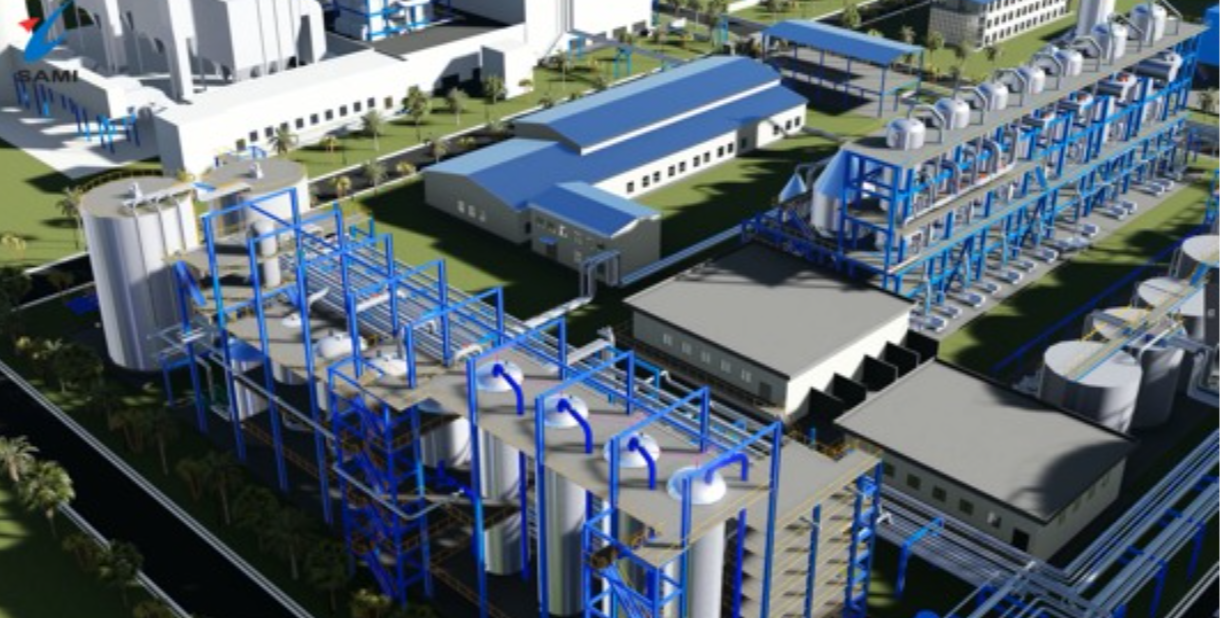
The proposed investment would fund the engineering, procurement and construction of a 1.5 to 2.5 million metric tonnes per annum alumina refinery, transforming domestic bauxite into high-value alumina.
The project would be strengthened by VALCO as a guaranteed primary off-taker and the construction of a new gas plant to produce steam and distribute excess electricity into the national grid.
This integrated approach ensures that value is captured domestically rather than exported in raw form.
If executed properly, the investment would anchor a modern aluminium ecosystem capable of generating substantial economic returns, expanding downstream manufacturing and creating tens of thousands of jobs.
But such transformation requires partners with capital, global networks and proven technical competence.
The strategic investor alternative
The preferred option involves securing a strategic investor to provide the required US$600 million through a debt-equity mix—two-thirds equity and one-third debt.
Under this structure, GIADEC would retain 49% shareholding, while the strategic investor would hold 51%.
Although this entails diminished state control, it offers compelling advantages.
The debt-to-equity ratio would improve to 0.26:1, fully compliant with Act 896.
VALCO’s balance sheet would be de-leveraged. Bankruptcy risks would decline. Cash flow would improve. Loan repayment periods would shorten.
More importantly, the strategic investor would bring technical expertise, advanced operational systems, global market access and management best practices.
With its own capital at stake, the investor would have strong incentives to ensure operational turnaround and profitability.
Ghana would be better positioned with a substantial stake in a thriving VALCO than sole ownership of a failing entity.
Five serious bids were shortlisted, most from previous expressions of interest.
Selection criteria were strengthened in alignment with the government’s reset agenda, with enhanced scoring for staff retention, new recruitment, plant expansion, value addition and alignment with the 24-hour economy.
The chosen investors will be required to retain all existing staff and improve their conditions of service within a specified timeframe.
The expansion plan must generate over 30,000 direct and indirect jobs.
Equity transfer is conditional and phased. Only 30% of GIADEC’s shares will be transferred after the first 12-month turnaround milestones are achieved.

Additional transfers over the next 24 months will depend on performance benchmarks set by GIADEC.
This structure prevents asset stripping and ensures that ownership is tied to tangible performance outcomes.
The investor must demonstrate commitment before equity is earned.
The Arise International component
A critical pillar of the industrial strategy is partnership with Arise International, Africa’s leading developer of industrial parks.
Arise has built and operated successful industrial parks in Rwanda, Kenya, Côte d’Ivoire and Benin.
A Ghanaian delegation recently visited the Arise industrial park in Benin to assess its viability.
At Tema’s Heavy Industrial Area, on 122.70 hectares of TDC land, Arise will develop a dedicated aluminium industrial park with zones for midstream and downstream industries.
The company has committed between US$250 million and US$300 million.
The park will create a centralised ecosystem for aluminium fabricators and manufacturers, generating thousands of jobs during construction and after completion.
It aligns with global green economy standards and positions Ghana competitively in international markets.
Ongoing discussions include a €300 million Italian-funded aluminium rolling plant and additional downstream investments from Chinese firms, all to be located within the new industrial park.
Merits and demerits of other proposed option
The strategic investor pathway did not emerge suddenly.
In April 2022, management of VALCO and GIADEC jointly presented a memorandum to Cabinet seeking approval to engage a strategic partner capable of injecting US$600 million for retrofitting, expansion and modernisation.
The proposed partner was expected to provide funding through a mix of equity and debt, introduce efficient and environmentally friendly technologies, strengthen raw material sourcing, and expand VALCO’s global corporate alliances to achieve economies of scale.
On 22nd May 2022, Cabinet granted approval for GIADEC and VALCO to initiate the process of identifying and engaging the best-suited strategic investor.
With advisory support from KPMG, five restructuring options were examined. Two primary options were presented for serious consideration: 100 percent debt financing or bringing in a strategic investor with equity participation.
Why 100% debt is not the answer
At first glance, financing the turnaround entirely through debt while maintaining full state ownership may appear politically attractive.
However, closer scrutiny reveals severe structural weaknesses.
A fully debt-financed solution would result in a debt-to-equity ratio exceeding 5:1, breaching the thin capitalisation rule under the Income Tax Act, 2015 (Act 896).
This would leave VALCO highly leveraged, debt-distressed and financially fragile.
Loan repayment obligations would severely constrain operational liquidity.
Government has also signalled unwillingness to provide sovereign guarantees, particularly within the context of IMF programme commitments.
Furthermore, given VALCO’s consistent operational losses over the past ten years, lenders are unlikely to advance significant funding without equity participation.
Continuing the practice of borrowing while operating at a loss would merely postpone insolvency. It would not solve it.
By ELVIS DARKO, Accra