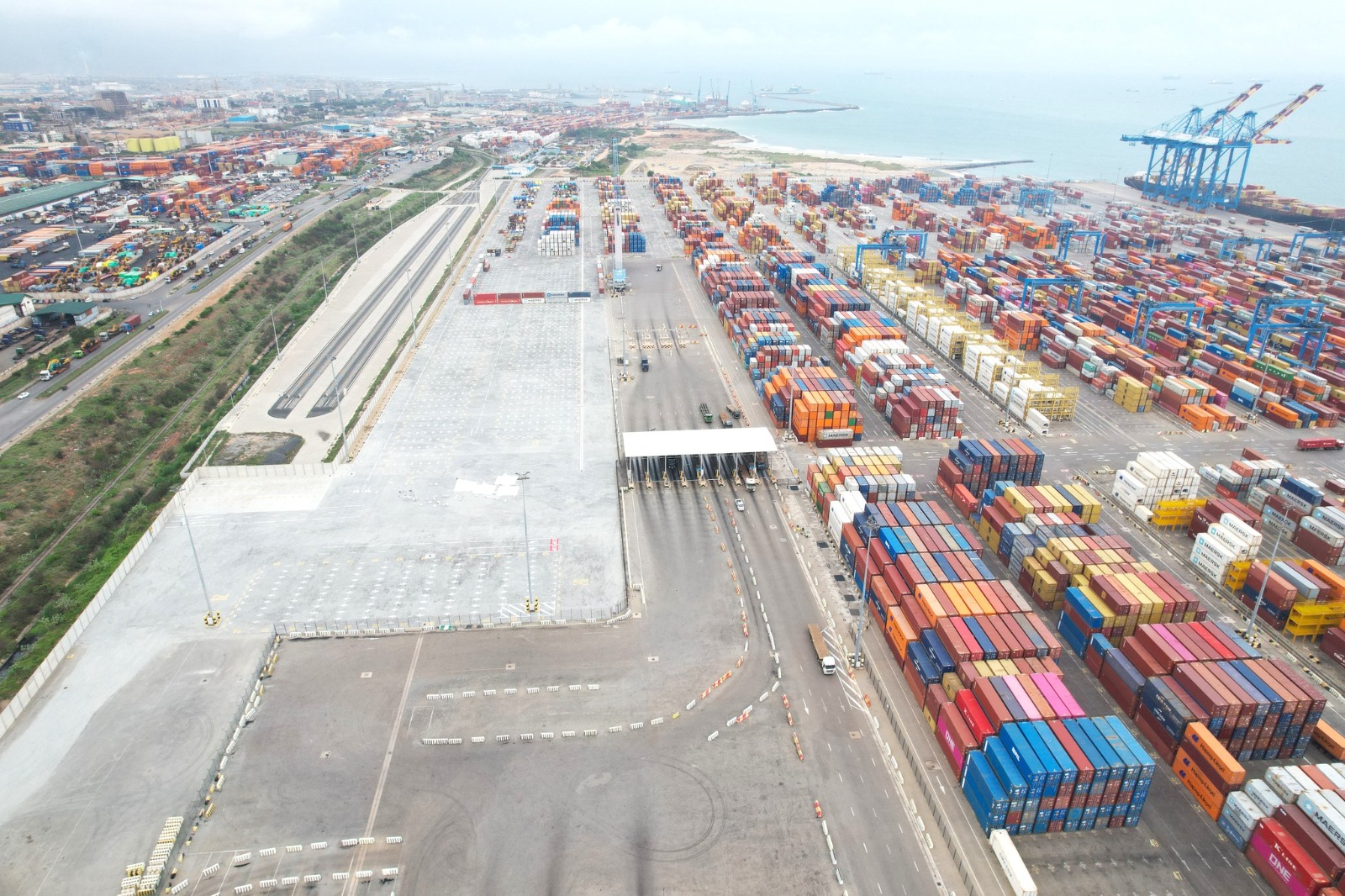
Clearing of goods at Ghana’s ports faces significant disruption following a directive by the Ghana Union of Traders’ Associations (GUTA) for importers, freight forwarders and clearing agents to suspend duty payments and lay down their tools from Monday, April 13 to Friday, April 17, 2026.
The industrial action, triggered by growing opposition to the Publican AI customs valuation system, has slowed cargo processing activities and raised fears of a broader shutdown across the country’s ports if the standoff persists.
GUTA argues that the system, in its current form, has introduced severe inefficiencies into the clearance process, resulting in unpredictable and excessively high duty assessments, prolonged cargo delays, and escalating demurrage and rent charges for importers.
The impact of the directive is already being felt across the port value chain, with clearing operations slowing and uncertainty mounting among traders whose goods remain stuck at the ports.
Broadening resistance across trade groups
The disruption appears set to deepen as opposition to the system extends beyond GUTA. Earlier this month, a coalition of key industry players led by the Ghana Institute of Freight Forwarders (GIFF), and including the Customs Brokers Association of Ghana (CUBAG), the Association of Customs House Agents Ghana (ACHAG), the Freight Forwarders Association of Ghana (FFAG), the Ghana National Chamber of Commerce and Industry, the Traders Advocacy Group Ghana (TAGG), and Exim Frozen Foods, called for the immediate review or suspension of the Publican AI system.
The coalition warned that the system is creating operational bottlenecks, financial losses and widespread uncertainty within the trading community, further intensifying pressure on port operations.
TAGG has also threatened mass industrial action at all ports and entry points within the same period, reinforcing concerns that the dispute could escalate into a coordinated shutdown of clearing activities nationwide.
Mounting pressure on supply chains
Industry players say the implications of the disruption go beyond port operations.
Delays in cargo clearance and rising costs are expected to ripple through the broader economy, affecting haulage, warehousing, manufacturing supply chains and ultimately consumer prices.
Businesses dependent on timely importation of raw materials and finished goods are particularly exposed, with fears that prolonged disruptions could lead to shortages and higher market prices.
Traders have also raised concerns about the absence of an effective and accessible dispute-resolution mechanism under the new system, making it difficult to challenge valuation disagreements.
Debate over reforms
At the centre of the dispute is the implementation of the Publican AI system, part of government’s broader push to digitise customs operations, enhance revenue mobilisation and reduce leakages.
The Ministry of Finance has defended the system, insisting that it is designed to streamline port processes and improve transparency, while the Ghana Revenue Authority (GRA) maintains that the platform does not arbitrarily determine customs values but rather supports compliance.
However, stakeholders argue that while digitisation is necessary, the rollout of the system has not been sufficiently aligned with international valuation standards or Ghana’s legal framework.
They are demanding a review of the governing directive, broader stakeholder consultation, and the establishment of an independent appeals mechanism to address disputes.
Test of policy and trade balance
The ongoing standoff is increasingly being viewed as a critical test of the balance between revenue protection and trade facilitation.
While government seeks to tighten compliance and plug revenue leakages, industry players warn that excessive rigidity in the system risks undermining the efficiency and predictability required for smooth port operations.
For now, the position of the port-side coalition remains firm: the immediate suspension of the Publican AI system, followed by a comprehensive review of its valuation and dispute-resolution framework.
As the impasse continues, attention will be on whether government engages stakeholders to de-escalate tensions or risks a prolonged disruption that could significantly impact trade flows and economic activity