Stakeholders in Ghana’s telecommunications, data and fintech ecosystem have called for the urgent development of a national policy on data sovereignty to position the country, and the wider African continent, to harness the full benefits of the emerging intelligence economy.
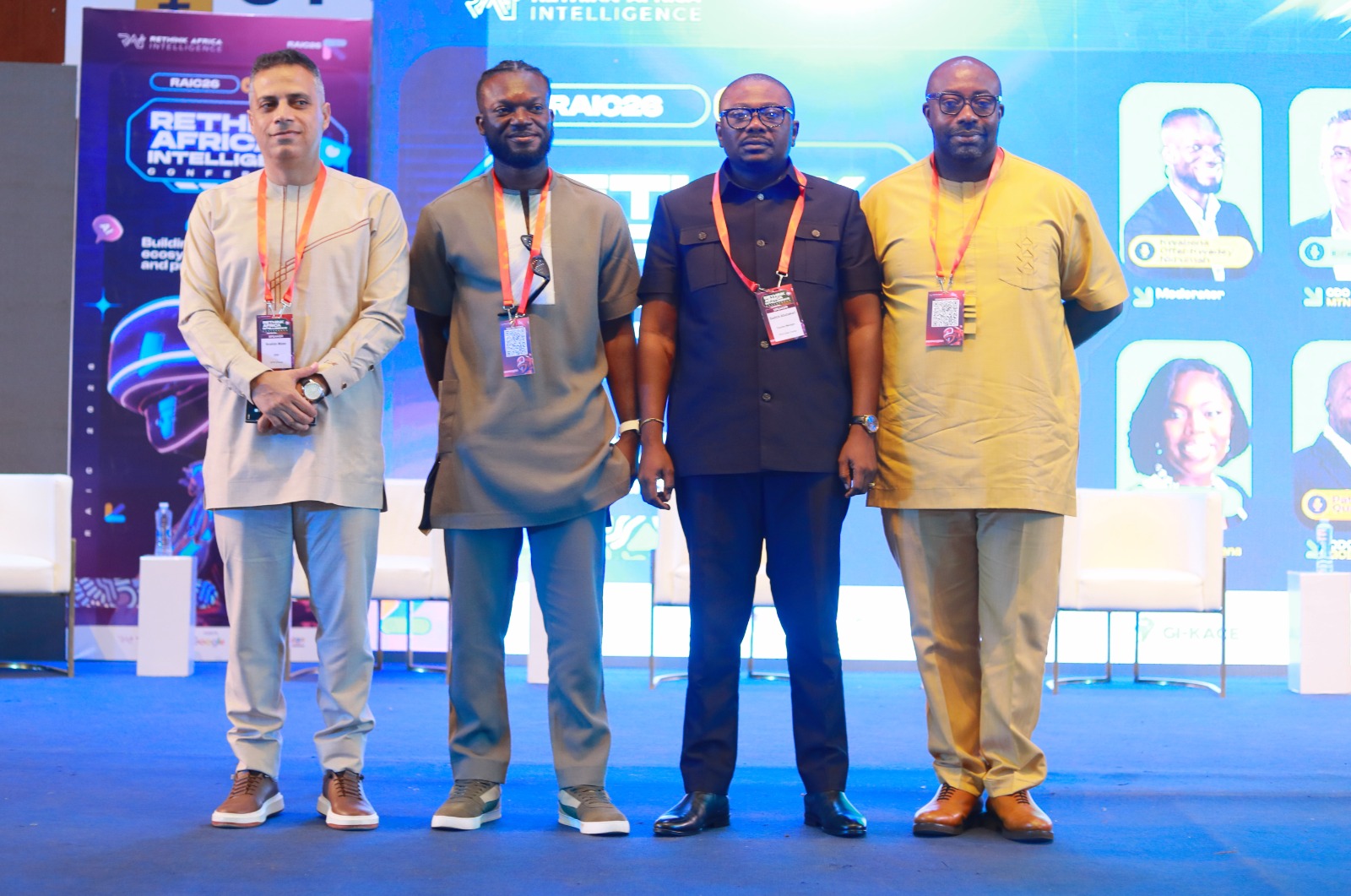
The call was made at the Rethink Africa Intelligence Conference held at the University of Professional Studies, Accra (UPSA), under the theme, “Building Africa’s Intelligence Ecosystem for Sovereignty and Prosperity.”
The two-day conference brought together developers, policymakers, academics and industry leaders to deliberate on strategies for shaping Africa’s Artificial Intelligence (AI) ecosystem to drive growth and sustainable development.
Board Chairperson of Rethink Africa, Ing. Densu, described artificial intelligence as a transformative force comparable to electricity, warning that Africa risked once again being relegated to the position of a consumer if deliberate steps were not taken.
“In history, there have been transformative technologies that changed the world, electricity being a prime example. Some nations developed it, others adopted it later, and many simply became consumers. Today, we stand at a similar turning point with artificial intelligence,” he said.
He stressed that AI was no longer a distant prospect but a present reality shaping industries and global power dynamics.
“Artificial intelligence is not approaching; it is already here. The fundamental question before Africa is this: will we shape this intelligence revolution, or will it shape us?”
He thus emphasised the need for Africa to build its own intelligence systems anchored on local data, noting that many existing AI models were not reflective of African realities.
“Data is power. If we fail to act, we risk buying back our own potential at a premium,” he cautioned.
He described the push for data sovereignty as a new phase of independence for the African continent.
“In 1957, Ghana’s independence marked political liberation. Today, we stand at the frontier of a new kind of independence—not territorial, but intellectual. Control of intelligence is the new power,” he stated.
He reiterated the importance of collaboration among government, academia, industry and investors in building a resilient AI ecosystem.
“No single institution can achieve this alone. We must build an ecosystem, not isolated efforts. We cannot afford to wait.”
During a panel discussion on financing Africa’s AI economy, industry players emphasised the need for robust infrastructure, affordable energy and sound regulatory frameworks.
Ibrahim Misto, Chief Digital Officer, MTN Ghana, noted that telecommunications companies must evolve beyond connectivity to become key enablers of digital infrastructure.
“It is no longer enough to be a pipe. We must play a role in shaping the intelligence layer and influencing how data is utilised and protected,” he said.
Country Manager of PIAX Data Centre, Sadick Abubakari, a co-panellist, also reiterated the urgency of a coordinated national approach to data governance.
“We remain an untapped intelligence reservoir. This must sit within a national strategy,” he said.
He stressed the importance of local data hosting, integration of African languages into AI systems, and sustained investment in digital infrastructure.
“The right to host our own data is fundamental. Policy and investment must align to drive data sovereignty,” he added.
Patrick Quantson, Chief Digital Officer, GCB Bank, also emphasised the role of financial institutions in building trust within the data ecosystem, particularly in supporting small and medium enterprises (SMEs) through data-driven lending models and understanding customer behaviour.
The Director-General of the Ghana-India Kofi Annan Centre of Excellence in ICT (GI-KACE), Dr. Ing. Collins Yeboah-Afari, described the rise of AI as a defining moment for Africa’s sovereignty and dignity.
“We are standing at a historic crossroads with artificial intelligence. It goes to the core of humanity, not just technology. It will define our sovereignty and dignity,” he said.
He warned against a growing digital dependency and urged African countries to make deliberate investments in talent, infrastructure and trust.
He added that Africa faces the choice of either continuing to use systems it does not control or building its own unique systems that shape its future, adding that every African nation must become an intelligence nation.
He noted that Africa’s youthful population presents a unique advantage.
“This generation does not need permission to innovate; they only need platforms, infrastructure and belief,” he said.
He assured that the Centre stood ready to support efforts to build a robust intelligence ecosystem.
The Country Manager of Google Ghana, Perry Nelson, also highlighted the company’s ongoing contributions to Africa’s digital transformation through AI-driven solutions.
He noted that tools such as weather forecasting, wildfire detection and geospatial analytics were already supporting agriculture, education and healthcare delivery.
“These innovations,” he said, “are improving livelihoods and enabling better decision-making across sectors.”
Similarly, a representative of the Egyptian Ambassador to Ghana outlined Egypt’s progress in AI development, citing the implementation of a national AI strategy and the development of a national AI language model.
She expressed optimism about strengthening bilateral cooperation between Ghana and Egypt in advancing AI initiatives and investments.