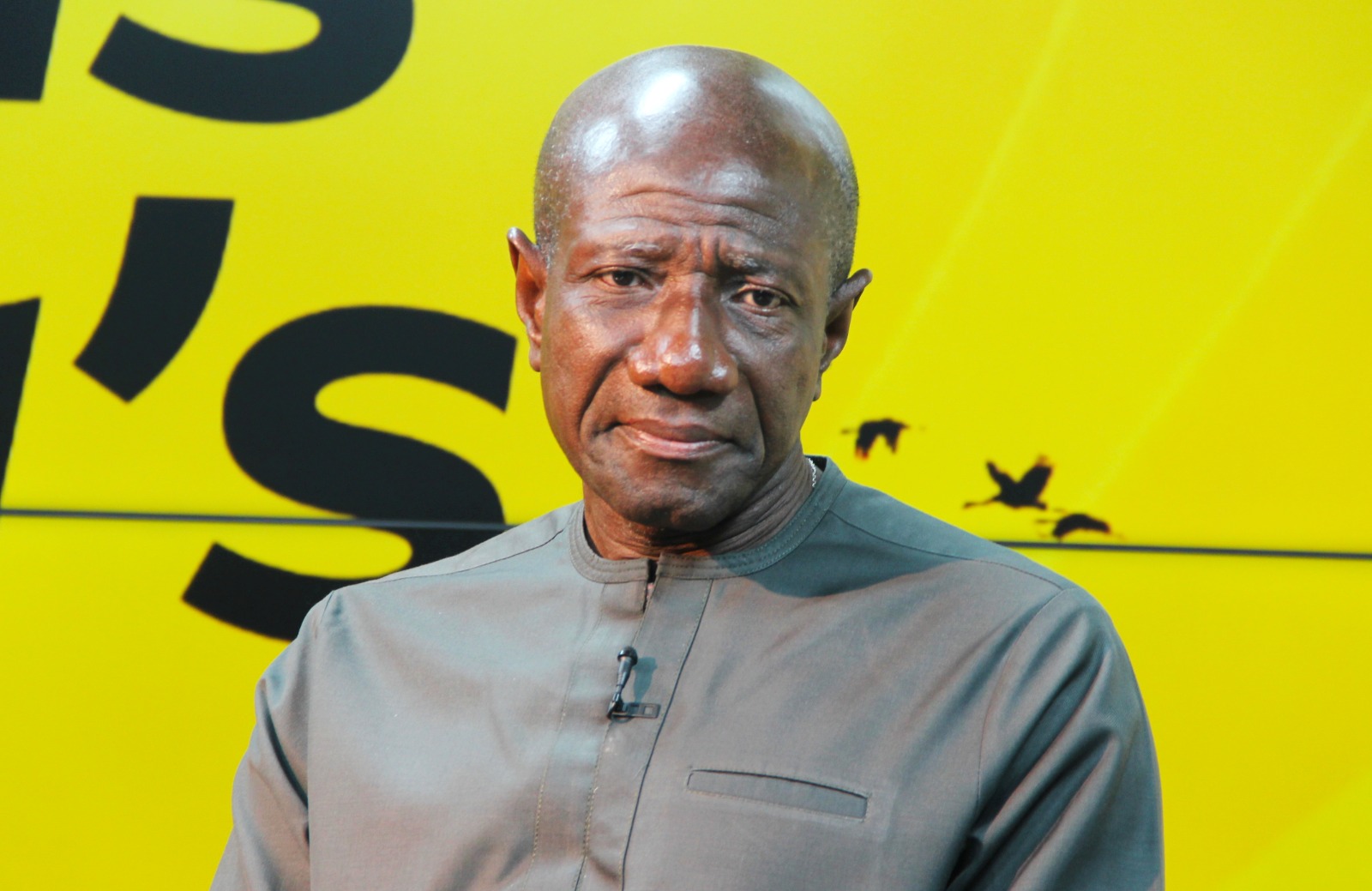
Senior Vice-President of Markets at MTN Group, Ebenezer Asante, has disclosed that the telecommunications giant is deliberately positioning itself to withstand both favourable and adverse economic cycles, as part of a long-term strategy to safeguard its investments and operations in Ghana.
Speaking during a visit to Ghana alongside Group President and Chief Executive Officer, Ralph Mupita, at the beginning of 2026, Asante said the company’s approach is anchored on building structural resilience that allows it to adapt to changing macroeconomic conditions without compromising growth or shareholder returns.
Building resilience by design
Addressing concerns about Ghana’s evolving fiscal and macroeconomic landscape, Asante pointed to MTN Ghana’s track record over the past decade as evidence of its ability to navigate economic turbulence.
Over the last 10 to 12 years, he noted, the company has weathered inflationary pressures, episodes of sharp currency depreciation, and broader macroeconomic shocks.
Among the most significant of these was Ghana’s recent Domestic Debt Programme (DDP), which reshaped the country’s fiscal environment and tested corporate balance sheets across multiple sectors.
Despite these headwinds, Asante said MTN Ghana continued to invest, expand its network and pay dividends to shareholders.
He emphasised that this resilience was not accidental but by design.
Given the capital-intensive nature of telecommunications—where continuous investment in spectrum, towers, fibre and equipment is essential, MTN Ghana developed robust financial and operational models to mitigate foreign exchange risk and absorb economic shocks.
Part of this strategy involved working closely with monetary and fiscal authorities.
Asante disclosed that the company collaborated with the Bank of Ghana and other government institutions to structure arrangements that supported equipment procurement and network expansion, even during periods of forex constraints.
Preparing for global shifts
Looking ahead, Asante cautioned that resilience will also require vigilance in the face of external variables, including fluctuations in global commodity prices such as gold.
Given Ghana’s position as a major gold producer, movements in global gold prices can have significant implications for the country’s fiscal strength, currency stability and overall economic performance.
Asante indicated that MTN’s planning framework takes such macro linkages into account.
By preparing for both upswings and downturns, he said, the Group aims to maintain operational continuity and financial stability regardless of global market volatility.
Signalling confidence to global investors
As one of the most significant foreign investors in Ghana, MTN Group maintains regular engagement with global shareholders and institutional investors who hold interests in Ghanaian equities, bonds and other financial instruments.
In those interactions, Asante explained, MTN has an opportunity to share its positive operational experience in Ghana and reinforce confidence in the country’s regulatory environment and long-term economic prospects.
He described the visit led by Group CEO Ralph Mupita as particularly important in this regard.
High-level engagements signal commitment, strengthen relationships with policymakers and reassure international investors that MTN’s strategy in Ghana is aligned with national development priorities.
The early 2026 visit, he said, was therefore both symbolic and strategic—demonstrating that Ghana remains a priority market within the Group’s pan-African portfolio.
Ghana’s strong standing within the group
Within the broader MTN portfolio, Asante indicated that Ghana continues to perform strongly.
Over the past decade, MTN Ghana has consistently delivered real growth, outperforming inflation in most years except for some two years largely due to severe macroeconomic disruptions.
He attributed this relative strength to the company’s diversified business model.
While traditional voice services remain relevant, data services, fintech offerings and a range of digital products are increasingly driving revenue growth.
Mobile data consumption continues to expand as smartphone penetration rises, while fintech—anchored on mobile money—has become a critical growth engine.
The company is also venturing into home connectivity solutions, reflecting changing consumer behaviour and rising demand for broadband services.
Rather than depending on a single revenue stream, MTN Ghana now operates on multiple pillars of growth, reducing vulnerability to sector-specific or macroeconomic shocks.
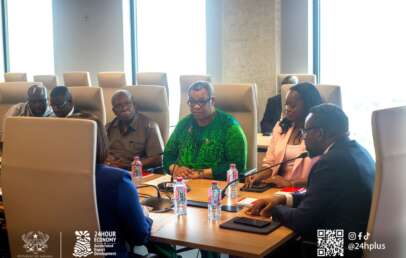
During their two-day visit, Mupita and Asante engaged directly with MTN Ghana’s board, leadership team, regulators and key government stakeholders.
They paid courtesy calls to officials at the Bank of Ghana, the Ghana Investment Promotion Centre, and the Minister for Communications, Digital Technology and Innovations, Samuel George.
The discussions were described as constructive and forward-looking, centred on reaffirming MTN Group’s long-term commitment to Ghana and aligning corporate strategy with the country’s broader development agenda.
A key theme of the engagements was MTN’s continued role as a major investor in digital infrastructure and financial inclusion.
On the fintech front, the MTN Group engaged the Bank of Ghana on plans to expand advanced mobile money services.
The company also pledged closer collaboration with the central bank to combat fraud within the mobile money ecosystem.