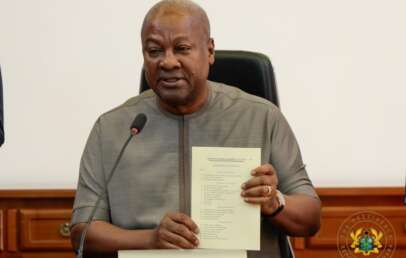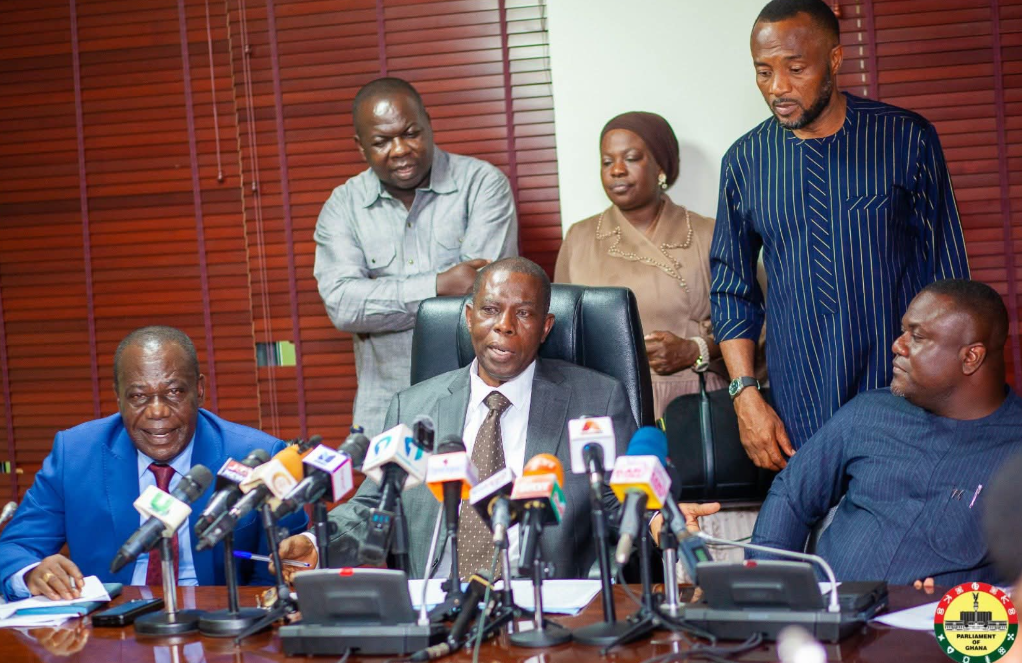
The Minority Caucus in Parliament has mounted strong pressure on government to immediately release GH¢10 billion owed to Licensed Buying Companies (LBCs), warning that prolonged payment delays have plunged cocoa farmers across the country into severe financial distress and now threaten the stability of Ghana’s most strategic agricultural sector.
Speaking on behalf of the Minority, the Ranking Member on the Parliamentary Committee on Food, Agriculture and Cocoa Affairs, Mr Isaac Yaw Opoku, said government’s failure to reimburse the Ghana Cocoa Board (COCOBOD) had created a cascading crisis, leaving LBCs unable to pay farmers for cocoa beans supplied as far back as November last year.
According to him, thousands of cocoa farmers who rely almost entirely on cocoa income to survive have been pushed to the brink, struggling to feed their families, pay school fees, access healthcare and prepare for the next farming season.
Power struggles and political interference alleged
Mr Opoku, who is also the New Patriotic Party (NPP) Member of Parliament for Offinso South, attributed the crisis not only to funding challenges but also to what he described as a “serious power struggle” at the top of the cocoa sector.
He alleged that tensions between the Chief Executive Officer of COCOBOD and the Managing Director of the Cocoa Marketing Board had paralysed decision-making, with perceived political interference further complicating operations within the sector’s leadership.
“This situation has been worsened by political meddling and internal wrangling at the highest levels of COCOBOD,” he told the media, insisting that governance failures were directly translating into hardship for farmers on the ground.
Farmers owed since November
The Ranking Member disclosed that cocoa farmers in several producing areas have not been paid since November, a situation he described as unprecedented and deeply troubling.
He painted a grim picture of the human cost of the delays, recounting cases of farmers who could not afford medicine for sick relatives, struggled to put food on the table, or were forced to withdraw their children from school due to unpaid fees.
In perhaps the most striking illustration of the crisis, Mr Opoku said some cocoa farmers were compelled to forgo Christmas celebrations for the first time in Ghana’s history because they had received no income from their cocoa sales.
“This is not just about numbers and balance sheets. This is about human lives, dignity and survival,” he stressed.
Broken promises on cocoa prices
The Minority also criticised government for what it described as dishonesty in cocoa pricing. Mr Opoku recalled that while in opposition, the ruling National Democratic Congress (NDC) promised cocoa farmers a producer price of GH¢6,000 per bag.
However, he said government later revised the price downward to GH¢3,625 per bag, only to default on payment even at the reduced level.
“To promise GH¢6,000, cut it almost by half, and still fail to pay is not only unfair, it is deceptive,” he argued, accusing the government of making “outrageous promises” to secure political power and abandoning farmers once in office.
Fears of further price cuts
Mr Opoku further expressed concern over reports suggesting that government may consider reducing the producer price in order to manage cash flow challenges.
He described any such move as a betrayal of trust that would worsen farmer hardship and further erode confidence in the cocoa marketing system.
According to him, instead of protecting farmers from hardship and preventing cocoa smuggling, government policies were inadvertently encouraging distress sales, smuggling and disillusionment within the sector—contrary to commitments outlined in the NDC’s manifesto.
Indigenous buying companies under threat
Beyond farmers, the Minority warned that delayed reimbursements were also threatening the survival of indigenous Licensed Buying Companies and transporters whose capital has been locked up for months.
Mr Opoku cautioned that if LBCs collapse due to cash flow constraints, the entire cocoa purchasing and evacuation system could be disrupted, with long-term consequences for production, quality control and export performance.
The Caucus is therefore demanding immediate payment to farmers for all cocoa beans delivered, full reimbursement of LBCs for outstanding deliveries, and prompt settlement of all future cocoa taken-over receipts.
They also called for a formal apology from government and COCOBOD, insisting that paying farmers promptly is a duty, not a favour.
Farmers threaten nationwide demonstration
Meanwhile, frustration among cocoa farmers has reached boiling point, with growers across multiple cocoa-producing regions threatening a nationwide demonstration next week if outstanding payments are not cleared.
Farmers say months of unpaid dues have left them unable to meet basic needs, including accessing healthcare, paying school fees and investing in inputs for the next planting season.
In interviews with researchers and media outlets, farmers confirmed that despite repeated assurances from COCOBOD, no clear timelines for payment have been communicated, deepening anxiety in rural communities.
Financing model changes behind delays
Analysis of the crisis indicates that the payment delays are partly linked to changes in COCOBOD’s traditional financing model.
In recent seasons, the Board has moved away from large syndicated loans towards reliance on international cocoa traders to pre-finance purchases.
However, a combination of rising global interest rates, falling cocoa prices and reluctance by traders to make advance deposits has constrained available funding.
This has placed additional pressure on government to step in and bridge financing gaps—interventions critics say have been slow and inadequate.
Cocoa’s central role in Ghana’s economy
The unfolding crisis is particularly worrying given cocoa’s enduring importance to Ghana’s economy.
Historically the backbone of agricultural export earnings, cocoa has supported millions of rural households and remains one of the country’s most valuable foreign exchange earners through exports of beans and processed products.
Delayed payments, analysts warn, threaten not only individual livelihoods but the integrity of Ghana’s entire cocoa production system.
Prolonged uncertainty pushes farmers into debt, desperation or out of cocoa farming altogether, undermining future output and weakening confidence in the value chain.