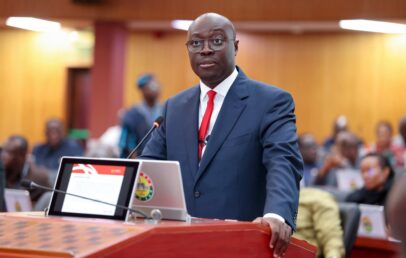
President John Dramani Mahama’s recent announcement to lift manufacturing’s contribution to Ghana’s GDP from 10% to at least 15% by 2030 marks a decisive step toward industrial transformation and economic self-reliance.
Central to this ambition is the creation of 500,000 quality industrial jobs—a target that directly addresses Ghana’s pressing need for employment while strengthening the nation’s productive capacity.
The President’s strategy goes beyond mere numbers.
By prioritizing value addition in sectors such as cocoa, minerals, and agribusiness, Ghana positions itself to move away from the vulnerability of raw commodity dependence.
The proposed National Agribusiness Policy, alongside reforms in the cocoa value chain, underscores the importance of structural transformation.
By guaranteeing farmers 70% of the international market price and fostering local processing of cocoa and other tree crops, the policy ensures that wealth creation occurs within the country rather than leaving it at the port of export.
Equally pivotal is the 24-Hour Economy Policy.
By encouraging factories to operate multiple shifts, the policy maximizes the productivity of capital, labor, and infrastructure.
Coupled with incentives such as off-peak electricity tariffs, enhanced nighttime security, and tax exemptions for equipment expansion, this policy framework directly links economic growth to job creation.
Manufacturers benefit, workers earn more, and the country experiences higher output and competitiveness—especially in the context of the African Continental Free Trade Area (AfCFTA), where production efficiency can determine market access and regional dominance.
Energy sector reforms complement this approach.
By restructuring debts, expanding renewable generation, and promoting embedded generation in industrial enclaves, the government addresses one of the key constraints to growth: reliable and affordable power.
Coupled with dedicated financing windows, expanded credit guarantee schemes, and the deepening of long-term capital markets, these measures ensure that industrial expansion is not merely aspirational but achievable.
The economic implications are profound. A stronger manufacturing base translates into broader economic diversification, increased exports, and higher domestic value creation.
It also strengthens resilience against global commodity shocks, a lesson learned from recent fluctuations in cocoa prices.
By embedding reforms across energy, finance, and industrial productivity, the government is not just targeting GDP growth—it is building a robust ecosystem that sustains employment, promotes innovation, and drives inclusive prosperity.
President Mahama’s vision signals a shift from stabilization to transformation.
While macroeconomic stability remains essential, it is the strategic alignment of industrial policy, energy reform, and labor productivity that will turn Ghana into West Africa’s production hub.
For citizens, this is more than policy—it is a pathway to jobs, higher incomes, and a future where Ghana’s economy works harder for its people.
Ghana’s industrial revolution is on the horizon. The challenge now is execution.
With disciplined implementation, oversight, and private sector collaboration, the 15% manufacturing GDP target is not just achievable—it can redefine the country’s economic landscape for decades to come.