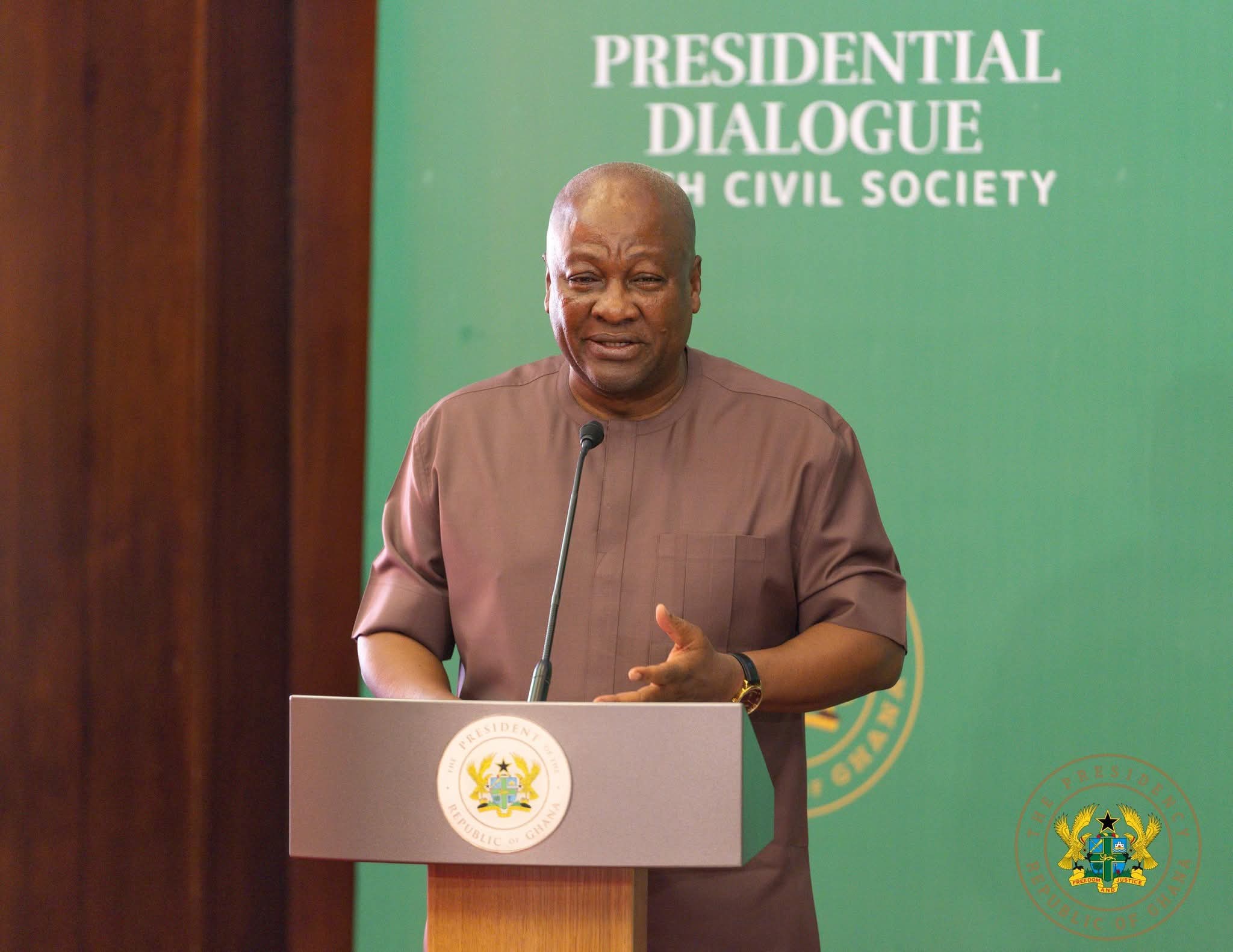
President John Dramani Mahama has hailed the contributions of civil society organizations (CSOs) in nation building.
He described them as indispensable to nation-building, accountability, and the enhancement of democracy.
“Civil society is recognized as a partner in nation-building rather than an adversary, with a commitment to maintain open engagement, institutionalize regular dialogue platforms, and ensure that diverse perspectives inform policymaking,” the President stated in his remarks at a Presidential Engagement with CSOs.
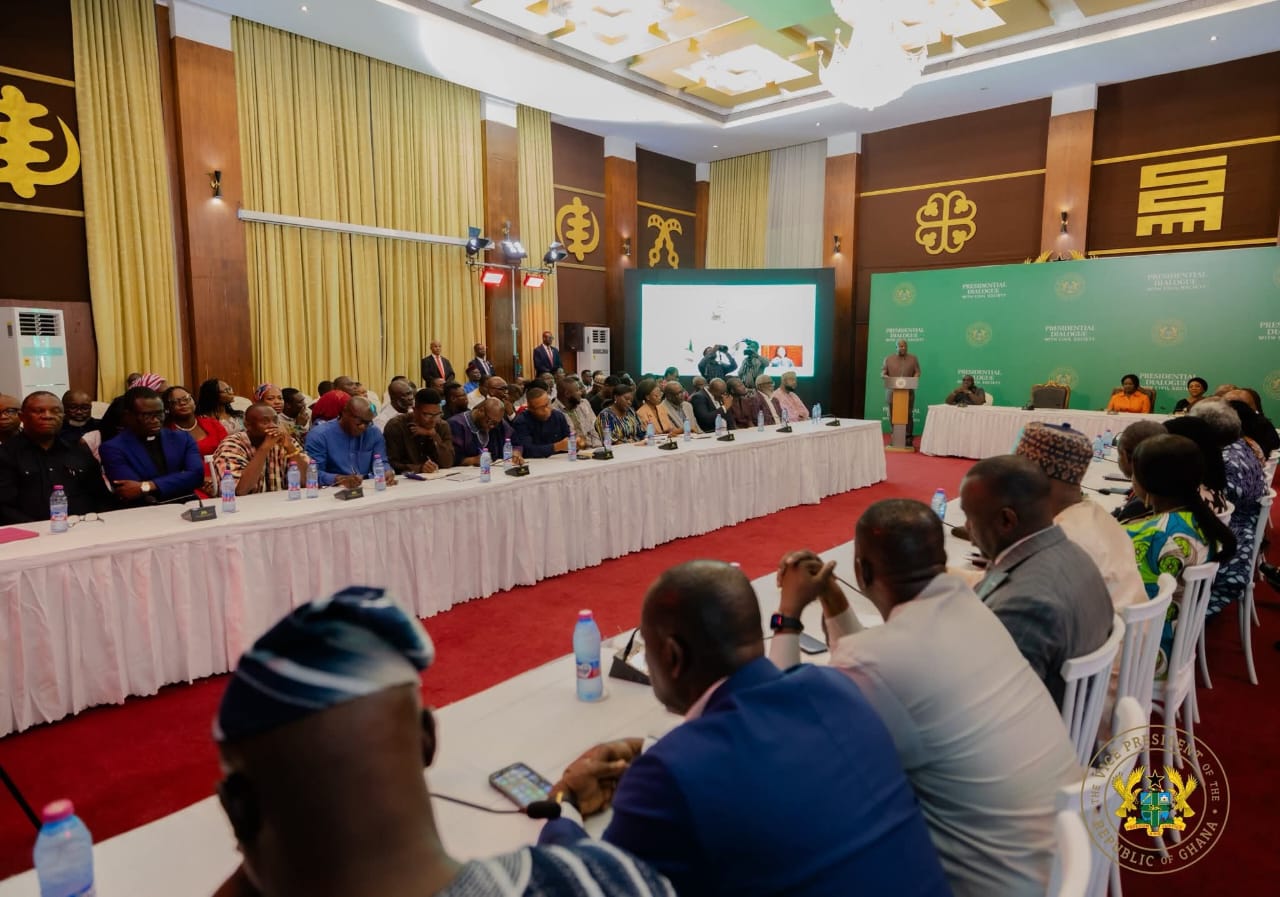
The engagement is framed as a practical dialogue meant to listen to viewpoints, share ideas on national priorities, and deepen collaboration between government and civil society, with the presence of ministers and senior officials ensuring that the interaction leads to meaningful outcomes.
Similar ones had already been organized by the Presidency for organized labour and private enterprises.
President Mahama said the passage of the Governance Advisory Bill was noted as a step toward participatory governance, creating a formal structure for continuous citizen and stakeholder input into decision-making processes.
He reiterated that CSOs continued to play a vital role in Ghana’s democratic journey through advocacy, research, community engagement, and watchdog functions, contributing to accountable governance and reinforcing the need for participatory, inclusive, and responsive governance that reflects the voices of citizens.
The President said national transformation was presented as a collective responsibility that could not be achieved by government alone but required the active participation of all segments of society, recognizing the long-standing contributions of stakeholders to Ghana’s democratic development.
He said commitment was reaffirmed to uphold the rule of law, protect fundamental human rights, and strengthen independent institutions, while acknowledging concerns about civic space, freedom of expression, and accountability, and recognizing media scrutiny and fair criticism as assets rather than obstacles to governance.
He said the Government was examining recommendations from the Constitutional Review Committee and would soon establish the Constitutional Review Implementation Committee (CRIC) to oversee the next phase, with implementation of reforms to follow parliamentary processes in line with constitutional provisions.
He said the constitutional review process is positioned as a way to deepen democratic governance, strengthen checks and balances, and ensure that the constitutional framework continues to reflect the evolving aspirations of the Ghanaian people.
“Transparency and accountability are being pursued through measures to improve public financial management, increase procurement transparency, and uphold ethical standards, including the Public Officers’ Code of Conduct Bill before Parliament, which seeks to define clear standards, address conflict of interest, and guide the proper use of public office,” he said.
“Civil society organizations are encouraged to engage actively with legislative processes, support public awareness, monitor public projects, oversee budget execution, and strengthen social accountability to rebuild public trust in institutions.”
President Mahama said concerns arising from investigations into procurement processes under the Big Push programme had led to steps to obtain full reports, assess allegations, and request responses from relevant ministries, alongside plans to amend the Public Procurement Act to limit single sourcing and promote transparency and value for money.
He said the establishment of an Independent Value for Money Office was being fast-tracked to ensure rigorous review of procurement decisions, with an emphasis on reducing reliance on single sourcing and consulting stakeholders on proposed legislative changes.
The President said economic policies such as the 24-Hour Economy and Accelerated Export Development Programme were being implemented to expand job opportunities for young people, support small and medium enterprises, and promote export-led growth, while addressing cost of living pressures, inequality, and social protection needs.
He said social sector interventions include strengthening the Ghana Medical Trust Fund, expanding access to healthcare, and introducing apprenticeship programmes to equip young people with skills for employment.
He said the Free Primary Healthcare Programme was set to be launched on 15th April, aimed at removing financial barriers to basic healthcare, improving access at the community level, and promoting preventive care, with civil society expected to support education, monitoring, and feedback.
GNA