Concerns over persistently low wages in Ghana’s public sector have intensified, with Organised Labour calling for sweeping reforms to ensure fair and adequate compensation for workers across the country.
At the centre of the agitation is the stark reality that many workers continue to struggle to meet basic living costs, despite years of salary adjustments under the current pay system.
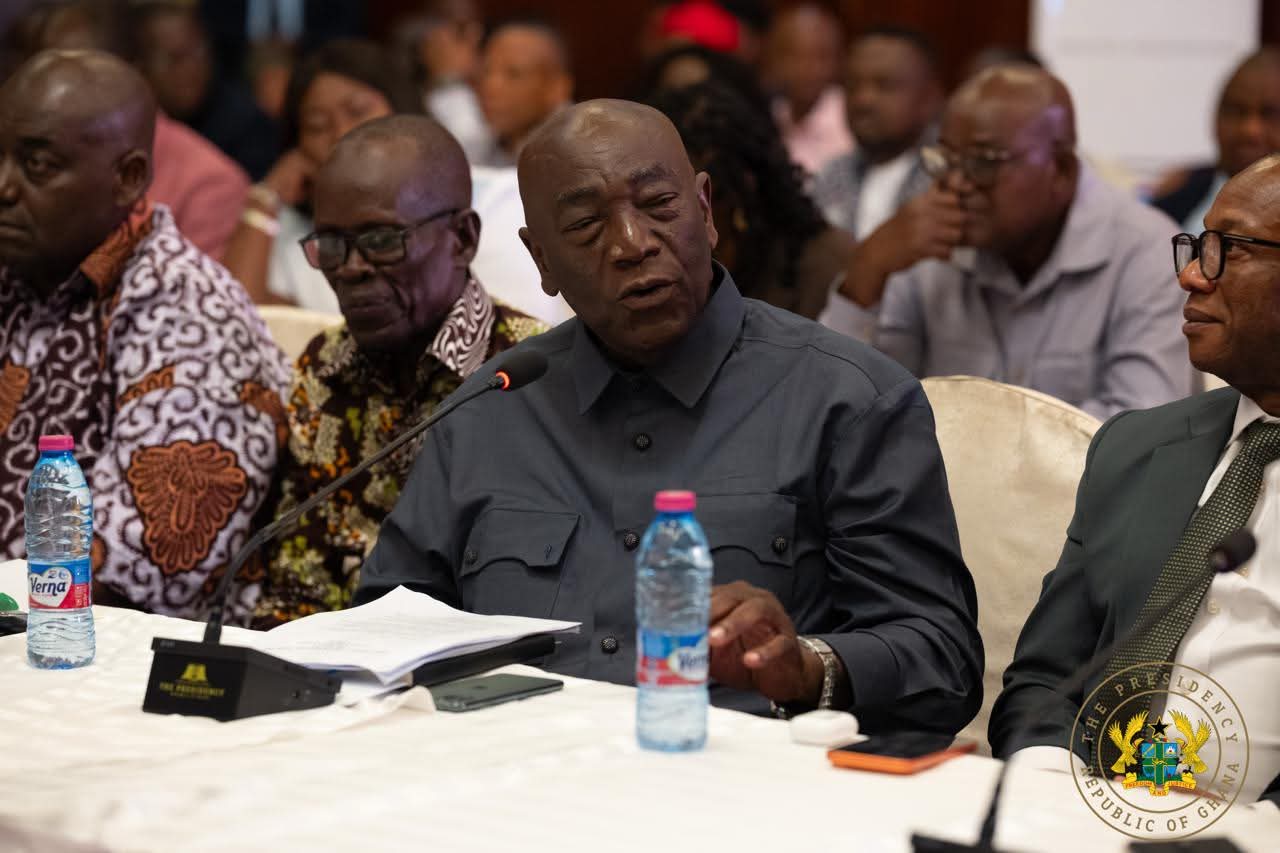
Speaking at a presidential dialogue with labour unions in Accra, the Secretary-General of the Ghana Trades Union Congress, Joshua Ansah, urged the government to adopt a comprehensive national incomes policy to address widening wage disparities and improve living standards.
Minimum wage falls short
Mr Ansah pointed to the national daily minimum wage of GH¢21.78—equivalent to about GH¢588 per month—as a clear indication of the inadequacy of current pay levels.
According to him, such earnings fall far short of meeting the basic needs of workers and their families in an environment of rising living costs.
“We need to move away from the piecemeal approach to wage adjustments to a system where a living wage policy ensures that workers can meet their fundamental needs,” he stressed.
Deepening inequality in public sector pay
Beyond low wages, Organised Labour raised concerns about growing disparities within the public sector pay structure.
Mr Ansah revealed that while about 80 percent of workers on the Single Spine Salary Structure receive some form of allowances, the remaining 20% depend solely on their basic salaries, creating significant inequality among workers performing similar roles.
This uneven distribution of allowances has been identified as a major source of dissatisfaction and tension within the public service, further undermining morale and productivity.
Pension inequities exposed
The disparities extend into retirement, where Organised Labour says the current pension system is deeply unequal.
Mr Ansah highlighted that while the lowest-paid pensioners receive about GH¢400 monthly, others earn in excess of GH¢200,000 per month.
He described the situation as unjust and called for urgent reforms to unify pension systems and ensure fairness.
“This must be reset,” he stated, emphasizing the need for a more equitable retirement system that protects all workers.
Risk of industrial unrest
Organised Labour also warned of the potential for industrial unrest if delays in negotiations over conditions of service persist.
Mr Ansah expressed concern over slow engagements by the Fair Wages and Salaries Commission and the Ministry of Finance, urging both institutions to expedite discussions to avoid disruptions to public services.
Structural challenges in pay system
Responding to the concerns, the Chief Executive Officer of the Fair Wages and Salaries Commission, George Smith-Graham, acknowledged that the current remuneration system faces significant structural challenges.
He noted that inconsistencies in salary structures, coupled with the reintroduction of multiple allowances, have weakened the integrity of the Single Spine Salary Structure and contributed to recurring labour disputes.
“What is required now is structural reform of how remuneration is determined,” he said.
Cost of strikes to the economy
Dr Smith-Graham further highlighted the economic consequences of unresolved labour issues, revealing that industrial actions continue to impose heavy financial costs on the country.
According to him, 22 strikes recorded in 2024 resulted in economic losses of GH¢1.47 billion.
In 2025, eight strikes led to additional losses of about GH¢635 million.
These figures underscore the urgent need for sustainable solutions to wage and labour concerns, as continued disruptions threaten economic stability and public service delivery.
Path to reform
The dialogue forms part of ongoing government engagement with labour unions aimed at reforming public sector employment conditions and restoring confidence in the wage system.
Dr Smith-Graham indicated that the Commission remains committed to supporting reforms through broad stakeholder consultations, with the goal of creating a more transparent and equitable pay structure.
Meanwhile, the Civil and Local Government Staff Association, Ghana announced the suspension of its strike following assurances from government to address concerns over conditions of service, offering temporary relief in an otherwise tense labour environment.
A system under pressure
The renewed calls for reform highlight a public sector compensation system under strain—characterised by low base pay, unequal allowances, and stark pension disparities.
Without comprehensive reforms, analysts warn that the current system could continue to fuel dissatisfaction, trigger industrial actions, and impose significant costs on the economy, making it imperative for government to act decisively in addressing the concerns of workers.