
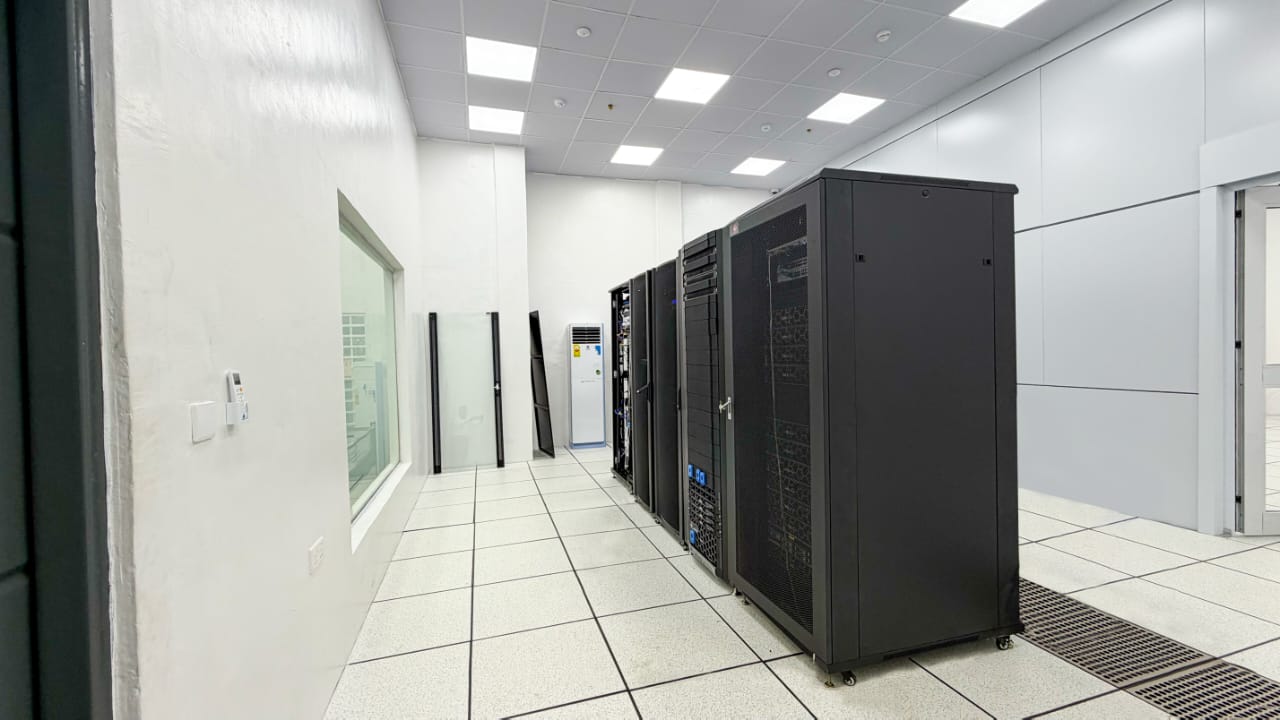
Ghana Link Network Services Limited has completed and deployed a state-of-the-art Tier IV data centre as part of efforts to deliver seamless services to the trading community and enhance Ghana’s competitive advantage as a trade hub in West Africa.
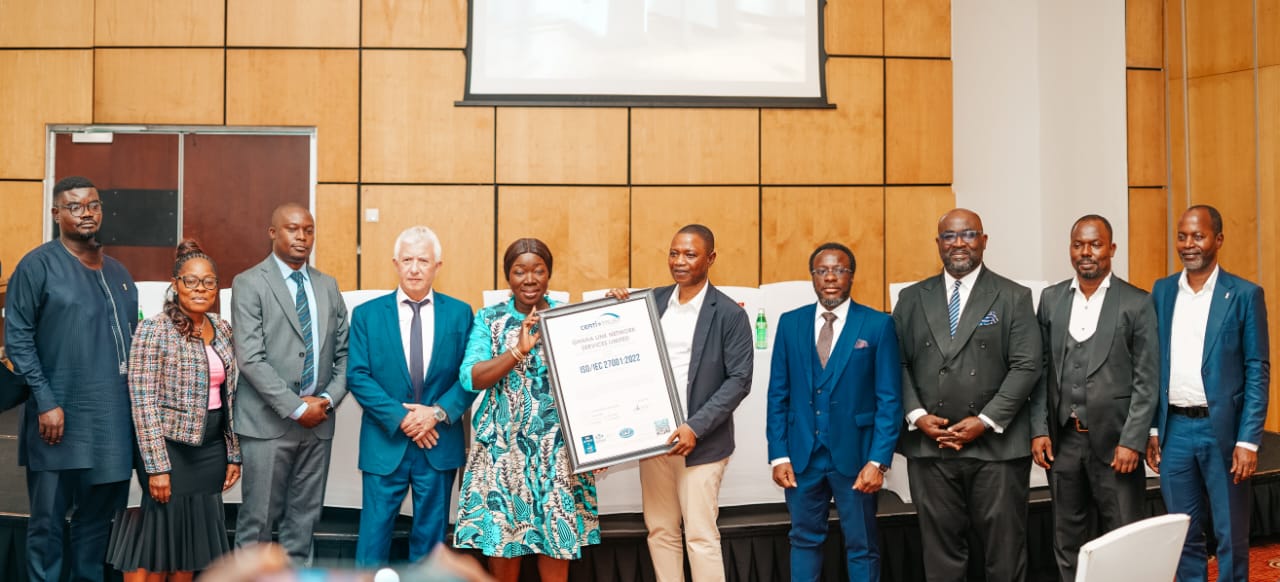
In recognition of the modern standards underpinning the facility, the International Organization for Standardization (ISO) has awarded the company ISO/IEC 27001:2022 certification for its information security management systems.
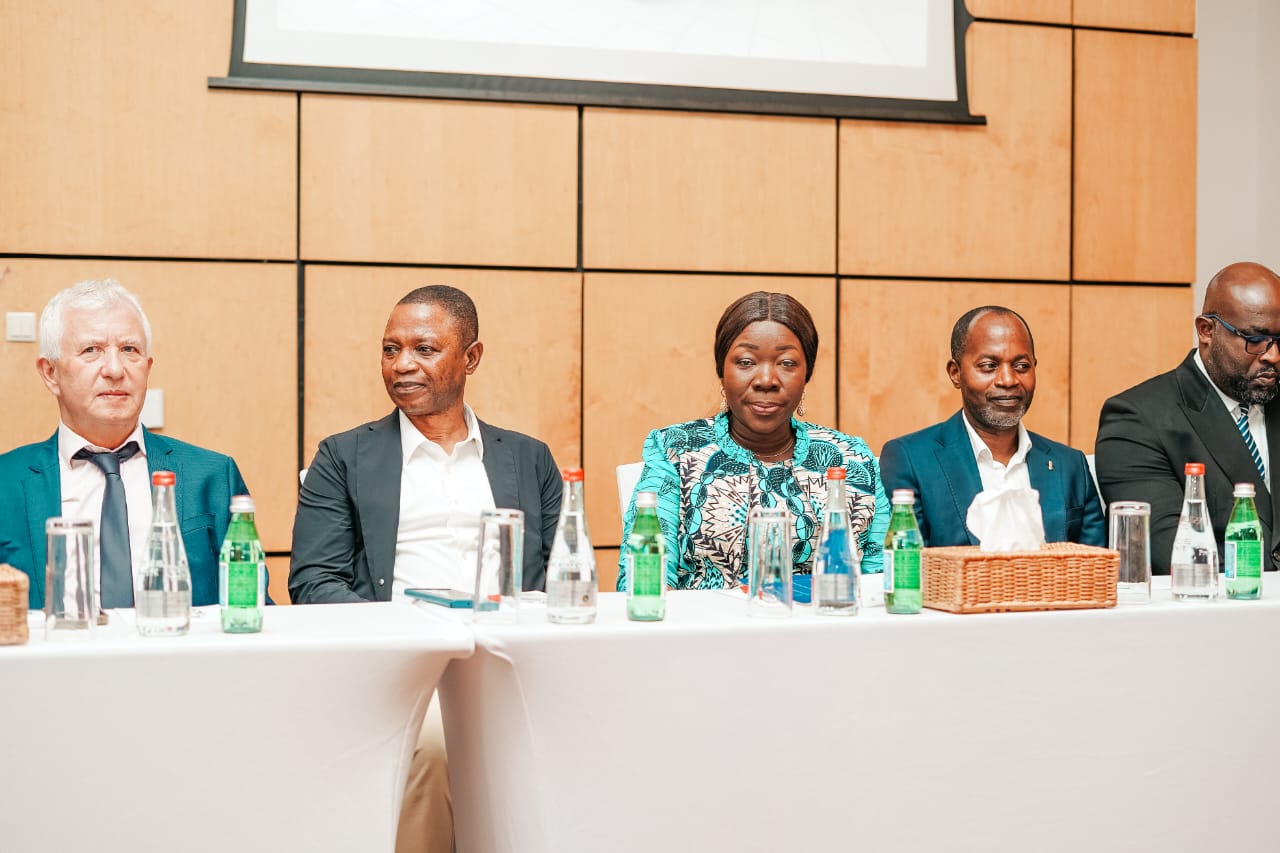
The certification was formally presented at a ceremony in Accra attended by the Chairman of Ghana Link, Mr Nick Danso Adjei, and the President of Ghana Link, Mr James Lopez, alongside senior government officials, regulators, and representatives of the certification body.
The ceremony underscored the strategic importance of digital infrastructure in safeguarding Ghana’s trade and revenue systems, particularly the Integrated Customs Management System (ICUMS), which underpins customs processing nationwide.
A ‘trust moment’ for Ghana’s trade ecosystem
Delivering a speech on behalf of the Managing Director, Nabali Bawa, Mrs Cynthia Addy, Director of Human Resources at Ghana Link, described the occasion as more than a ceremonial event.
“Today is not just a certificate moment; it is a trust moment,” she declared.
She explained that Ghana Link supports critical national trade and revenue operations through ICUMS, making the reliability and security of its systems a matter of national economic importance.
In such an environment, she stressed, performance cannot depend solely on technology.
It must be anchored in clearly defined standards, structured controls, repeatable processes, strong governance, and measurable accountability.
According to her, this formed the core reason the company pursued ISO/IEC 27001:2022 certification, widely regarded as the global gold standard for information security management systems.
She explained that achieving certification means an independent international body rigorously examined the organisation’s processes, technology, and personnel.
“They have verified that we do not just talk about security; we live it, we audit it, and we improve it daily,” she said.
The certification, she noted, confirms that Ghana Link has built a secure and resilient environment for data processed through ICUMS—data that powers Ghana’s national trade ecosystem.
Addressing stakeholders directly, including the Customs Division of the Ghana Revenue Authority (GRA), customs house agents, trade associations, importers, exporters, government ministries, shipping lines, airlines, and road transport operators, she offered firm assurance.
“I want you to hear me clearly—your information is safe with us,” she emphasised.
Describing trade data as the lifeblood of the national economy, Mrs Addy said Ghana Link treats such information with the highest levels of confidentiality, integrity, and accountability.
However, she cautioned that the company would not become complacent.
“Technology changes. Threats change. And so must we,” she stated, affirming Ghana Link’s vision to remain the most secure gateway for Ghana’s trade.
“Ghana Link is certified. We are secure. And we are ready for the future,” she concluded.
Building resilience through tier iv infrastructure
Chief Technical Officer Dr Alvin Kwabena Ansah described the certification as a declaration of resilience and disciplined governance.
“This is a declaration that Ghana Link has built resilient infrastructure and institutionalised disciplined governance,” he said.
He revealed that the company constructed a Tier IV (T4) data centre engineered specifically for fault tolerance and business continuity, eliminating single points of failure to ensure operational stability.
A key highlight, he said, was the successful migration of critical systems to the new data centre without service disruption.
The migration achieved zero downtime—an accomplishment he described as technically demanding and requiring meticulous planning and coordination.
Yet, he emphasised that infrastructure alone was insufficient. Through the ISO/IEC 27001:2022 process, Ghana Link implemented structured risk management frameworks, strengthened access governance, integrated business continuity planning, and subjected its systems to independent external audits.
Passing the audit confirmed that the company now operates under a globally recognised standard of security and accountability.
Dr Ansah credited the achievement to the dedication of system engineers, network engineers, database administrators, and technical partners.
“Without them, we could not have done this,” he said, adding that true resilience is built through partnership.
He reiterated that certification is not a destination but a standard to be maintained, stressing that Ghana Link’s digital model is resilient, secure, and benchmarked against global standards.
Certification not a ‘tick-box’ exercise
Lead Auditor Erick Odea of Certi Trust commended Ghana Link’s leadership and technical team, noting that the company now ranks among leading data centre operators on the continent that have achieved ISO/IEC 27001:2022 certification.
Speaking on behalf of Certi Trust, the certification body, he said the occasion was about recognising commitment, discipline, resilience, and leadership in information security.
He emphasised that ISO/IEC 27001:2022 certification is not a simple administrative or “tick-box” exercise.
It requires strategic leadership, structured risk assessments, documented controls, staff awareness, operational consistency, and a culture that prioritises information security.
“I am pleased to state that the audit demonstrated that Ghana Link’s information security management system is effectively established, implemented, maintained, and aligned with ISO/IEC 27001:2022 requirements,” he said.
Certification, he explained, sends a strong message to customers, regulators, and stakeholders that Ghana Link manages risk proactively rather than reactively.
However, he cautioned that the true value of certification lies not in the document displayed but in daily discipline—risk-based thinking, secure operational practices, staff awareness, monitoring, and continuous improvement.
With cyber risks constantly evolving, he urged the company to sustain its momentum and keep information security at board level.
A deliberate choice to meet global standards
Mike Kamau, Regional Head of Certi Trust for West and Eastern Africa and Asia, described the certification as a celebration of dedication and deliberate choice.
“One of the things about ISO is that you are never forced to do it. It is a choice,” he said.
He noted that Ghana Link voluntarily invited independent verification to ensure its systems meet global standards.
In the context of a data centre, he explained, stakeholders expect three core assurances: confidentiality, integrity, and availability.
Confidentiality ensures only authorised users can access data. Integrity guarantees that data remains accurate and unaltered. Availability ensures systems are accessible when needed.
He emphasised that ISO certification requires real operational verification, not just documentation, and involves time, financial investment, and internal capacity development.
Importantly, he said, ISO standards apply equally across countries. With this certification, Ghana Link has been listed in the global ISO database as a certified organisation.
“This is something you are allowed to celebrate,” he remarked.
Minister hails boost to trade facilitation
Mrs Elizabeth Ofosu-Adjare, Minister for Trade, Agribusiness and Industry, commended the GRA, its Customs Division, Ghana Link, and all partners for achieving certification for the Home Use Data Centre supporting ICUMS.
She described the milestone as a significant step in strengthening Ghana’s trade facilitation architecture and boosting confidence in customs processes.
“Our traders, manufacturers and other businesses thrive when the trading environment is predictable, efficient and trustworthy,” she said.
She stressed that businesses importing raw materials, clearing machinery, exporting goods, or transporting products depend on time and reliability.
When systems fail, costs rise and supply chains are disrupted.
No value, she observed, can move through a system that users do not understand or cannot trust.
She explained that the new data centre improves performance and operates under internationally⁷ recognised standards for information security management, with certification valid until September 2029.
The safeguards in place—including access control, incident management, disaster recovery planning, and structured change management—are essential for supporting daily trade operations and national revenue mobilisation.
Mrs Ofosu-Adjare noted that ICUMS is central to Ghana’s trade and industrial agenda.
A reliable customs environment lowers the cost of doing business, promotes fair competition, and supports export growth.

She acknowledged past challenges such as under-declaration and revenue leakages, which distort competition and disadvantage honest traders.
By strengthening system integrity, she said, ICUMS can help curb such practices and level the playing field.
She further highlighted that secure and dependable customs systems attract investors in logistics, warehousing, agro-processing, and manufacturing.
“A secure and well-run customs platform signals seriousness,” she stated.
However, she cautioned that sustaining ISO certification requires continuous improvement, routine reviews, audits, and ongoing staff training.
“Maintaining the ISO certification will require continuous improvement, routine reviews and sustained staff capacity building,” she emphasised.
She urged all institutions involved to remain responsive to users and ensure the system remains dependable over the long term.
Reinforcing Ghana’s position as regional trade hub
The ceremony conveyed a unified message from Ghana Link’s leadership, independent auditors, and government officials: the ISO/IEC 27001:2022 certification marks a major institutional milestone.
It affirms that Ghana Link’s Tier IV data centre and operational processes meet internationally recognised information security standards, reinforcing confidence in Ghana’s digital trade infrastructure.
More importantly, it signals an enduring commitment to governance, resilience, and continuous improvement in protecting the data that underpins Ghana’s national trade and revenue systems—further consolidating the country’s ambition to serve as a leading trade hub in West Africa.
By ELVIS DARKO, Accra