The Institute of Economic Research and Public Policy (IERPP) has questioned what it describes as a contradiction in government’s anti-corruption agenda, raising concerns over the simultaneous establishment of a new accountability body and the decision to block a parliamentary probe into the operations of the Ghana Gold Board (GoldBod).
The criticism follows the passage by Parliament on Friday, March 27, 2026, of the Governance Advisory Council Bill, which seeks to establish an independent body tasked with promoting accountability, combating corruption and safeguarding human rights.
The proposed council is expected to strengthen oversight of public officials and ensure that duty bearers are held responsible for their stewardship.
However, on the same day, the Majority side in Parliament rejected a motion by the Minority to constitute an ad hoc committee to investigate alleged losses at GoldBod, including issues surrounding the controversial gold-for-reserves programme.
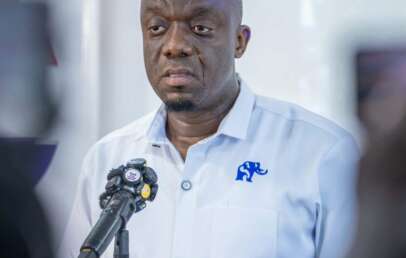
Reacting to the developments, Executive Director of IERPP, Isaac Boadi, described the situation as both “disturbing and ironic,” arguing that the government’s actions undermine the credibility of its anti-corruption efforts.
According to him, the two decisions send conflicting signals about the administration’s commitment to transparency and accountability.
He questioned why a government that is establishing an anti-corruption body would, at the same time, resist calls for investigations into a state entity facing allegations of financial losses.
“If the advisory council has accountability as one of its core functions, why then is the government preventing GoldBod from being investigated?” he asked.
IERPP maintains that the government’s posture risks rendering the newly established Governance Advisory Council ineffective even before it begins operations.
The think tank warned that anti-corruption institutions cannot function meaningfully if they are not allowed to operate independently or if certain state entities are perceived to be shielded from scrutiny.
The institute further argued that the government’s actions could erode public confidence in the fight against corruption, describing the creation of oversight bodies without corresponding political will as a potential waste of resources.
IERPP has therefore demanded answers from the government regarding what it considers inconsistencies in policy and action. Among the questions raised are why GoldBod is being protected from scrutiny, why efforts to investigate alleged losses estimated at $214 million have been blocked, and whether there are underlying infractions that authorities are reluctant to expose.
The group warned that using parliamentary majority to stifle investigations into public institutions sets a worrying precedent and weakens democratic accountability mechanisms.
The developments have intensified debate over the effectiveness of Ghana’s anti-corruption architecture, with observers closely watching whether the proposed Governance Advisory Council will be empowered to act independently or become, as critics fear, another institution constrained by political considerations.
IERPP insists that for the fight against corruption to be credible, government actions must align with its stated commitments, stressing that accountability cannot be selective if it is to inspire public trust.