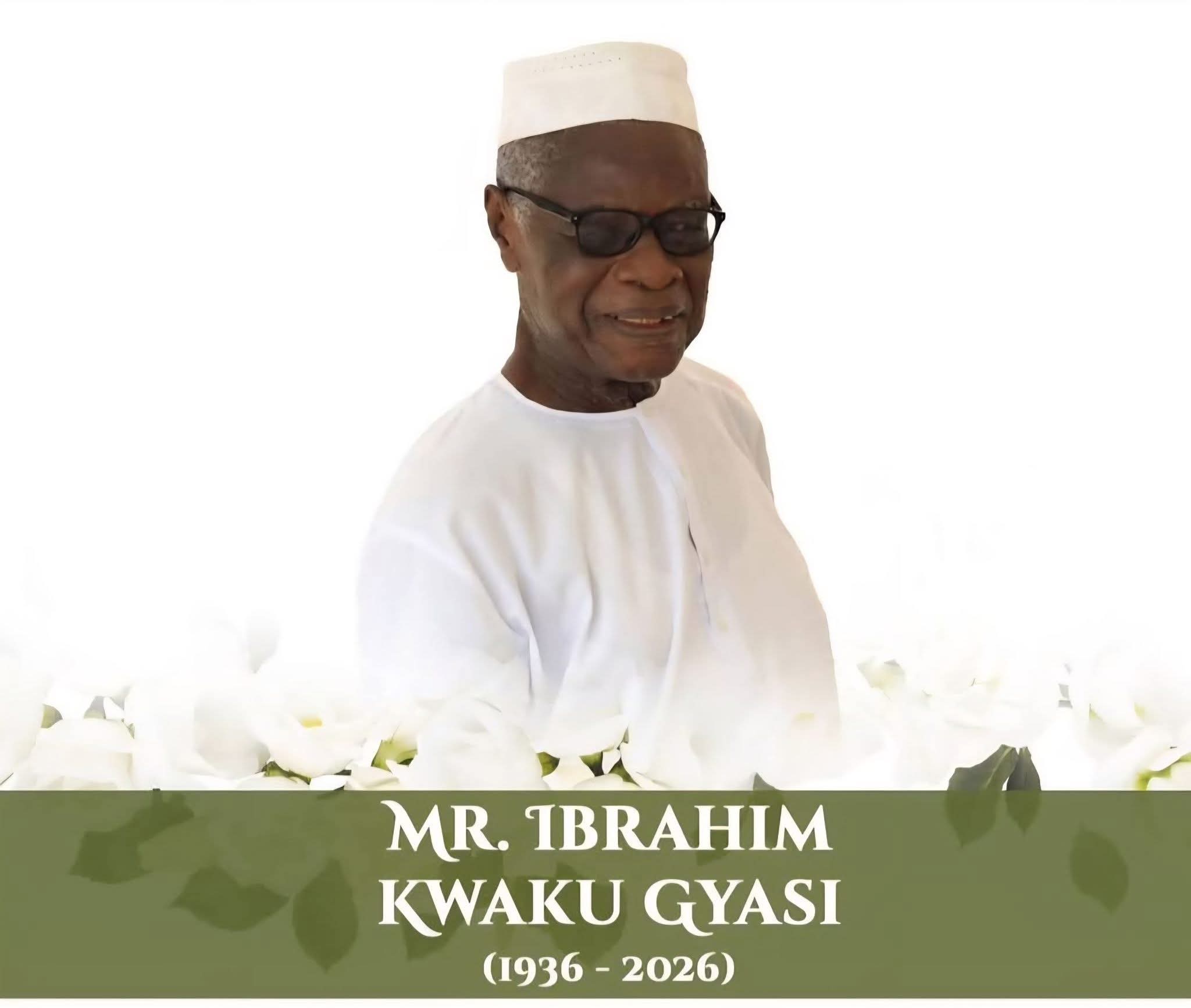
The day I.K. Gyasi died, I received thirty-three emails and nineteen telephone calls from my contacts around the world.
I am no friend or relation of Mr Gyasi, and did not know him–beyond newspaper writing.
The emails and telephone calls did not fail to remind me about that connection and the problems that attended that relationship. We had another thing in common: Vandalism.
We belong to Commonwealth Hall, University of Ghana; Mr Gyasi entered Vandal City in 1962, and me, in 1994.
He had written for the Echo, the Hall’s news publication, which had collapsed when I was a student. Radio Univers was born.
Master of the game
There is, however, a more specific matter that brought I.K Gyasi and me together.
Earlier readers of the Ghanaian Chronicle, especially between the years 2000 and 2002, would remember my shameless banter with I.K. Gyasi, the celebrated educationist behind ‘Bluntly Speaking’, a column that ran for twenty years (July 1996 to August 2016).
His entire writing career, however, spanned fifty years of intensive education.
His friend, brother and mentee, Africanus Owusu-Ansah, asked in his tribute: “Which Ghanaian newspaper hasn’t I.K. Gyasi written for?”
He had been a prolific contributor to The Spectator, The Ghanaian Times, The Pioneer, Daily Graphic, The Mirror, The Independent, and The Guidance (an Ahmadiyya publication).
He also hosted shows on radio, served on boards, including the Otumfuo Education Fund, and published some fine books on English language.
Ibrahim Kwaku Gyasi remained a scholar who “transported the masterful use of language and mechanical accuracy into the stratosphere of creative excellence.”
The statement above (in inverted commas) would easily attract the red pen of careful language users like I.K. Gyasi.
In 2001, I wrote an article on Ghanaian English, arrogating to myself powers reserved for grammarians, to decide which expressions passed my standard for correct English, while pronouncing a judgment on areas of usage I found incorrect.
The feature was published in the Ghanaian Chronicle under the provocative title, ‘Go ahead, not take the lead’.
Bluntly speaking
I was young and impressionable, but presumptuous enough to correct other people’s English when my English needed a lot of correction.
I had recently graduated from the School of Communication Studies at University of Ghana, and felt I had some fresh ideas to change the world.
With another degree in English Language, I was confident I had authority to tell Ghanaians how to speak English.
I had learnt beautiful ways of using language under concepts like semantics, pragmatics, syntax and parallelism.
I stepped into town like a modern scholar, teaching good English. I had also started work as a copywriter for a brand management company, and sought recognition as Ghana’s new wordsmith.
A week after the publication, I continued to receive praise, including a letter from a lady who offered ‘scholarship’ to marry me.
Ghana had suddenly found their Gomoa Shakespeare, having beaten the most prominent Gomoa scholar, Prof Kwesi Yankah, to be the Fante Nobel laureate.
Suddenly, I.K. Gyasi pounced to end my glory, choosing to sarcastically use my name as the title in his scathing rejoinder on 14th January 2002: ‘Quesi Tawiah’s English’.
Line by line, I.K. Gyasi reminded me that a butterfly was never a bird, tearing my every word into pitiful shreds.
My honour abused, I resolved to step away from newspaper writing, to count my ‘English losses’.
The ‘scholarship lady’ nursed my ‘linguistic wounds’ and inspired me with a kiss, to write again to the old man that I was no small fry.
On 30th January 2002, the Chronicle screamed again: ‘Quesi Tawiah Writes to I.K. Gyasi’.
Again, I made grievous mistakes in that attempt. I.K. Gyasi pounced again, this time, reducing me to an abecedarian (a novice) debating Martin Luther King, or in Kay Codjoe’s words, a soldier fighting with a water pistol in the Russia-Ukraine war.
Gyasi wrote first, so we can
With the energy of a disgraced villain, I filled my water pistol with a keg of anger powder doused in fermented concentrate of shame, to hit back, describing him as an “academic tyrant of a former headmaster.”
Mr Gyasi marked the script with the lens of a merciful grammarian who wanted to teach the younger generation to learn the elements of Style by E.B. White and William Strunk, Jr. The basic rules.
Did I write back? The scholarship lady deserted me–along with my mojo, leaving me with the hard lesson that women do not settle for losers.
I mopped together the last surviving vestiges of my broken pride (I.K., please forgive me if this construction is wrong) and sought refuge in England, to study law.
In the cold temperatures of North West London, I found my mojo again.
I started to write, this time, choosing carefully what to say and staying away from people’s English.
I built quite a following in the blogosphere. I got noticed.
My roommate and coursemate in communication school, Egbert Isaac Faibille, a former Chief Vandal, offered me a column in The Ghanaian Observer.
Then came George Sydney Abugri, one of our finest, flattering me to write a column for The General Telegraph, a paper he founded after retirement.
Then, Papa Kwesi Nduom’s ‘Today’ newspaper, where these ‘Tissues of the Issues’ started. I continue to write, this time, for The Newscenta.
The scholarship lady left me; I.K. Gyasi didn’t. He taught me. He built me.
Even today, my friends tease: ‘I.K. Gyasi will get you’.
From the grave, I still see his red pen editing large portions of this tribute. Fare thee well, teacher.
Quesi Tawiah, your English boy.
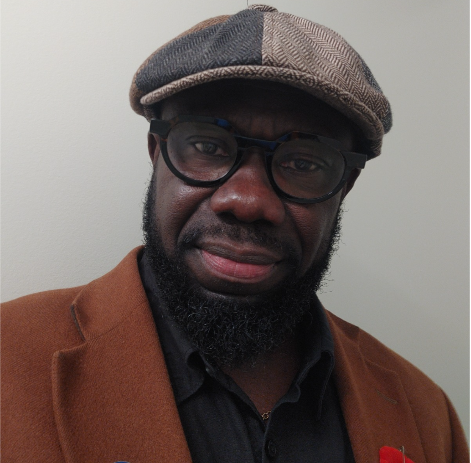
By KWESI TAWIAH-BENJAMIN
Tissues Of The Issues
bigfrontiers@gmail.com
Ottawa, Canada