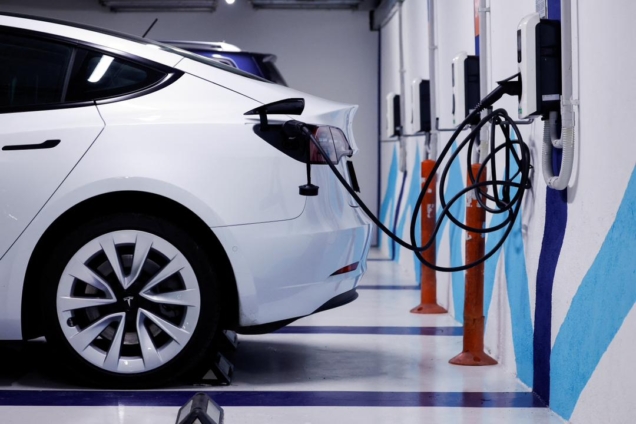
Draft Electric Vehicle Charging Station and Battery Swap Systems Regulation in Ghana is set to redefine the country’s transition to clean mobility, as the Energy Commission moves to introduce a comprehensive legal and technical framework to govern the use of electric vehicles (EVs) and their supporting infrastructure.
The proposed regulation, currently undergoing stakeholder engagement, seeks to ensure safety, efficiency and proper coordination in the fast-emerging EV ecosystem, while safeguarding lives, property and the national electricity grid.
Speaking at a stakeholder sensitisation forum in Wa, Madam Joyce Caitlyn Ocansey, Drive Electric Programme Coordinator at the Energy Commission, urged individuals and businesses to register their electric vehicles with the Commission to facilitate effective regulation and prevent potential hazards associated with EV charging.
She explained that the draft regulation—developed in collaboration with the Ghana Standards Authority—is anchored on international standards and covers a wide range of components critical to the safe deployment of EV charging stations and battery swap systems across the country.
At the core of the regulation is a mandatory registration regime for all electric vehicles. Under the proposed framework, prospective EV owners will be required to register their vehicles with the Energy Commission, a move aimed at strengthening data collection for policy planning and protecting the stability of the national power grid.
According to Madam Ocansey, the regulation will make it illegal to own or operate an unregistered electric vehicle in Ghana once it is passed by Parliament.
She emphasised that the registration process would also enable the Commission to guide users on safe charging practices and compliance requirements.
“If you buy a motorcycle or a tricycle that is an electric vehicle, kindly reach out to the Energy Commission, inform us about it, and we will guide you through the process to protect you, your family, your community and Ghana as a whole,” she stated.
A major component of the draft regulation focuses on technical and safety standards for EV charging systems, particularly in homes and workplaces.
The framework prescribes minimum technical requirements designed to reduce fire risks and ensure operational safety.
It specifies socket capacity thresholds, setting a limit of up to 16 kilowatts for home charging systems and up to 22 kilowatts for workplace installations.
These provisions are expected to standardise charging infrastructure nationwide and minimise the risk of electrical faults and related accidents.
Beyond individual users, the regulation also provides a structured framework for investors and operators within the EV value chain. It outlines clear guidelines on the establishment, certification and operation of EV charging stations and battery swap systems, ensuring that all facilities meet approved safety and performance standards.
In a detailed presentation, Dr. Godwin Kafui Ayetor, Consultant to the Energy Commission and Senior Lecturer at the Kwame Nkrumah University of Science and Technology, explained that the regulation addresses multiple dimensions of the EV ecosystem, including standards enforcement, registration processes, importation controls, sale and certification of EV equipment, as well as operational requirements for charging and battery swap facilities.
He noted that the government has set an ambitious target of establishing 1,000 EV charging stations across the country by 2028, with an average rollout of about 30 stations each month. To ensure equitable access, the Commission plans to develop a national location map that will guide the distribution of charging infrastructure and battery swap systems across all regions.
Dr. Ayetor further disclosed that Ghana’s National EV Policy envisions a full transition to electric mobility by 2045, positioning the country as a leader in sustainable transportation within the sub-region.
The draft regulation also signals strong government backing for private sector participation in the EV space. Madam Ocansey assured investors of an enabling environment that will support the development of charging infrastructure and battery swap networks, creating opportunities for innovation and job creation.
However, stakeholders at the forum raised concerns about potential implementation challenges, particularly the uneven distribution of electricity across parts of the country, which could affect access to charging infrastructure. Others highlighted the need for clear policies on the safe disposal and recycling of EV batteries to prevent environmental hazards.
Despite these concerns, the proposed regulation is widely seen as a critical step toward building a safe, reliable and future-ready electric mobility ecosystem in Ghana.
Once approved by Parliament, the Draft Electric Vehicle Charging Station and Battery Swap Systems Regulation is expected to provide the legal backbone for Ghana’s transition to cleaner transport, ensuring that the growth of electric vehicles is matched with robust safety standards, efficient infrastructure and sustainable practices.