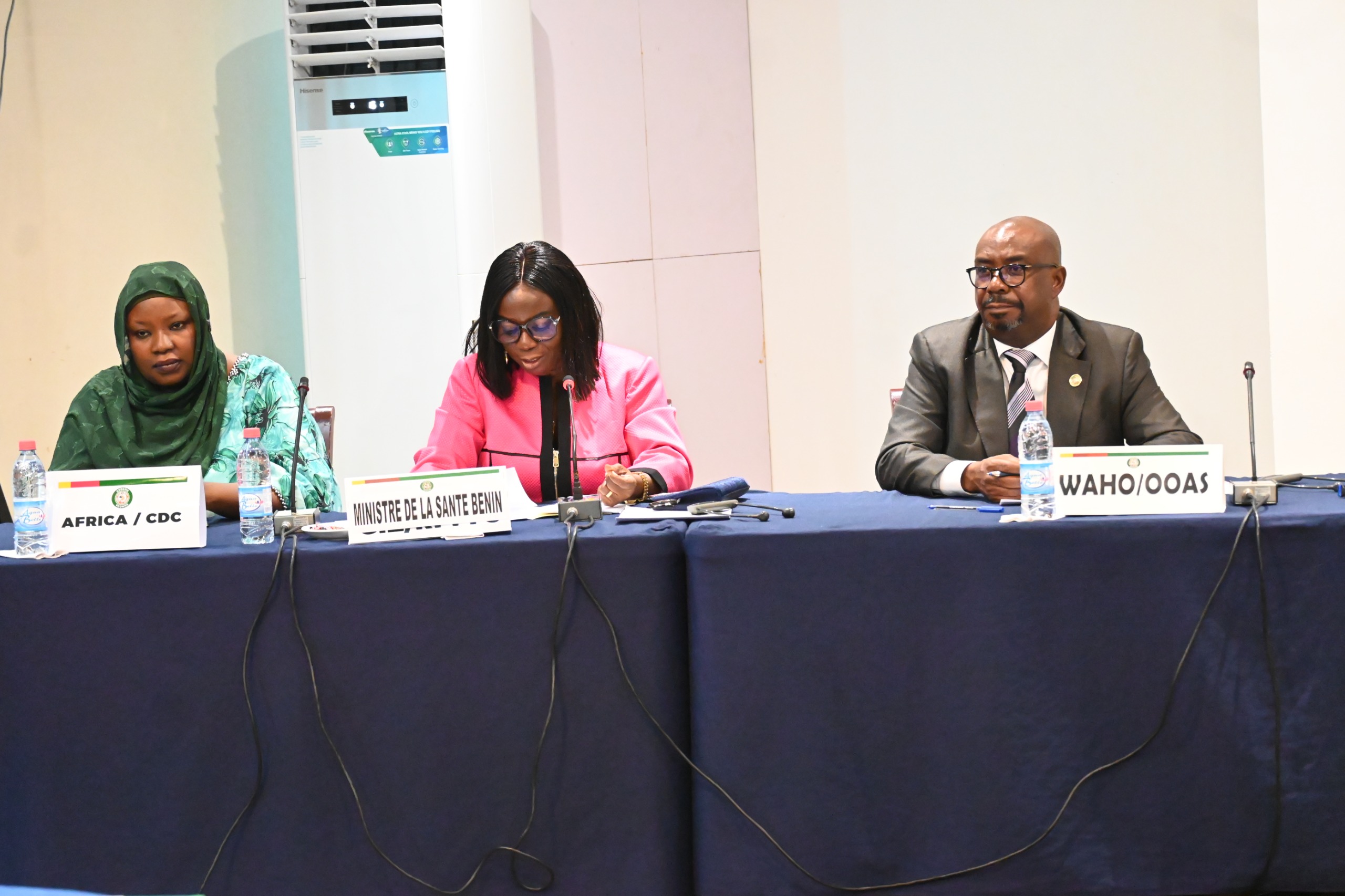
A regional workshop on integrated disease surveillance and digital early warning systems based on the One Health approach is currently underway in Cotonou, Benin Republic.
The 5-day workshop, which opened on February 23, 2026, brought together national directors for human, animal and environmental health surveillance, regional experts and technical and financial partners, including the World Health Organization (WHO), Centre for Disease Control (CDC)-Africa, GIZ and Pasteur Institute of Dakar.
During the five-day event, held under the auspices of the West African Health Organization (WAHO) through the ECOWAS Regional Centre for Disease Control and Surveillance (RCSDC), member states committed to strengthening collective health security in the face of cross-border threats.
At the official opening of the workshop, three institutional speeches punctuated the event, each highlighting the challenges, progress, and priorities for the region.

“Building together an interoperable and sustainable surveillance system,” was the theme of the speech by the Executive Director of the ECOWAS-RCSDC, Dr. Diarrassouba Mamadou, who spoke on behalf of the Director-General of WAHO, setting the tone for the official opening address.
In a solemn speech, Dr. Diarrassouba welcomed the Beninese government and emphasized the importance of the meeting for sub-regional health security.
“Integrated disease surveillance, based on the One Health approach, is essential to preserving the health of our populations, animal health, and the quality of our ecosystems,” he noted.
Dr. Diarrassouba highlighted the progress made, including the establishment of the regional DHIS2 platform, the automation of data transfer from several member states, and the development of tools such as ECOAlert.
According to him, “these achievements provide a solid foundation, but challenges remain—particularly regarding interoperability, full integration of animal and environmental indicators, and system sustainability.”

He then outlined the workshop’s objectives: to consolidate the regional surveillance network, update the list of priority diseases, present a regional digital surveillance architecture, and co-develop an operational roadmap for integrated digitization.
For her part, Ms. Maryam Ibrahim Buba, representing the Africa Centres for Disease Control and Prevention (Africa CDC) – Western RCC, delivered a message of partnership and strategic support, stressing the need for “a digital, integrated, and prepared West Africa.”
“It is an honor to address you on behalf of Dr. Kokou, Regional Director of Africa CDC. Health security is not limited to one country or sector; it is a collective responsibility,” Ms Buba said,
She also stated that a digitally connected West Africa was “an Africa capable of making faster, smarter, and more effective decisions in the face of health threats.”
“The One Health approach is not a slogan, but a silent revolution that recognizes that the next epidemic could originate in a market, a livestock farm, or a weakened ecosystem.”

Dr. Assavedo called for the harmonization of protocols, the adoption of a revised list of priority diseases, and the formalization of responsibilities within the regional network.
“Surveillance is not just a technical function; it is an act of sovereignty, a pact of regional solidarity, a commitment to our people.”
The workshop will continue until February 27, with technical sessions, co-creation workshops, and discussions aimed at transforming these commitments into concrete actions.”