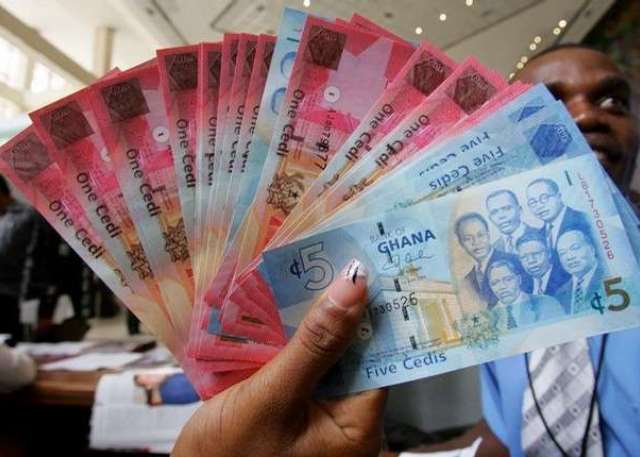
The cost of printing money in Ghana recorded a sharp decline in 2025, even as demand for cash in the economy continued to expand significantly, according to the latest financial statements of the Bank of Ghana.
Mixed cost structure emerges
The drop in currency issuance costs contrasts sharply with rising cash circulation and increases in several other currency management expenses, highlighting a mixed and increasingly complex cost structure in the central bank’s operations.
Total issuance costs more than halved
Total currency issuance costs fell substantially from over GH¢1 billion (GH¢1,010,144,000) in 2024 to GH¢471.4 million (GH¢471,390,000) in 2025, representing a reduction of more than 50% year-on-year.
The decline marks one of the most significant operational cost shifts in the Bank’s accounts for the period under review and reflects major adjustments in the way physical currency is produced and managed.
Sharp fall in printing and minting costs
The most significant driver of the reduction was the steep fall in direct production costs associated with printing banknotes and minting coins.
These costs dropped by 72%, from GH¢986 million (GH¢986,887,000) in 2024 to GH¢277 million (GH¢277,558,000) in 2025.
The scale of the reduction suggests a deliberate policy shift or operational efficiency measures, including possible improvements in currency inventory management, reduced replacement demand for worn notes, or broader cost optimisation efforts within the currency operations framework.
Non-production costs move in opposite direction
However, while production costs declined sharply, other components of currency management recorded notable increases, tempering the overall savings achieved in issuance costs.
Agency fees climb
Agency fees rose from GH¢8.537 million in 2024 to GH¢10.622 million in 2025, reflecting an increase of about 24.4%.
These fees, which relate to outsourced services and operational support in currency handling and distribution, indicate rising costs in third-party or contracted aspects of currency management.
Foreign currency import costs increase
Even more pronounced was the increase in foreign currency import costs, which climbed from GH¢14.4 million to GH¢16.5 million over the same period.
This represents an increase of approximately 14.6%, pointing to higher logistical and operational expenses associated with securing and transporting foreign currency inputs or services linked to currency operations.
Other currency expenses surge
The most dramatic movement, however, was recorded under other currency expenses, which surged from GH¢14.6 million in 2024 to GH¢183 million in 2025.
This represents an extraordinary increase of about 1,154%, signalling significant and potentially one-off or restructuring-related costs within the currency management system.
The sharp rise in this category has emerged as a major driver of overall cost pressures despite the reduction in direct printing expenditure.
Savings offset by rising ancillary costs
Taken together, the increases in agency fees, foreign currency import costs, and miscellaneous expenses significantly offset the savings achieved from reduced printing and minting costs, suggesting that underlying operational and logistical pressures in currency management remain elevated.
Cash demand still rising
At the same time, demand for physical cash in the economy continued to grow strongly.
Currency in circulation rose by approximately 17 per cent, increasing from GH¢71.6 billion in 2024 to GH¢83.8 billion in 2025.
This reflects sustained reliance on cash transactions within the economy, despite ongoing digital payment expansion efforts.
What currency in circulation means
The central bank defines currency in circulation as the total face value of banknotes and coins held by the public and financial institutions, net of cash held in its own vaults.
In its 2025 financial report, the Bank clarified that this figure represents its liability for issued currency after accounting for notes and coins returned or held internally.
Diverging signals in monetary operations
The simultaneous decline in issuance costs and rise in circulating cash presents a nuanced picture of Ghana’s monetary environment.
On one hand, the reduction in printing and minting costs suggests improved efficiency or reduced replacement cycles for physical currency.
On the other hand, rising ancillary costs and expanding cash circulation indicate persistent structural demand for cash and growing complexity in managing currency distribution.
Efficiency gains clouded by cost pressures
For the Bank of Ghana, the divergence raises important questions about the sustainability and efficiency of currency operations. While cost savings in production are significant, the sharp increase in miscellaneous expenses—combined with rising logistics and service-related costs—points to potential inefficiencies or transitional adjustments in how currency is handled across the system.
Shift in cost drivers
The data also suggests that currency management is becoming increasingly driven by non-production factors, such as distribution logistics, service contracts, and foreign exchange-related operations, rather than simply the physical printing of money. This shift could have implications for how the central bank plans future currency issuance strategies, particularly as it continues to balance cost efficiency with the need to meet rising demand for cash.
Overall, while the reduction in printing costs represents a positive development in terms of direct expenditure, the broader expense profile highlights emerging pressures that may require closer scrutiny.
The sharp rise in ancillary costs, in particular, underscores the need for improved cost control and greater transparency in currency-related operations as Ghana’s monetary system continues to evolve.