The story of the Trans-Atlantic slave trade is often told in stark, binary terms, of external exploitation, of continents violated, of people stolen and shipped across oceans into unimaginable suffering. This telling is not wrong. But it is incomplete.
For a continent seeking not only remembrance but renewal, a more difficult question emerges: What does accountability look like from within?
There is an uncomfortable truth woven into the fabric of that history, one that many would rather avoid.
While European demand fuelled the machinery of the slave trade, elements within African societies participated in it.
Rival kingdoms, opportunistic leaders, and fractured communities sometimes enabled, facilitated, or directly engaged in the capture and sale of fellow Africans.
These actions, often driven by short-term gains, internal conflicts, or survival instincts, contributed to one of humanity’s darkest chapters.
To acknowledge this is not to shift blame. It is to complete the picture. And perhaps, to begin healing.
The courage to confront ourselves
If Africa is to fully reclaim its narrative and destiny, the process must begin with introspection; not as an exercise in self-condemnation, but as a demonstration of maturity.
A civilisation that cannot examine its own past with honesty risks repeating its fractures in new forms.
Denouncing the role played by some ancestors is not an act of betrayal — it is an act of clarity.
It separates heritage from harmful legacy.
It allows present and future generations to say: We understand where we faltered, and we choose differently.
Such clarity is necessary in a world where internal divisions — ethnic, political, economic — still threaten collective progress.
The echoes of past fragmentation are not merely historical; they are contemporary, and they must be addressed at their root.
Beyond blame: The power of repentance and release
There is also a deeper, more spiritual dimension to consider. Across cultures, wrongdoing leaves more than physical scars — it leaves emotional, psychological, and sometimes spiritual imprints that transcend generations.
The cries of those wrongfully enslaved, whether understood metaphorically or spiritually, represent unresolved pain.
To speak of repentance, then, is not merely religious rhetoric. It is a call to collective release:
– A release from cycles of mistrust
– A release from inherited divisions
– A release from narratives that keep Africa anchored in its wounds rather than its potential
Renouncing the legacies of the past may be symbolic, but symbols matter. They shape consciousness, and consciousness shapes destiny.
From fragmentation to collective purpose
Perhaps the most urgent lesson from that era is the cost of disunity.
The slave trade thrived not only because of external demand, but because Africa, at critical moments, was divided against itself. Short-term, parochial interests overrode long-term collective strength.
Communities undercut each other, often unaware that the loss of one would ultimately weaken all.
That lesson remains painfully relevant today. Africa stands at the crossroads of immense opportunity: rich in natural resources, cultural capital, and, most importantly, human potential.
Its greatest asset is not buried in the ground but embodied in its people, resilient, creative, and intellectually formidable.
Yet progress continues to be hindered by fragmentation, political rivalries, economic protectionism, and a persistent prioritisation of the immediate over the strategic.
The question, then, is simple: Have we truly learned from history?
Rebuilding from strength, not scarcity
Africa does not need to be pitied. It needs to be understood — and, more importantly, to understand itself.
The narrative must shift from one of loss to one of possibility.
The same continent that endured centuries of extraction now possesses the intellectual and demographic capital to lead in innovation, technology, culture, and global influence.
African excellence — visible across the diaspora and at home — is not poetic exaggeration. It is observable reality.
The task is to harness this potential with intentionality:
– To invest in education that builds thinkers, not just workers
– To create systems that reward collaboration over competition
– To develop leadership that sees beyond borders and beyond election cycles
In essence, to build not for survival — but for supremacy of contribution.
Toward the pinnacle again
Africa’s place in human history did not begin with the slave trade, and it does not end with it.
Long before the ships arrived on its shores, Africa was a cradle of civilisation, of knowledge systems, architectural marvels, governance structures, and cultural sophistication.
That legacy is not lost. It is waiting to be reactivated.
But reclamation requires more than pride. It requires responsibility, a generation willing to confront uncomfortable truths, release inherited burdens and maybe curses, and reject the patterns that once made exploitation possible.
It requires a shift from external blame to internal alignment.
Only then can Africa rise, not as a continent defined by what was done to it, but by what it chooses to become.
The journey back to the pinnacle of humanity does not begin with forgetting.
It begins with remembering, fully, honestly, and courageously.
And then, building forward.
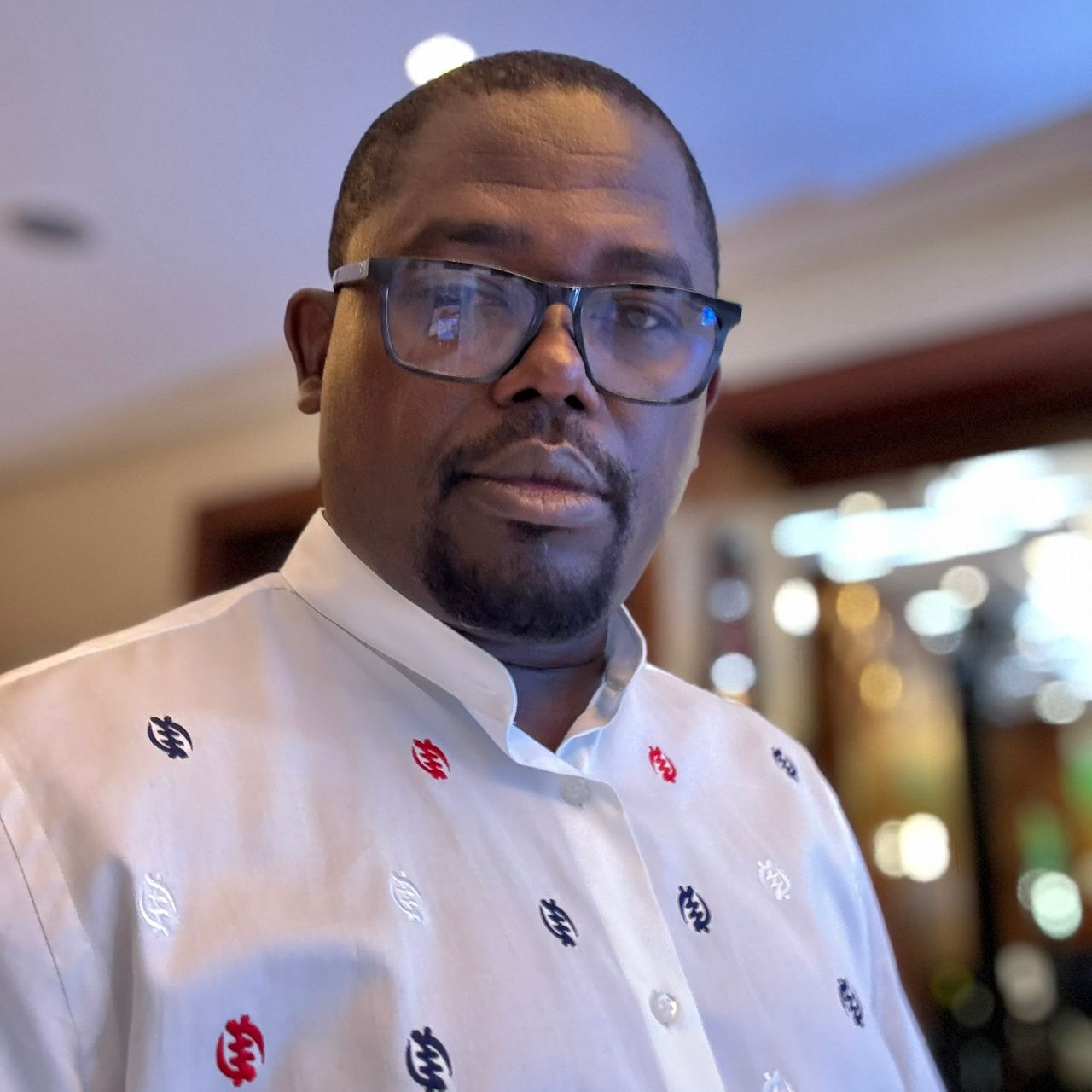
I am Kwaku Nhyira-Addo and I choose not to be held in an unending cycle of blaming my ancestors when I can rewrite the story.
The author is widely known as The Rainmaker; a seasoned broadcaster, thought leader, and brand development and communications specialist with a distinguished career spanning media, technology, and strategic consulting. A compelling public speaker and entrepreneur, he operates at the nexus of influence, innovation, and storytelling. He is the creator of Simple Conversations, a podcast that explores a broad spectrum of issues shaping humanity, reflecting his enduring commitment to elevating discourse and reframing the global African narrative.
#GoForward #MakeRain #NewAfrica