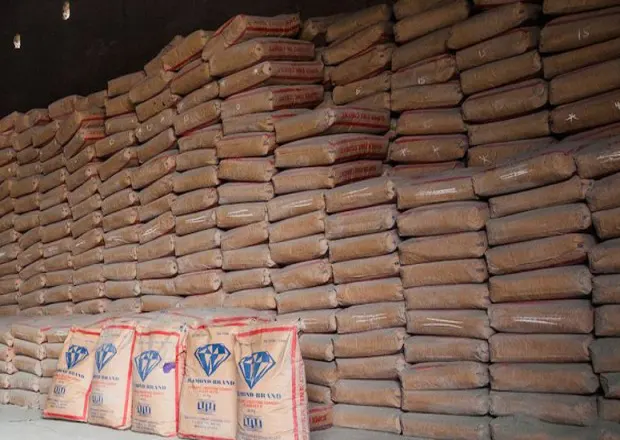
The Ghana Ports and Harbours Authority (GPHA) has rejected claims that congestion at the Port of Tema alone is responsible for the recent increase in cement prices, saying several operational and commercial factors influence the cost of importing clinker and cement into Ghana.
The Authority was responding to a recent statement by the Chamber of Cement Manufacturers, Ghana (COCMAG), which attributed the rise in cement prices partly to congestion at the Port of Tema.
In a statement dated September 10, 2026, GPHA said it has a responsibility to serve all port users while ensuring that operations are conducted in a safe and hygienic environment.
It explained that food-related cargo, including rice and wheat, must be handled separately from cement and clinker, a consideration that affects the allocation and use of berths at the port.
According to GPHA, it undertook strategic dredging of the bulk cargo section of the Port of Tema in anticipation of larger vessels, increasing cargo volumes and deeper vessel drafts.
The Authority said cement companies were informed ahead of time about the dredging project, its duration and the need to properly plan vessel arrivals and berthing schedules.
GPHA said the cement industry is also a direct beneficiary of the completed dredging works.
Berth 13 now has depths of up to 14 metres, while Berth 14 has depths of up to 12 metres. The Authority said the improved depths create opportunities for cement companies to receive larger vessels and benefit from economies of scale, which could potentially reduce logistics costs per unit.
Shared berths and cargo evacuation
GPHA further explained that Terminals 1 and 2 at Tema are multipurpose facilities handling food products, steel and other general cargo.
For safety, hygiene and environmental reasons, cement and clinker cannot be handled alongside food-related cargo, it said.
To facilitate cement and clinker operations, Berths 3, 13 and 14 have been designated as common-user berths. These facilities are shared by several cement companies and cannot therefore be dedicated exclusively to a single importer.
The Authority also pointed to the Port of Takoradi as an alternative facility for handling cement and clinker-related cargo.
It encouraged cement manufacturers to consider a combination of factors—including port selection, vessel size, discharge arrangements and inland transportation—when planning their operations.
GPHA said the efficiency of cargo evacuation is particularly important to reducing pressure on berths.
It noted that a vessel carrying about 40,000 tonnes of clinker may depend on a limited number of trucks to transport the cargo to factories located outside the port.
Where trucks are inadequate or delayed by traffic, discharge operations can slow considerably, resulting in vessels occupying berths for extended periods.
According to the Authority, such delays can sometimes last several days and reduce berth availability for other vessels, putting additional pressure on port operations.
GPHA pushes modern cement-handling systems
GPHA also disclosed that it is working to modernise the handling of cement and clinker at the Port of Tema.
The Authority said it is moving towards more efficient cargo-handling systems that will reduce reliance on traditional grabs and hoppers.
It urged cement companies to embrace and invest in the new technology as it is introduced.
GPHA said modern handling systems would improve discharge rates, reduce vessel turnaround times, optimise berth utilisation and contribute to a more efficient and competitive port operation.
The Authority stressed that improving port efficiency is a shared responsibility involving proper vessel planning, adequate trucking capacity, efficient cargo discharge, adoption of modern handling technology and timely evacuation of cargo.
It therefore urged stakeholders and the public to consider the entire logistics and supply chain when assessing cement prices, rather than attributing increases solely to port congestion.
Factors such as vessel planning, discharge efficiency, trucking capacity, factory location, port selection and other commercial costs, it said, all contribute to the final cost of cement.
GPHA reaffirmed its commitment to working with the cement industry and other stakeholders to improve berth utilisation, cargo evacuation and the overall efficiency of Ghana’s ports.