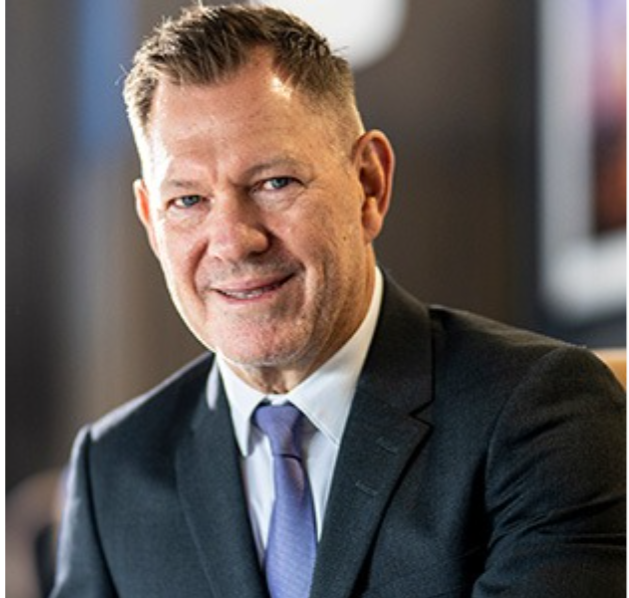
Gold Fields Chief Executive Officer, Mike Fraser, has made a passionate appeal to the Government of Ghana for fair and equitable treatment in the renewal of the company’s Tarkwa mining leases, warning that prolonged uncertainty over the process is increasingly being viewed by international investors as a sovereign-risk issue.
Mr Fraser said Gold Fields remained committed to finding a negotiated solution with the government and did not want to pursue legal avenues to resolve the matter, but stressed that the company had a responsibility to protect shareholder value and keep all options open as the leases approach expiry in April 2027.
“We will remain open to all avenues available to us to ensure that we receive fair and equitable treatment in the consideration of our lease-renewal applications,” he said.
He, however, stressed that legal action was not the company’s preferred route and expressed hope that continued engagements with the government would produce a mutually acceptable outcome.
“We certainly do not desire to take any legal pathways for the resolution of this,” Mr Fraser said. “We are absolutely hopeful that we can find alignment where we can have a mutually shared interest and build on the success of the last 30 years.”
Mr Fraser made the appeal during an online media briefing following the release of Gold Fields’ first-half results, in which the company reported significantly stronger production, gold prices, earnings and cash generation.
Tarkwa uncertainty becoming sovereign-risk concern
Mr Fraser said the prolonged uncertainty surrounding the Tarkwa lease renewal had become increasingly uncomfortable for the company and was beginning to affect investor sentiment towards Ghana.
“It is super unhelpful for any company to have the uncertainty around a material lease extension hanging over the company for a long period of time,” he said.
While mining companies routinely deal with uncertainties relating to commodity prices and operational performance, he said the issue that particularly unsettles international investors is sovereign risk.
“I think what we are dealing with now is clearly characterised by international investors as sovereign risk. And that doesn’t have negative implications just for Gold Fields, but potentially for other companies as well,” he said.
He said the impact could already be seen in Gold Fields’ share-price performance.
According to him, in the six months year-to-date, since concerns surrounding Ghana emerged, Gold Fields had underperformed its peers on a relative basis, with much of the underperformance reflecting uncertainty over the Tarkwa lease renewal.
Mr Fraser said Gold Fields would not want to negotiate with the government through the media and preferred direct, open and transparent engagement on the terms of the lease extension.
“We are having very open and transparent conversations with the Government of Ghana about what a fair sharing of value looks like for the extension of this lease,” he said.
He noted that there were several ways in which value could be distributed among government, communities and shareholders, but the fundamental issue was whether an agreement could provide sufficient value to justify the significant capital required to keep Tarkwa operating and develop it into the future.
“After mining an asset like this for 30 years, this does require significant reinvestment, and therefore, there does need to be some value demonstrated on that,” he said.
Gold Fields wants negotiated outcome
Gold Fields has been engaging the new administration since it took office at the beginning of 2025, initially in connection with the transition of the Damang Gold Mine.
Mr Fraser said that during those engagements, the company was encouraged to submit an early application for the renewal of the Tarkwa mining lease.
Gold Fields submitted the application, together with a detailed technical study, in November 2025. The study supported continued operations at Tarkwa and demonstrated a mine life of more than 20 years based on established reserves.
The company has since remained in regular discussions with the Government of Ghana over the application and submitted a commercial proposal for the lease renewal in July 2026, while continuing technical discussions.
However, with the leases due to expire in April 2027, Mr Fraser said the company had a responsibility to alert shareholders to the uncertainty surrounding the process and the need to remain conscious of all options available to protect the value of the asset.
He stressed that this was not the preferred course of action.
“We remain hopeful that the engagements that we are having with the government will bear fruit and that there will be a sensible consideration of our application,” he said.
Gold Fields, he added, believed it was well placed to continue operating Tarkwa safely and reliably, based on its 30-year track record in Ghana and the value it had created for the country, host communities and other stakeholders.
Tarkwa reserves support more than 20-year mine life
Mr Fraser said the technical report supporting the lease-extension application was based on established reserves rather than merely mineral resources.
The company had also committed to continuing exploration, including investigating the potential expansion of an underground mine.
That exploration programme, he said, would require time to study and prove up additional reserves.
Gold Fields therefore believes that while the initial mine life is supported by a genuine reserve declaration, further exploration could potentially extend the life of the Tarkwa asset beyond the period currently demonstrated by the reserves.
The company is seeking a lease arrangement that would provide sufficient certainty and economic value to justify the substantial reinvestment required after three decades of mining.
Nearly 75% of gold-sale dollar remains in Ghana
A central part of Gold Fields’ argument in the lease-renewal discussions is the distribution of value generated by mining.
Mr Fraser said the company was engaging government on how to achieve an appropriate balance in sharing value among the government, host communities and shareholders.
He said nearly 75 per cent of every dollar earned from the sale of gold remains in Ghana, through taxes, salaries, payments to suppliers and payments or benefits accruing to communities.
He acknowledged that there could be opportunities to change the distribution of value under a new lease, but cautioned that any changes should be structured in a manner that preserves Ghana’s attractiveness to investors.
The objective, he said, should be to grow the overall value generated by the mining industry rather than simply redistribute an existing pool of value.
Gold Fields believes attracting international capital is critical because international producers can access global capital markets at relatively lower costs and bring technical expertise, operational capabilities and financial resources that can support large-scale mining investment.
Mr Fraser said Ghana therefore needed to find a balance between national interests and maintaining an investment environment capable of attracting the capital required to develop its mineral resources.
‘Grow the pie, then share it equitably’
Jongisa Magagula, who also addressed the briefing, reinforced the argument for expanding the overall value generated by Ghana’s gold industry before determining how it should be distributed.
He said the gold sector was an “incredibly important driver” of Ghana’s economy and currently accounted for nearly two-thirds of foreign exchange earnings.
He noted that the elevated gold price had contributed to the sector’s strong contribution to foreign exchange earnings but stressed the need to protect and expand the industry while making Ghana attractive to future international investors.
According to him, the discussions with the government should focus on “growing the value and then being equitable about how the value is split”.
He described this as the need to “grow the pie” while allowing greater participation in the value created.
“The only way you can grow the value is to be able to attract investment into the sector,” he said.
Gold Fields distances itself from illegal actions in South Africa
Mr Fraser also addressed concerns arising from developments in South Africa, which he said had generated considerable “noise” in Ghana.
He acknowledged disappointment over how events had unfolded in South Africa and said Gold Fields had engaged with both the South African and Ghanaian governments on the matter.
He said Gold Fields had also used collective business leadership platforms to publicly condemn illegal actions by citizens in South Africa.
At the same time, he stressed the company’s respect for the rule of law and said Gold Fields believed it was acting appropriately within the law.
Mr Fraser urged stakeholders to look beyond the immediate difficulties and recognise Gold Fields’ broader identity as an African mining company with decades of experience across the continent.
“We are an African miner. We have been operating on the continent for many, many decades, and we think that there should be more that keeps us together than things that pull us apart,” he said.
He expressed hope that the short-term challenges could be overcome through cooperation aimed at creating mutual prosperity.
Gold Fields cites shareholder disclosure obligations
Mr Fraser also explained the company’s extensive disclosures about the Tarkwa lease issue, saying Gold Fields was required to inform investors about material developments.
As a company listed in Johannesburg and the United States, he said Gold Fields had obligations to its shareholders to be transparent about material events and developments.
The comprehensive disclosures, he said, were therefore part of the company’s responsibility to investors.
“With that comes a responsibility to protect shareholder value,” he said, adding that the company’s objective remained to reach a negotiated outcome with the Government of Ghana.
Communities need govt, mining companies to work together
Mr Fraser also called for a broader approach to addressing the development needs of mining communities.
He said social needs in communities around mine sites were often greater than what an individual mining company could provide and that this was not unique to Ghana.
The challenge, he said, was to strike a balance between significant taxes and other revenues paid to central government and the resources that ultimately remained within mining communities for their development.
He said similar discussions took place in South Africa and other countries where Gold Fields operates.
Responding to calls from some commentators and chiefs for greater participation and benefits for mining communities, Mr Fraser said the issue should not be treated simply as a bilateral matter between mining companies and communities.
Government, he said, had to be part of the process to create a coordinated pathway for community development.
Mr Fraser pointed to Gold Fields’ track record in Tarkwa and said there were people who wanted the company to continue operating the mine because they had seen the value created over the years.
He called for balanced reporting of the debate, arguing that criticism of Gold Fields was not universally shared.
He said the discussion should instead examine where taxes and royalties generated by mining ultimately go and how those resources could translate into greater benefits for Ghanaians, particularly people living in mining communities.
Gold sector must remain attractive to investors
Mr Fraser warned that Ghana, like other African countries, needed to remain open to international investment if it wanted to unlock the full potential of its mineral resources.
He said Africa needed to make better use of its collective skills, capabilities and resources to increase the value derived from its mineral wealth.
Creating barriers around natural resources and pursuing national interests at the expense of international investment, he cautioned, could prevent countries from securing the capital needed to develop major projects.
He said debates around national interest needed to be balanced with pragmatism about where the capital required for large-scale mining investment would come from.
“This is not just a question for Ghana. It is a question for all of us in Africa,” he said.
Gold Fields’ position is that international capital should remain part of Africa’s development strategy, while governments, communities, workers, shareholders and the wider population should receive an appropriate share of the benefits generated by investment.
Gold Fields posts strong first-half results
The lease-renewal uncertainty came against the backdrop of a strong first-half performance by Gold Fields.
The company reported an 18 per cent increase in sales volumes to 1.269 million ounces, while attributable production rose 12 per cent to 1.267 million ounces.
Its average realised gold price surged to US$4,678 per ounce, representing an increase of nearly 50 per cent compared with the corresponding period of 2025.
The combination of stronger production and higher gold prices resulted in a substantial improvement in financial performance.
Headline earnings increased 81 per cent to US$1.855 billion, while adjusted free cash flow surged 134 per cent to US$2.225 billion.
The company said its operational momentum remained strong, with Salares Norte completing its ramp-up to steady-state production and delivering 337,000 gold equivalent ounces during the period.
Granny Smith also recorded a strong first half, while Gruyere, Agnew and Tarkwa showed encouraging improvement in the second quarter as recovery plans gained traction after a slower first quarter.
Balance sheet strengthens
Gold Fields’ financial position also improved materially during the period.
Net debt to adjusted EBITDA stood at 0.6 times, strengthening the company’s ability to continue investing in its operations while providing returns to shareholders.
The company completed US$300 million in share buybacks by the end of July.
It also announced a further US$500 million allocation to its additional returns programme, taking total additional returns announced since November last year to US$1.25 billion.
The company said the stronger financial position allowed it to maintain investment in its operations while continuing to return capital to shareholders.
No fatalities, serious injuries in first half
Gold Fields also reported a strong safety performance for the first half, recording no fatalities and no serious injuries across its assets during the period.
The company said safety remained a fundamental component of its operating strategy and that it would continue implementing its safety improvement plan to ensure employees returned home safely every day.
Production target at upper end of 2.4m–2.6m ounces
Looking ahead, Gold Fields said it remained on track to meet its production and cost guidance.
Attributable production is expected to reach the upper end of the company’s guidance range of 2.4 million to 2.6 million ounces.
The company is also advancing its Windfall project towards a final investment decision.
At the same time, engagement with the Government of Ghana over the renewal of the Tarkwa leases is continuing.
For Gold Fields, the desired outcome is a negotiated agreement that provides a fair sharing of value, gives the company sufficient certainty to commit further capital to Tarkwa, protects the interests of Ghana and its mining communities, and keeps the country attractive to international mining investors.
Mr Fraser’s appeal therefore places the Tarkwa lease negotiations within a broader debate over the future of Ghana’s gold industry: how to increase national participation and community benefits while maintaining the international capital, technical expertise and long-term investment needed to sustain large-scale mining.
The company insists that the two objectives do not have to be mutually exclusive, arguing that a growing mining industry can create a larger pool of value from which government, communities, employees, shareholders and the wider Ghanaian economy can all benefit.