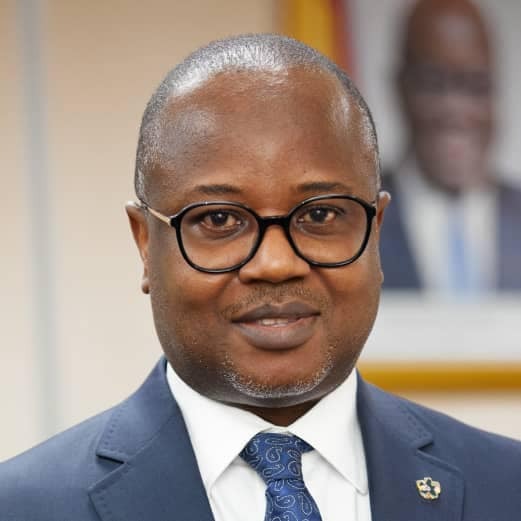
Ghana’s 2022 sovereign debt crisis was not the product of a single shock but the culmination of years of fiscal weaknesses, expensive borrowing, election-related spending, rising debt-service obligations and unaddressed contingent liabilities, former First Deputy Governor of the Bank of Ghana, Dr. Maxwell Opoku-Afari, has argued.
In a detailed assessment titled “How Not to Miss a Crisis: Lessons from Ghana,” Dr. Opoku-Afari concluded that Ghana’s apparent economic success between 2010 and 2019 masked deep vulnerabilities that eventually overwhelmed the country’s fiscal and external position.
He said the extensive use of Eurobond borrowing between 2007 and 2021 was particularly significant, with the US$15.59 billion raised through nine issuances used largely to finance annual budget gaps rather than specifically identifiable self-repaying projects.
According to him, the combination of recurrent expenditure, persistent fiscal deficits, high interest costs, contingent liabilities, currency depreciation and external shocks gradually weakened Ghana’s capacity to service its debt.
The situation deteriorated sharply after the COVID-19 pandemic, the Russia-Ukraine war and the loss of access to international capital markets in 2022, culminating in Ghana’s December 2022 suspension of debt-service payments on Eurobonds, most bilateral loans and commercial term loans.
Dr. Opoku-Afari’s assessment raises broader questions about the sustainability of Ghana’s economic management, the effectiveness of fiscal rules and surveillance, the implementation of the 2015–2019 IMF programme, the assumptions underpinning the “Ghana Beyond Aid” agenda and whether warning signs of the debt crisis were adequately identified.
Eurobonds used to fund budgets
Dr. Opoku-Afari said Ghana borrowed US$15.59 billion from international capital markets between 2007 and 2021 through nine Eurobond issuances.
Contrary to the perception that the borrowings were primarily intended to finance projects capable of generating sufficient revenues to repay the debt, he said the funds were used to close budgetary financing gaps and were largely spent on recurrent expenditure.
“This move followed years of sustained borrowing, both domestic and external, to close annual budget financing gaps,” he stated.
The heavy reliance on borrowing, he said, contributed to a cycle in which new debt increasingly became necessary to meet existing fiscal obligations.
The former central banker said Ghana’s public debt consequently increased from about 63 per cent of Gross Domestic Product (GDP) in 2019 to approximately 93 per cent by the end of 2022, when the country entered the IMF-supported programme in 2023.
The combination of fiscal and balance-of-payments pressures eventually made it increasingly difficult for the government to service its obligations and resulted in a technical default.
From strong performer to debt crisis
Dr. Opoku-Afari noted the dramatic contrast between Ghana’s economic position during much of the 2010–2019 period and the crisis that emerged only a few years later.
During that period, Ghana was regarded as one of Africa’s eight strongest economic performers, recording sustained, although volatile, economic growth.
The country completed an IMF-supported reform programme, modernised its public financial management framework, introduced fiscal rules, strengthened debt-management institutions and repeatedly received debt sustainability assessments from the IMF and World Bank that did not indicate an imminent sovereign debt crisis.
The government also promoted the ambitious “Ghana Beyond Aid” vision, signalling an intention to build a more self-reliant economy capable of sustaining macroeconomic stability without excessive dependence on external assistance.
Yet those gains proved insufficient to prevent a severe deterioration.
By December 2022, Ghana had suspended payments on most of its external debt and entered a comprehensive debt restructuring process.
Dr. Opoku-Afari said the reversal should compel policymakers and development partners to examine why the safeguards that appeared to be in place failed to prevent the accumulation of vulnerabilities.
He questioned whether warning signals were misunderstood, underestimated or obscured by headline economic indicators.
He also asked whether the “Ghana Beyond Aid” vision represented a realistic development strategy or an ambition that had become detached from the country’s fiscal and economic realities.
IMF programme under scrutiny
The former First Deputy Governor also questioned whether the IMF-supported programme implemented between 2015 and 2019 succeeded in addressing Ghana’s deeper structural and fiscal weaknesses.
Although the programme helped narrow trade and budget deficits, he said it did not fundamentally transform the underlying vulnerabilities in the economy.
He questioned whether the programme placed too much emphasis on short-term fiscal consolidation instead of deeper institutional reforms capable of delivering long-term fiscal resilience.
He further challenged both domestic institutions and international partners responsible for economic surveillance to explain whether they adequately identified emerging risks.
The questions, he argued, are particularly important because Ghana’s debt crisis emerged despite years of international monitoring, fiscal reforms and economic growth.
Growth masked deep vulnerabilities
According to Dr. Opoku-Afari, Ghana’s growth story before the crisis was impressive on the surface but insufficiently balanced underneath.
During the mid-2000s, GDP growth averaged about six per cent annually, supported initially by cocoa and gold exports and later by oil production.
However, he said the expansion was accompanied by increasing fiscal deficits and greater dependence on external borrowing.
The discovery and exploitation of oil boosted economic growth but also coincided with weakening fiscal discipline, particularly around election periods.
“Election-driven spending booms produced some growth spurts but were quickly followed by deep fiscal and debt crisis,” he observed.
He also noted that increased election-related expenditure did not necessarily translate into electoral victories for incumbent governments, suggesting that the fiscal costs of such spending were not matched by corresponding political returns.
More fundamentally, he said the growth achieved before the crisis was not sufficiently diversified and was not driven strongly enough by private investment or high-quality public infrastructure.
Deficits and debt accumulation
Dr. Opoku-Afari described Ghana’s debt experience as representative of the challenges facing resource-rich, lower-middle-income countries with substantial infrastructure needs and expanding middle classes.
Following debt relief under the Highly Indebted Poor Countries (HIPC) initiative, Ghana began the period with relatively low public debt but returned to debt distress within two decades.
Fiscal deficits averaged 8.3 per cent between 2010 and 2024, while gross public debt increased sharply from approximately 38.9 per cent of GDP in 2010 to 92.7 per cent in 2022.
Debt levels subsequently declined following the 2023–2024 debt restructurings.
He identified several major turning points in the deterioration, including the increased use of Eurobonds from 2007, the acceleration of external borrowing after 2013, fiscal slippages, energy-sector costs, the COVID-19 pandemic, terms-of-trade shocks and significant exchange-rate depreciation.
Cedi depreciation added GH¢93.9bn
Currency depreciation became particularly damaging as Ghana’s external debt was largely denominated in foreign currencies.
Dr. Opoku-Afari cited Ministry of Finance data showing that the depreciation of the cedi alone added GH¢93.9 billion to the external debt stock in 2022.
He said debt dynamics before COVID-19 were driven less by primary fiscal deficits and more by high interest costs and stock-flow adjustments, including contingent liabilities that were not initially captured in headline deficit figures.
Primary deficits became a dominant factor in 2020, while after 2022, cedi depreciation became the key driver of debt accumulation.
The distinction is critical because it demonstrates that the debt crisis was not simply the result of government spending exceeding revenues in a conventional sense.
Financing costs, exchange-rate movements and obligations arising outside the immediate budget also played a major role.
Debt service squeezed development spending
One of the most damaging consequences of the borrowing strategy was the growing amount of government revenue absorbed by debt servicing.
Between 2018 and 2020, debt service accounted for more than 45 per cent of government revenues, according to Dr. Opoku-Afari.
Between 2018 and 2022, interest payments alone absorbed an average of about 29 per cent of total government expenditure.
When interest payments were combined with employee compensation, these relatively rigid obligations consumed nearly 60 per cent of the national budget.
That left significantly less fiscal space for development priorities, including education, healthcare, water, infrastructure and other essential public services.
Dr. Opoku-Afari said the pressure effectively weakened the national budget as an instrument for economic transformation and improving living standards.
Instead of allocating a greater proportion of public resources to productive investment, government increasingly had to devote resources to servicing debt and meeting recurrent obligations.
“This created the foundation for the unsustainable borrowing cycle to close annual budgetary financing gaps,” he said.
Hidden liabilities and structural risks
The former Bank of Ghana official also raised concerns about liabilities that accumulated outside the conventional fiscal framework.
He specifically pointed to the energy, cocoa and financial sectors as areas where contingent or “hidden” debt could have amplified Ghana’s fiscal vulnerabilities.
He questioned whether the country’s strong headline growth figures gave policymakers and observers an overly optimistic assessment of the economy while underlying risks continued to accumulate.
The central question, he suggested, is whether Ghana’s economic management system had become too dependent on indicators that captured current performance without sufficiently measuring future fiscal risks.
Lessons for future economic management
The assessment ultimately calls for a fundamental rethink of how Ghana manages public finances, borrows, invests and responds to economic shocks.
For Dr. Opoku-Afari, the experience demonstrates that strong growth alone cannot guarantee fiscal sustainability.
Economic expansion must be supported by disciplined borrowing, productive investment, diversified sources of growth, stronger institutions and rigorous management of contingent liabilities.
The experience also underscores the importance of ensuring that borrowed funds generate sufficient economic and fiscal returns rather than being absorbed predominantly by recurrent expenditure.
Ghana’s debt crisis, in his assessment, therefore offers a broader warning: fiscal stability can deteriorate rapidly when structural weaknesses remain hidden behind periods of strong growth.
The challenge for policymakers is to ensure that the country does not return to the borrowing cycle that produced the 2022 crisis, but instead builds an economic framework in which public debt supports productive investment, fiscal policy remains credible and government resources are increasingly directed towards sustainable development.