A U.S. criminal case has exposed an intricate network of alleged bribes, consulting fees, reimbursements and transfers linked to a Turkish power project in Ghana.
More than $50 million in alleged corrupt-linked payments, contracts and financial arrangements appears in the case materials, including a $42 million consulting agreement.
But the most important names remain largely hidden. Will Ghana follow the money and identify those allegedly paid?
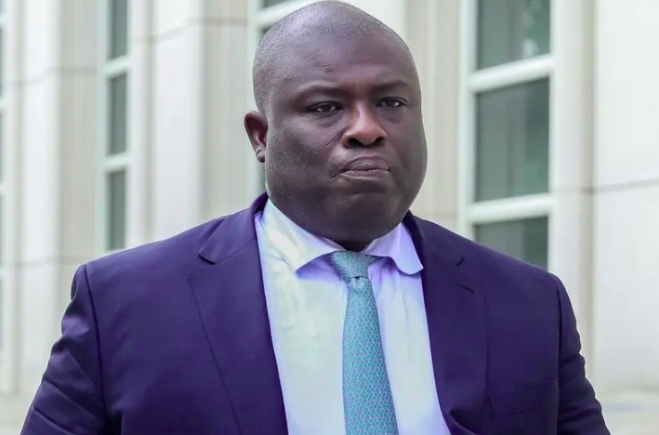
Ghana is facing a fresh accountability test over a controversial power project after a U.S. criminal case involving former Goldman Sachs banker Asante Kwaku Berko laid out a detailed trail of alleged payments to individuals connected to key government institutions.
At the heart of the case is an allegation that more than $700,000 in bribes was paid or arranged for Ghanaian officials and other individuals to influence the award, approval and implementation of a power project being pursued by a Turkish energy company.
But the alleged bribes represent only part of the financial picture.
The U.S. case also describes a $42 million consulting agreement, proposed annual consulting payments of up to $10 million, financial models projecting approximately $9.7 million a year for a Ghanaian consulting company, millions of dollars in transfers from the Turkish company and hundreds of thousands of dollars ultimately transferred into accounts allegedly belonging to Berko.
The question confronting Ghana is therefore larger than the conduct of one former international banker.
Who were the Ghanaian beneficiaries?
And will the Ghanaian authorities now go beyond the descriptions contained in the U.S. case to identify the people behind references to Parliament, PURC, GRIDCo engineers, Ministry of Power officials, a senior adviser, a Ghanaian official and the President’s brother?
The project at the centre of the allegations involved a Turkish energy company seeking to build a power plant in Ghana.
The proposed transaction required an Emergency Power Agreement (EPA) with the Government of Ghana, financing of approximately $190 million for construction of the plant and a $75 million letter of credit for the Republic of Ghana.
For the U.S. financial institution involved in arranging the financing, the transaction presented significant commercial opportunities.
The loan alone was expected to generate approximately $10.3 million in fees, while the letter of credit could generate more than $1 million.
According to the allegations, Berko was part of the team responsible for securing and managing the transaction.
It was during the pursuit of this deal, prosecutors alleged, that a network of payments to Ghanaian officials and other individuals was established.
The payments allegedly moved through Ghanaian consulting companies and bank accounts, with some transactions routed through correspondent banks in New York.
$700,000+ in alleged bribes
The U.S. case alleges that Berko and his co-conspirators caused more than $700,000 in bribes to be transferred to Ghanaian officials and others.
The alleged beneficiaries included individuals associated with the Ministry of Power, Parliament, PURC and GRIDCo, as well as other Ghanaian officials.
The allegations also refer to the President’s brother, two shell companies and other individuals.
The institutions themselves are not, on the material available, accused of institutional wrongdoing.
Rather, the allegations concern individuals connected to them.
That distinction is critical.
But it does not eliminate the public interest question of who the individuals were.
The turkey trip: 5 officials, $25,000
The case provides one of the clearest alleged examples of payments to public officials.
Five Ghanaian officials travelled to Turkey to inspect equipment that the Turkish energy company proposed to use for the power plant.
According to the allegations, Berko and a co-conspirator paid the officials’ flights and hotel expenses.
Each of the five officials was allegedly given $5,000.
That amounted to $25,000 in alleged cash payments, excluding travel and accommodation.
After returning from Turkey, the officials allegedly prepared a favourable assessment of the equipment.
Ghana Official 1 subsequently forwarded the assessment to a senior Ghanaian official.
The timing is crucial. The alleged payments occurred while the Turkish company was seeking approval for the project.
On or about May 12, 2015, the Senior Ghanaian Official signed the EPA.
The $500,000 invoice
The alleged money trail was already moving before the EPA was signed.
On or about April 14, 2015, a co-conspirator allegedly sent Berko and another conspirator an invoice for $500,000 from Ghana Consulting Company 2.
The invoice contained instructions involving a U.S. bank in New York and a Ghanaian bank.
That same day, $500,000 was allegedly transferred from an account belonging to the Turkish energy company in Turkey to Ghana Consulting Company 2 in Ghana.
The transaction passed through a correspondent account in New York and allegedly carried the invoice reference.
The payment therefore occurred during the crucial period when the Turkish company was pursuing the EPA.
$1.5m after EPA signing
On May 12, 2015, the same day the EPA was allegedly signed, Ghana Consulting Company 2 issued another invoice — this time for $1.5 million.
On or about May 22, the money was allegedly transferred from the Turkish energy company’s account to Ghana Consulting Company 2 through correspondent accounts in New York.
The payments, according to the allegations, formed part of the consulting-company mechanism used in connection with the project. But the most revealing evidence came later.
The $250,000 bribe list
On or about August 17, 2015, a co-conspirator allegedly forwarded an email requesting $250,000 as reimbursement for bribes previously paid to Ghanaian officials.
The correspondence allegedly contained a remarkable breakdown of where the money had gone.
Among the entries were visa payment —$5,000, PURC — $20,000, GRIDCo engineers — $20,000, three Ministry of Power officials described as the “MoP Girls” — $20,000, Parliament — $30,000, travel to Turkey — $45,000,Asante personal — $35,000.
The correspondence also referred to another Ghanaian official and $250,000 allegedly discussed for a senior adviser.
This is perhaps the most consequential part of the case for Ghana.
The allegations do not merely describe money changing hands.
They describe money allegedly allocated according to particular institutions, officials and activities.
Who were the “MoP Girls”?
One of the most intriguing descriptions in the alleged payment record is “MoP Girls”.
The case allegedly attributes $20,000 to three Ministry of Power officials under that description.
But who were they? What positions did they hold? What role did they play in the project? Did they receive the money personally? Were they acting for someone else?
The U.S. case materials, as presented in the indictment, do not answer those questions.
That leaves an obvious investigative trail for Ghanaian authorities.
The Ministry of Power’s records from 2015 could potentially establish who occupied relevant positions, who travelled to Turkey, who participated in negotiations and who had dealings with the Turkish company or its representatives.
Parliament: $30,000 — or $46,000?
Parliament also appears in the alleged payment trail.
The reimbursement correspondence reportedly listed $30,000 under “Parliament”.
Elsewhere, the case refers to approximately $46,000 associated with Members of Parliament.
The figures appear in different contexts and should not automatically be treated as one payment.
But their appearance in the case is significant.
The EPA was eventually ratified by Parliament on or about July 17, 2015.
The alleged payments occurred in the period surrounding the project’s approval and Parliamentary ratification.
The case does not establish that every MP involved in the ratification received money.
Nor does it establish wrongdoing by Parliament as an institution.
The allegation is that certain individuals associated with Parliament were among those allegedly targeted.
That distinction makes the unanswered question even sharper: Who were they?
PURC: $20,000 — And $120,000 reference
The Public Utilities Regulatory Commission also features in the allegations.
One breakdown attributes $20,000 to PURC.
Elsewhere, the material refers to approximately $120,000 associated with PURC.
That difference requires clarification. Were these separate payments? Were they paid to different individuals? Were they reimbursements for different activities? Who received the money?
PURC played a significant role in Ghana’s electricity regulatory framework, making any allegation that individuals associated with the institution were paid to influence a major power transaction particularly serious.
But again, the allegations relate to individuals, not the institution itself.
GRIDCo engineers in the money trail
The alleged payment list also identifies $20,000 for GRIDCo engineers.
The case does not identify the engineers by name in the material supplied.
Yet their alleged involvement raises questions about the technical and operational aspects of the proposed power project.
Who were the engineers? What assessments did they conduct? Did they travel to Turkey? Did they make recommendations concerning the proposed equipment?
Were any payments made to them directly or through intermediaries?
These are questions that could potentially be answered through institutional records and banking evidence.
The $140,000 deal
The alleged reimbursement dispute did not end with the $250,000 request.
A counteroffer was reportedly rejected. The parties eventually agreed to $140,000.
On or about September 4, 2015, $140,000 was allegedly transferred from an account belonging to the Turkish energy company to a Ghanaian bank account held in the name of a Ghana Consulting Company employee.
Six days later, approximately $99,900 was allegedly transferred from that account to another account belonging to Berko.
The transaction created another link between the Turkish company’s money, intermediary accounts in Ghana and Berko.
The $42m consulting agreement
The largest figure in the allegations is the $42 million consulting agreement.
Early drafts allegedly proposed that Ghana Consulting Company 1 would receive a variable annual fee linked to the Turkish company’s payments under the EPA.
The minimum proposed annual payment was US$10 million.
The drafts also allegedly provided for reimbursement of expenses for services that included acting as the chief liaison with the Government of Ghana and state-owned entities during EPA negotiations.
Financial models allegedly showed the company was to receive approximately $9.7 million annually, based on projected power production.
Following negotiations, the structure changed.
A final agreement executed on or about September 29, 2015 allegedly provided for total milestone and periodic payments of $42 million.
The variable component was eliminated.
The milestone payments reportedly covered events including agreement on the EPA, signing of the EPA, finalisation of the letter of credit and commencement of plant operations.
The sheer size of the agreement raises another question:
What exactly was Ghana Consulting Company 1 being paid $42 million to do?
And, more importantly, how much of the money was legitimate consulting compensation and how much, if any, was connected to the alleged bribery scheme?
The money reaches Berko
The case also traces several transfers into accounts allegedly belonging to Berko.
On June 11, 2015, $75,000 was allegedly transferred from Ghana Consulting Company 2 to a Ghanaian bank account in Berko’s name.
On July 2, approximately $50,000 was allegedly moved from that account to his U.S. bank account.
In September 2015, approximately $99,900 was allegedly transferred to another Berko account.
In March 2016, approximately $194,000 was allegedly transferred to another account belonging to him.
The case further alleges that between September and December 2016, the Turkish energy company transferred $1.5 million to Berko’s Ghanaian account.
On February 14, 2017, another $500,000 was allegedly transferred to the same account.
The transactions form part of the financial evidence presented in the U.S. case.
Where did the money end?
The allegations reveal something more significant than individual transactions.
They show an alleged system. There were consulting companies. There were invoices.
There were milestone payments. There were travel expenses. There were reimbursement requests. There were intermediary accounts.
There were payments allegedly linked to Parliament, PURC, GRIDCo and Ministry of Power officials.
And there were transfers into personal accounts.
The alleged structure raises the possibility that legitimate commercial transactions were being used to conceal payments designed to influence public decision-making.
But the ultimate destination of much of the money remains the most important missing piece.
Will Ghana name the beneficiaries?
The U.S. case has done something Ghana has struggled to do in many corruption cases: it has provided a map including dates, amounts invoices, bank accounts, institutions, descriptions of beneficiaries, travel and milestones.
The challenge now is for Ghana to follow that map.
If the alleged payments were made to public officials, who were they?
If money went to Parliament-linked individuals, which individuals?
Who were the three “MoP Girls”? Which GRIDCo engineers were allegedly involved?
Who received the alleged PURC-related payments?
Who was the senior adviser for whom $250,000 was allegedly discussed?
What role, if any, did the President’s brother play in the consulting structure?
Who owned the two shell companies? And where is the money today?
The accountability test
The allegations do not establish that every person associated with the institutions named in the case was involved in wrongdoing.
They do not establish that the institutions themselves participated in corruption.
Nor does an allegation in a U.S. criminal case amount automatically to a conviction of every person mentioned or described.
Those matters require evidence, investigation and due process.
But the allegations are too detailed to be dismissed as merely another corruption story involving anonymous actors.
They identify a financial architecture around a major national power project.
They allege that public officials were targeted with payments.
They identify specific institutions, provide dates and amounts and they reveal a trail of money crossing Ghana, Turkey and the United States.
For Ghana, the real test now is whether the trail will be followed to its destination.
The U.S. case has put the money on the table. Ghana’s investigators must now tell the public who allegedly took it.
And if the beneficiaries are identified and the allegations substantiated, the next questions will be unavoidable:
How much did each person receive? What decision or favour was allegedly bought? How much can be recovered? And will anyone be held accountable?