The Director of Technical Services at the Ghana AIDS Commission (GAC), Dr Fred Nana Poku, has attributed the disproportionate HIV infection rates among Ghanaian women to biological factors, saying the anatomical structure of women makes them more vulnerable to infection than men.
Speaking to media at the end of a one-day media training programme organised by the AIDS Healthcare Foundation (AHF), Dr Poku said the female reproductive anatomy allows for easier transmission of HIV from men to women compared with transmission from women to men.
“The anatomy of the female organ allows for easier transmission than from females to males. We have done a transmission index that shows that male-to-female infections are about 9.7 per cent, while female-to-male infection rates are about 2.9 per cent. This means that for every 100 males who have HIV, they are able to produce about three times more new infections than females,” he said.
He attributed the situation partly to economic power dynamics, which often leave women with limited ability to negotiate for safer sex practices.
To address the high rate of male-to-female HIV transmission, Dr Poku said more efforts must be made to identify infected men and ensure they are placed on treatment to suppress the virus and reduce the risk of transmission to almost zero.
He also stressed the need to prevent men from becoming infected in the first place, noting that achieving this goal requires renewed attention to men’s health and testing behaviours.
“How do we get the men to test to know their status? Because generally, they don’t really care. They don’t go to the hospital, they don’t visit the clinic when they aren’t well, but we have to find ways of encouraging them,” he said.
Dr Poku stated that the Commission is currently exploring innovative ways to encourage men to use HIV self-testing kits by reaching them at places where they frequently gather, including football fields, game centres and gyms, and providing them with free kits to enable them to check their status privately at home.
He further confirmed that the Commission has identified long-distance truck drivers as a key population requiring targeted interventions and is working with institutions such as the Abidjan-Lagos Corridor Organisation (ALCO) to sensitise the drivers about HIV risks and provide them with the necessary information and medication to prevent infection and transmission.
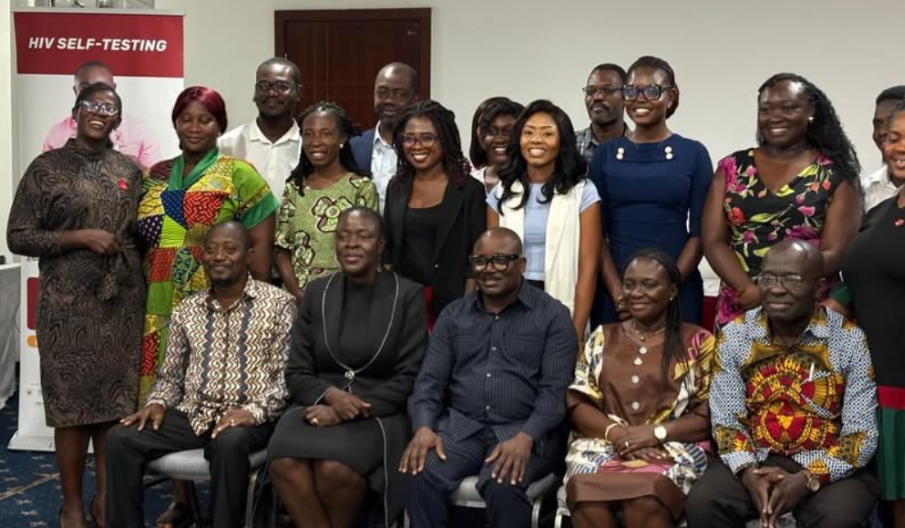
The Country Programme Manager of AHF, Dr Ekua Houphouet, explained that the media training was organised in recognition of the critical role journalists play in providing accurate HIV information and supporting the country’s efforts to achieve its treatment targets.
“There is a lot that the media is doing, and we appreciate that. We carry the numbers, and that goes a long way to help us. But what we have emphasised today is to go beyond the numbers and put stories behind the numbers to link people to the services that we want them to have, because that is the only way we can make progress with our response,” she said.
She encouraged the media to tailor their messaging and storytelling approaches to their target audiences to achieve greater impact in HIV awareness and prevention efforts.