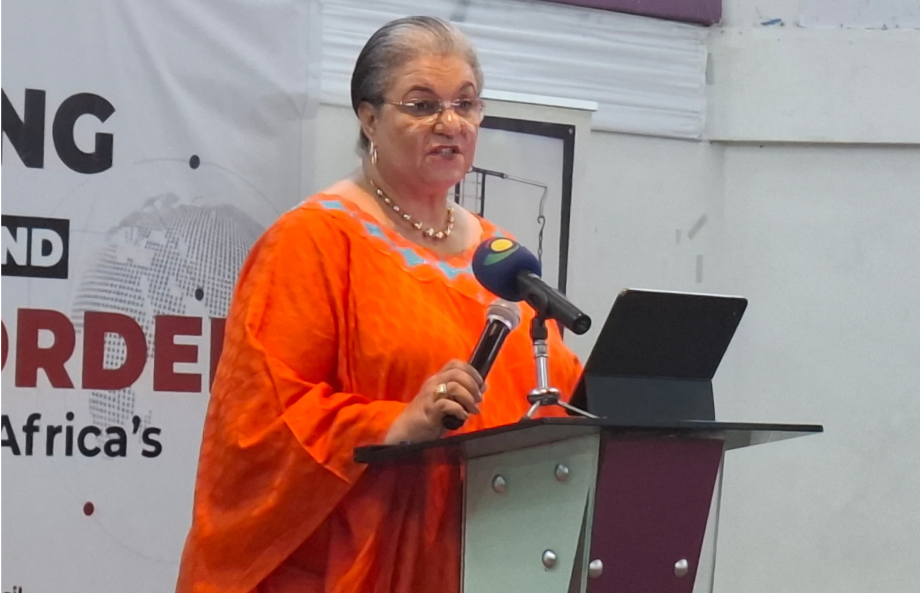
African countries must strengthen collective action to safeguard their interests as global cooperation weakens and geopolitical competition intensifies, Madam Hanna Serwaa Tetteh, a diplomat, has urged.
She said a united continental approach to diplomacy, trade, development and security was becoming increasingly important as multilateral institutions came under strain and major powers shifted towards bilateral engagements.
Madam Tetteh, the United Nations Secretary-General’s Special Envoy for Libya and Head of the United Nations Support Mission in Libya (UNSMIL), made the call at the 21st “Kronti ne Akwamu” Lecture organised by the Centre for Democratic Development (CDD-Ghana) in Accra.
Speaking on the theme: “The Changing Global and Multilateral Order: Implications for Ghana and Africa’s Strategic Positioning,” she said the rules-based international order remained essential for smaller states because it enabled collective engagement and helped reduce global inequalities.
“Our dependence on multilateralism to level an uneven playing field is important and is something that we cannot afford to negate,” she said.
Madam Tetteh said the international system was moving from broad multilateral cooperation towards greater geopolitical rivalry and bilateral arrangements, exposing smaller economies to increased vulnerabilities.
She cautioned that rising protectionism, the weaponisation of trade and the growing preference for bilateral agreements over multilateral frameworks could undermine gains Africa had achieved through common negotiating positions.
The Special Envoy said Africa had demonstrated its influence whenever it acted collectively, citing the continent’s role in shaping negotiations that led to the adoption of the United Nations Sustainable Development Goals.
“If we work together, our competition should not be mutually destructive; it should focus on being mutually cooperative,” she said.
Madam Tetteh urged African governments to accelerate implementation of the African Continental Free Trade Area Agreement, saying ratification alone would not deliver its expected economic benefits.
“Agreements don’t implement themselves. There is a difference between market access and market readiness,” she said.
She also called for reforms to the global financial architecture, stronger domestic resource mobilisation, a common African position on artificial intelligence governance and measures to address climate change while protecting the continent’s development and energy needs.
On peace and security, Madam Tetteh said sustainable development could not be achieved without resolving conflicts and tackling terrorism, warning that criminal and terrorist networks were increasingly operating across borders.
She called on African governments to strengthen diplomacy, mediation, post-conflict recovery and inclusive governance to address the underlying causes of instability.
Turning to Ghana, Madam Tetteh urged the country to safeguard its peace and stability while adopting a whole-of-government approach to foreign policy to ensure diplomatic engagements translated into national development outcomes.
She encouraged Ghana to leverage its position as host of the African Continental Free Trade Area Secretariat by improving market readiness, strengthening commercial diplomacy through its diplomatic missions and supporting small and medium-sized enterprises to expand into African markets.
Madam Tetteh said Africa’s ability to respond effectively to the changing global order would depend on stronger institutions, deeper regional cooperation and sustained implementation of decisions adopted by member states.