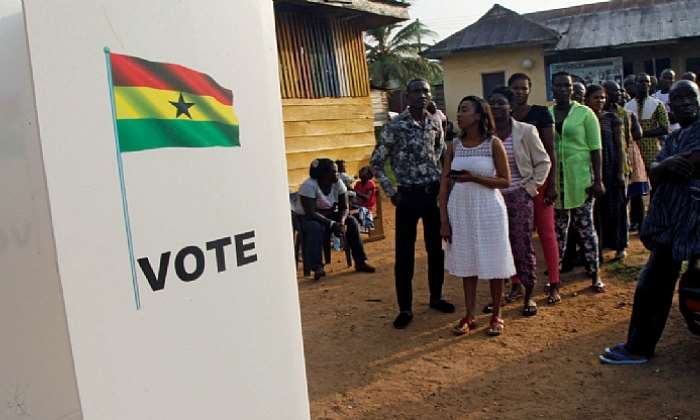
A new continental survey has found that while African youth remain firmly committed to democracy, they increasingly want a governance model rooted in African realities—one that delivers jobs, accountability, stability and stronger youth representation rather than merely replicating Western democratic systems.
The 2026 African Youth Survey shows that 73% of young Africans believe democracy is always preferable to any other form of government, while 64% reject one-party rule.
However, 56% say Western-style democracy is not suitable for Africa, preferring systems that prioritize national unity, economic opportunity and effective leadership.
The survey, commissioned by the Ichikowitz Family Foundation and conducted by PSB Insights, interviewed 4,901 young Africans aged 18 to 24 across 16 countries in March 2026.
It is the largest edition of the recurring survey, launched in 2020 to track the views of Africa’s rising generation.
The findings also expose growing dissatisfaction with political leadership, with 76% of respondents saying leaders are out of touch with the needs and aspirations of young people.
The same proportion believe there are too few young people in government.
In addition, 79% said they would be more likely to vote for political parties that field more young candidates, 79% support the creation of a Minister for Youth, while 65% favour age limits for presidents and prime ministers.
Democracy with African characteristics
The survey found that although young Africans overwhelmingly support democratic principles such as elections, free speech, equality before the law and accountable government, they want political systems that better reflect Africa’s social and economic realities.
Support for democracy has strengthened since 2024, with 73% now saying democracy is preferable to any other system, up from 71%.
Support for non-democratic government has fallen from 27% in 2024 to 23%.
Despite this commitment, a majority (56%) believe Western-style democracy is not appropriate for Africa.
Although this represents a slight improvement from 61% recorded in 2024, it suggests many young Africans remain unconvinced that imported democratic models adequately address the continent’s development challenges.
Asked what an African-style democracy should represent, respondents ranked national unity and stability (48%) as the most important feature, followed by free and fair elections (46%), leaders who create jobs and provide services (43%), and community participation (36%).
The findings suggest young Africans are not rejecting democracy itself but are demanding governance systems that combine political freedoms with tangible economic and social outcomes.
Leaders disconnected
The survey paints a worrying picture of relations between young people and political leadership.
It found that 76% believe political leaders do not understand the concerns of young people, while another 76% say there are too few young people occupying positions of political leadership.
The findings come amid a wave of youth-led demonstrations across several African countries over taxation, corruption, rising living costs, poor public services and demands for greater political accountability.
According to the survey, these movements reflect broader demands for governments that are more responsive to the aspirations of Africa’s younger generation rather than simple anti-government sentiment.
Youth seek political reforms
The survey also points to growing demand for political reforms that increase youth participation.
Nearly eight out of every ten respondents (79%) said they would be more inclined to support political parties that nominate more young candidates.
Similarly, 79% support appointing a dedicated Minister for Youth, while 65% back constitutional age limits for presidents and prime ministers.
Continental differences
Support for democracy varies considerably across Africa.
It is strongest in Zambia, where 83% favour democracy, followed by Kenya (81%).
Burkina Faso presents one of the survey’s most complex political landscapes, with 49% saying democracy is preferable while 44% believe non-democratic government may sometimes be preferable.
The survey notes that perceptions of democracy, equality before the law and political participation differ significantly across countries depending on economic conditions, governance and security challenges.
Interestingly, young people in countries with stronger democratic traditions such as South Africa (61%) and Ghana (60%) are more likely to prioritise governments capable of delivering quick and effective results.
By contrast, respondents in countries where democratic institutions have experienced greater pressure—including Zambia (66%), Mozambique (60%) and Chad (58%)—place greater emphasis on preserving democratic processes.
Optimism returns despite economic pressures
The survey also identifies what researchers describe as an “Afro-optimism paradox.”
Despite continuing economic hardships, confidence in Africa’s future has improved.
Some 43% of respondents believe Africa is moving in the right direction, compared with 37% in 2024, returning to pre-pandemic levels.
More than half (51%) say they are optimistic or excited about the future of their own countries, a significant increase from 35% recorded two years earlier.
However, optimism remains uneven across the continent.
Confidence is highest in Rwanda, Somalia, Burkina Faso and Ghana, while pessimism is most pronounced in Kenya, South Africa, Mozambique, Chad and Nigeria.
Jobs and cost of living dominate concerns
Economic issues remain the biggest concern for Africa’s youth.
The rising cost of living was identified by 27% of respondents as the single event or development that has had the greatest impact on Africa over the past five years.
When asked what Africa needs most to make progress, respondents ranked creating new, well-paying jobs (27%) as the top priority, followed closely by reducing government corruption (25%).
Support for entrepreneurship also continues to grow, with 16% saying making it easier to start a business should be a priority, up from 10% when the survey was first conducted in 2020.
Democracy must deliver
Commenting on the findings, Ivor Ichikowitz, Founder and Commissioner of the African Youth Survey, said young Africans were not abandoning democracy but were demanding governments capable of delivering meaningful improvements in their daily lives.
He said the survey demonstrates that African youth see no contradiction between democratic governance and effective service delivery.
According to him, they want governments that provide both freedom and opportunity, as well as accountability and economic progress, arguing that future democratic systems must respond to the realities and aspirations of Africa’s youthful population