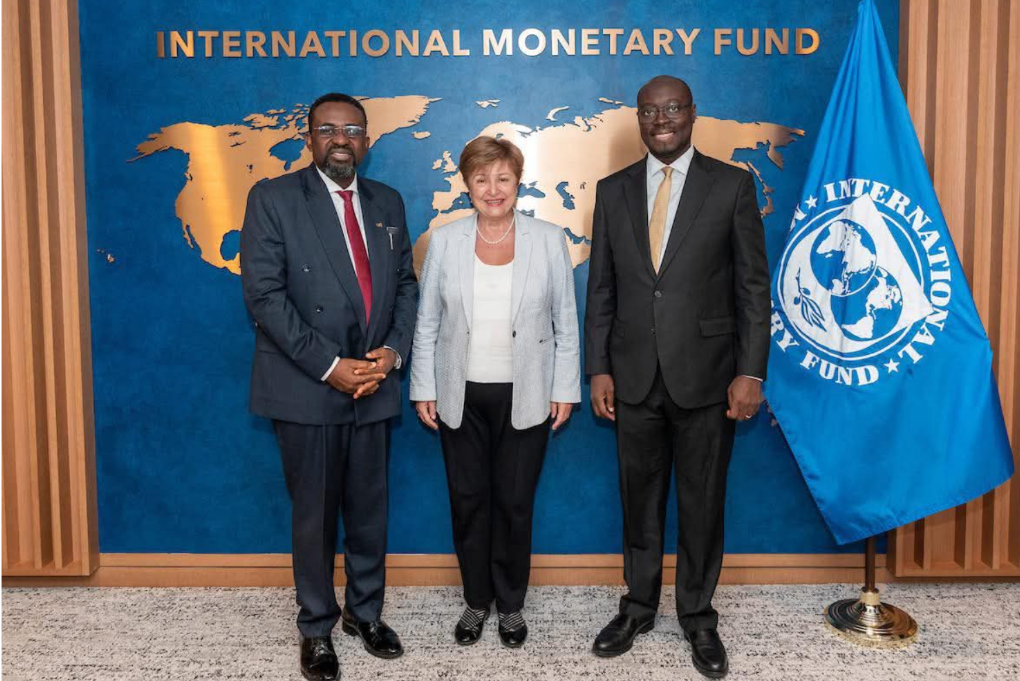
Ghana has entered a new phase of its economic recovery programme after transitioning from the $3 billion International Monetary Fund (IMF) Extended Credit Facility (ECF) programme to a 36-month Policy Coordination Instrument (PCI), a non-financing arrangement designed to sustain reforms, strengthen policy credibility and boost investor confidence.
Unlike the previous ECF programme, which provided financial support to Ghana during a period of severe economic distress, the PCI will not offer direct funding.
Instead, it will serve as a policy framework to guide government’s economic management, reassure investors and development partners, and support Ghana’s return to long-term fiscal stability.
Under the new arrangement, the IMF has outlined 10 key conditions that Ghana must pursue to consolidate economic gains and prevent a return to fiscal difficulties.
Use PCI to sustain investor confidence
The IMF wants Ghana to use the Policy Coordination Instrument as the foundation of its post-bailout economic reform agenda.
Although the PCI does not come with financial assistance, the Fund believes the arrangement will provide a strong signal to investors, credit rating agencies and development partners that Ghana remains committed to prudent economic management.
The IMF expects the programme to reinforce confidence by demonstrating Ghana’s commitment to maintaining fiscal discipline, implementing structural reforms and protecting macroeconomic stability.
Strengthen domestic revenue mobilisation
The IMF has identified stronger revenue generation as a critical requirement for Ghana’s long-term fiscal sustainability.
The Fund wants government to expand the tax base, improve tax administration systems and increase domestic revenue collection to finance development programmes.
According to the IMF, improved revenue mobilisation will reduce Ghana’s dependence on borrowing and create fiscal space for investments in infrastructure, social services and economic growth.
The focus is expected to be on building a more efficient tax system that increases compliance while ensuring that revenue collection does not place excessive pressure on businesses and households.
Protect Bank of Ghana independence
The IMF has stressed the importance of maintaining the operational independence of the Bank of Ghana (BoG) to preserve monetary policy credibility.
The Fund wants the central bank to permanently discontinue quasi-fiscal operations, where monetary authorities undertake activities outside traditional central banking functions that can create financial risks.
The IMF is also urging Ghana to complete the transfer of the Domestic Gold Purchase Programme to the Ghana Gold Board (GoldBod), allowing the central bank to focus primarily on its monetary policy responsibilities.
Recapitalise Bank of Ghana by 2032
Despite improvements in inflation and other economic indicators, the IMF says Ghana must fulfil its commitment to recapitalise the Bank of Ghana by 2032.
The Fund argues that restoring the central bank’s financial strength is essential for maintaining confidence in monetary policy and protecting the financial system.
A stronger BoG balance sheet, according to the IMF, will improve its ability to respond to future economic shocks while maintaining stability in the banking sector.
Complete external debt restructuring
The IMF has urged Ghana to complete the remaining aspects of its external debt restructuring programme.
Although Ghana has reached agreements with official creditors and most commercial creditors, negotiations with a small group of external commercial creditors remain outstanding.
The Fund wants government to conclude these discussions through good-faith negotiations to ensure that the restructuring process is fully completed.
The IMF believes completing the debt restructuring programme will strengthen Ghana’s debt sustainability and improve investor confidence.
Energy, cocoa and state-owned enterprises
The IMF continues to identify state-owned enterprises (SOEs) in the energy and cocoa sectors as major potential sources of fiscal risk.
The Fund is calling for stronger governance systems, improved financial monitoring and reforms to prevent these institutions from accumulating debts that could eventually become government liabilities.
The IMF wants government to ensure that SOEs operate efficiently, improve accountability and reduce their reliance on public resources.
Maintain public debt reduction path
The IMF wants Ghana’s fiscal policy to remain focused on reducing public debt to 45% of Gross Domestic Product (GDP) by 2034.
While recognising improvements in Ghana’s fiscal position, the Fund cautioned that government spending must remain aligned with long-term debt sustainability objectives.
The IMF stressed that improved fiscal performance should not lead to excessive spending that could reverse recent gains and create new debt pressures.
Address banking sector vulnerabilities
The IMF has acknowledged improvements in Ghana’s financial sector but warned that risks remain within some state-owned banks, private banks and specialised deposit-taking institutions.
The Fund is recommending stronger supervision, early intervention measures and timely corrective action to address weaknesses before they threaten financial stability.
It is also calling for the completion of Ghana’s financial sector crisis management and resolution framework to ensure authorities are better prepared to respond to future banking challenges.
Expand social protection programmes
The IMF has emphasised that fiscal consolidation must be balanced with stronger social protection measures.
The Fund wants government to use improved fiscal performance to expand support for vulnerable households and ensure that economic recovery benefits more Ghanaians.
According to the IMF, inclusive growth will be essential in protecting vulnerable groups while supporting private sector-led economic expansion.
Strengthen governance and anti-corruption reforms
The IMF has identified governance improvements and anti-corruption measures as essential to sustaining investor confidence and public trust.
The Fund is calling for effective implementation of the reformed asset declaration framework and the timely passage of the Conduct of Public Officials Bill currently before Parliament.
The IMF believes stronger governance systems will improve accountability, reduce corruption risks and strengthen confidence in Ghana’s institutions.
A new test for economic management
The transition from the IMF’s financing programme to the PCI marks a new test for Ghana’s economic management.
While the country has recorded improvements in inflation, fiscal balances and investor sentiment, the IMF’s 10 conditions highlight the reforms required to prevent future economic instability.
The success of the PCI will depend not only on meeting IMF benchmarks but also on whether the reforms translate into stronger institutions, improved public finances and sustainable growth for Ghanaians.