The completion and handover of the Damang Water Supply System in the Tarkwa Municipality of Ghana’s Western Region marks a transformative milestone for the Damang community. Funded by the Gold Fields Ghana Foundation and implemented by World Vision Ghana, the project represents the successful realisation of a shared vision: that every community deserves reliable access to safe, clean water.
What was once an aspiration has become a lived reality. Functional water systems now serve households, public spaces, schools, and healthcare facilities, and the community is equipped to manage its own water future.
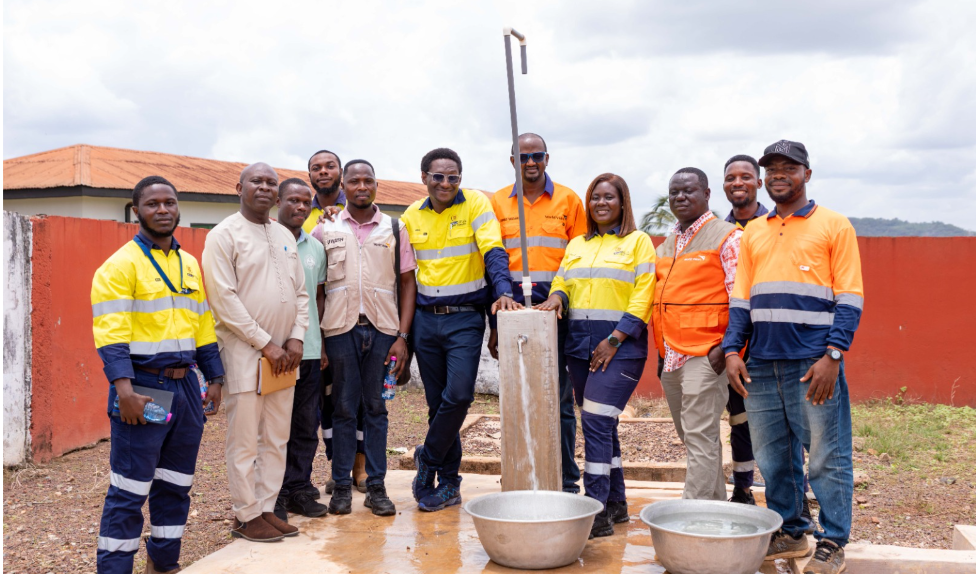
The official handover ceremony brought together traditional leaders, community members, local government authorities, and representatives of both institutions.
More than a formal conclusion of infrastructure works, it symbolised the fulfillment of a promise rooted in partnership and shared responsibility.
For the Gold Fields Ghana Foundation, the project underscores a long-standing commitment to ensuring that communities surrounding its operations benefit meaningfully from its presence. For World Vision Ghana, it reflects the culmination of a deliberate, child-focused development approach designed to improve well-being at the household and community levels.
Central to this initiative is the conviction that responsible mining must be accompanied by sustainable community development. The Foundation’s investment was not a corporate obligation; it was a strategic, value-driven decision to contribute to long-term social impact.
By prioritising water infrastructure, the Foundation has demonstrated how corporate social responsibility can move beyond philanthropy to deliver tangible, lasting change.
The Damang community is not viewed as a passive recipient, but as a central partner whose well-being is integral to the Foundation’s mission.
World Vision Ghana’s role as implementing partner was critical to the project’s success.
With decades of experience in community development and an unwavering focus on child welfare, the organisation ensured that the needs of children remained central throughout.
Access to clean water carries far-reaching consequences: girls freed from long water-fetching journeys attend school more regularly; households suffer fewer waterborne diseases; and health facilities are better equipped to provide safe, effective care.
These outcomes were intentionally designed into the project, reflecting a holistic understanding of development.
Technically, the Damang water supply system is a modern, sustainable solution designed to meet both current and future needs.
The infrastructure includes drilled and rehabilitated boreholes, a 100-cubic-metre reservoir, and a solar-powered pumping system that ensures reliability independent of the electricity grid. Distribution networks extend throughout the community via strategically placed standpipes and household connections, while dedicated links to schools and health facilities strengthen impact for children and vulnerable populations.
Equally significant is the project’s emphasis on sustainability and local ownership.
From the outset, the aim was not simply to deliver infrastructure but to build lasting capacity within the community.
World Vision Ghana worked closely with local leaders to establish water and sanitation committees, train local technicians, set up revenue collection mechanisms, and put water quality monitoring processes in place.
The community is well-positioned to maintain and sustain the system long into the future.
With the system formally handed over, the people of Damang are now empowered to take full responsibility for its management, supported by governance structures that promote accountability and efficiency.
Both Gold Fields Ghana Foundation and World Vision Ghana have expressed confidence in the community’s readiness and have committed to remaining engaged as partners where continued support is needed.
The Damang water supply system stands as a powerful example of what purposeful collaboration can achieve, with financial resources, technical expertise, and community engagement aligned around a single, shared goal.
The partnership demonstrates how development can be both strategic and compassionate, delivering measurable improvements in quality of life while keeping the most vulnerable at the center.
This project offers a model worth replicating.
When organisations commit to genuine partnership and long-term impact, they create solutions that extend far beyond infrastructure.
In Damang, access to safe water is not merely a service—it is a foundation for health, education, dignity, and opportunity.
The story of Damang is not the story of a completed project.
It is the story of a community transformed, and a blueprint for future development wherever the need for clean water remains unmet.