Let us commend the Inspector-General of Police (IGP), Christian Tetteh Yohuno, for his tremendous efforts to flush out criminal gangs across the country and make Ghana a safer place for all. His introduction of “Black Maria” patrols, special operational task forces and other security reforms has contributed immensely to crime prevention through swift response and intelligence-led operations.
However, one lingering question remains in the minds of many citizens: Who watches the watchman?
Given the crucial role played by our law enforcement agencies, society accords security personnel a great deal of respect and trust. Such confidence must never be taken for granted.
It is for this reason that officers of the security services are among the first public servants to receive their salaries each month and are provided with allowances to cushion them against the hardships and stress associated with the discharge of their duties.
Yet, are all our revered officers living up to this responsibility without inducement or compromise at the checkpoints?
Although officers wear the same uniform, their conduct at checkpoints often distinguishes the truly professional from those whose actions bring the Service into disrepute.
As a frequent traveller on the Dambai-Kpandai, Bimbilla-Yendi and Yendi-Saboba roads, it is disheartening to witness the experiences of commuters and motorists who ply these routes. Many recount instances of harassment and unnecessary delays allegedly designed to satisfy the selfish interests of some officers deployed to combat crime.
However, my harrowing experience at the Nandi-Krom Police checkpoint (barrier) in the Krachi Nchumuru District, near the Banda Yam Market, remains one of the worst. It may be linked to similar incidents that unsuspecting and vulnerable motor riders have experienced while travelling along the Kete-Krachi–Banda road stretch.
These officers, whose salaries are paid from the sweat of hardworking taxpayers, appear to have turned some checkpoints into unofficial toll booths and “SUSU” collection points, where motorists are expected to part with money before being allowed to proceed on their journeys.
Commuters and drivers who either refuse to pay or genuinely have no money to offer are often subjected to needless delays until someone intervenes on their behalf.
This worrying trend, if left unchecked, has the tendency to compromise the core values and principles of law enforcement and ultimately threaten national security.
When officers entrusted with enforcing the law engage in acts that erode public confidence, the consequences extend far beyond the checkpoints themselves.
The conduct of these recalcitrant officers undermines the image and professionalism of the Ghana Police Service and betrays the trust reposed in the institution by the public.
The IGP must act decisively by investigating these allegations and sanctioning any officers found culpable in order to safeguard the integrity of the Service.
The “pay-and-go” syndrome allegedly practised at some checkpoints, if not nipped in the bud, could discourage public cooperation with law enforcement and normalise corruption on our roads.
This practice appears to be particularly prevalent in parts of the Oti Region, according to the experiences shared by many road users.
As one frustrated commuter lamented: “Each time I embark on a journey, I panic because the police officers at the checkpoints along that stretch of road demand money before I am allowed to continue my trip.”
More troubling are claims that after motorists are stopped, no meaningful searches or inspections are conducted.
Instead, some officers are reportedly seen seated under makeshift shaman-huts, with ropes stretched across the road to block passage, only lowering them after receiving money from drivers and motor riders.
Checkpoints are established to protect citizens, deter criminal activities and enhance national security not to become avenues for extortion.
The overwhelming majority of police officers serve the nation with dedication, professionalism and integrity.
Those few whose actions fall short of the standards expected of the Service must not be allowed to tarnish the reputation of the many honourable men and women in uniform.
If public confidence in law enforcement is to be maintained, accountability cannot be selective.
The Ghana Police Service must demonstrate that no officer is above the law and that integrity remains the cornerstone of policing in our democracy.
The IGP has demonstrated commitment in confronting criminality across the country.
The time has come for that same resolve to be directed inward. The fight against corruption within the ranks is just as important as the fight against crime on our streets.
For when checkpoints become SUSU collection points, the public loses faith not only in individual officers but in the institution itself.
Could the alleged “pay-and-go” or “cash-road” syndrome perpetuated by these recalcitrant errand cops be regarded as an Internally Generated Fund (IGF) for the Ghana Police Service?
If so, it may not be out of place to call on the leadership of the Ghana Police Service to liaise with the Ministry of Finance and Economic Planning to officially convert checkpoints into toll collection points to boost national revenue, rather than contemplating the reintroduction of road tolls.
Such irony underscores the urgent need to address these allegations before an unlawful practice becomes normalised and mistaken for an acceptable source of revenue.
Police officers are deployed to various checkpoints primarily to detect, deter, and prevent crime, maintain law and order, and enforce traffic regulations.
However, these responsibilities should not be carried out in a manner that undermines the rights, freedoms, and dignity of citizens.
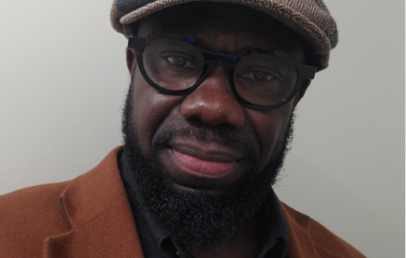
By PAUL NYOJAH DALAFU
The writer is a Journalist, Communications specialist and Public Relations practitioner.
Email address: paulnyojah30@gmail.com