G-Water Bottling Limited tasked to become leading bottled water brand as Ghana Water Institute targets regional centre of excellence
Ghana Water Limited (GWL) has inaugurated the Board of Directors of G-Water Bottling Limited and the Governing Council of the Ghana Water Institute (GWI), in a major move aimed at diversifying revenue streams, strengthening institutional capacity and positioning the company for long-term sustainability.
The twin inaugurations form part of GWL’s broader transformation agenda to expand beyond its traditional mandate of potable water production and distribution while creating new opportunities for growth, innovation and professional development within the water sector.
Speaking at the inauguration ceremony in Accra, the Chairman of the Board of Directors of Ghana Water Ltd, Mr Eric J. Biliguo, said both institutions would play strategic roles in the company’s efforts to become a modern, diversified and financially sustainable utility.
G-Water Bottling targets market expansion
The newly inaugurated Board of Directors of G-Water Bottling Limited has been tasked to transform the company into one of Ghana’s most visible, trusted and commercially successful bottled water brands.
G-Water Bottling Limited, a subsidiary of Ghana Water Ltd, was established to manufacture, package and distribute safe, high-quality drinking water while operating on sound commercial principles.
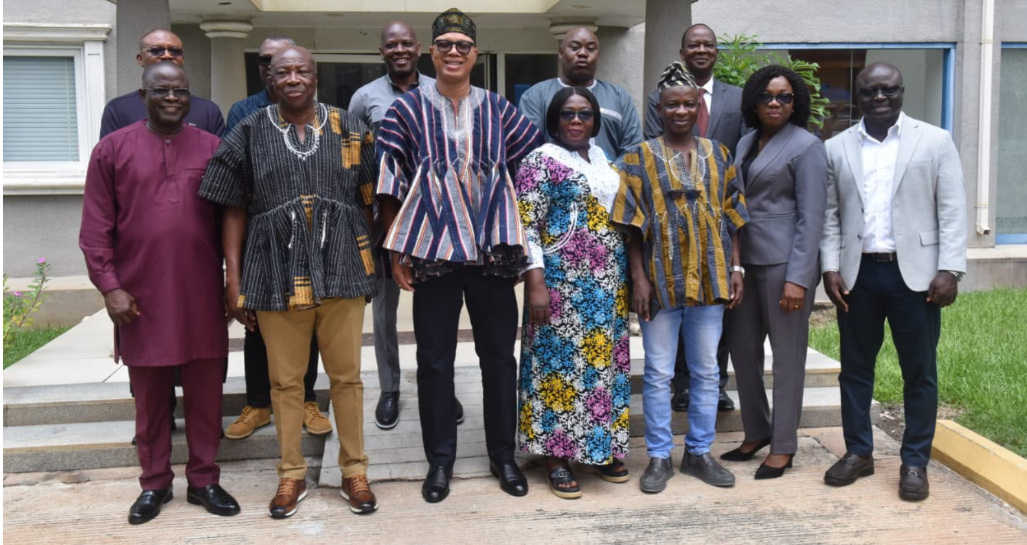
The Board comprises Mr Agbesi Nutsu as Chairperson, Dr Hadisu Alhasan as Executive Director, Mr Sulemana Alhassan Alancash and Mr Joseph Zefo Kero as Non-Executive Directors, and Madam Innocentia Kuupiel as Chief Executive Officer.
Mr Biliguo described G-Water Bottling Limited as a critical pillar of Ghana Water’s long-term growth strategy.
According to him, the bottled water brand has already earned public confidence due to its quality, purity and taste but has not yet fully realised its commercial potential because of limited market penetration and availability.
He urged the Board to provide strategic leadership that would enable the company to expand its footprint and become a dominant player in Ghana’s highly competitive bottled water industry.
The Managing Director of Ghana Water Ltd, Mr Adam Mutawakilu, said the subsidiary presents a unique opportunity for the company to leverage its expertise in water production and quality assurance to compete effectively in the bottled water market.
He noted that the company is expected to generate additional revenue, strengthen the Ghana Water brand, create jobs and contribute to national economic growth.
Mr Agbesi Nutsu assured stakeholders that the Board would provide effective oversight and strategic direction to ensure the growth and sustainability of the company.
He stressed that the Board recognises G-Water Bottling Limited not merely as a commercial venture but as a strategic subsidiary with responsibility for delivering safe, reliable and high-quality drinking water to consumers.
Ghana Water Institute targets regional leadership
In a related development, Ghana Water Ltd also inaugurated the Governing Council of the Ghana Water Institute, charging members to position the institution as the leading centre for water-sector training, research, consultancy and professional development in West Africa within the next three years.
The Institute evolved from the Ghana Water Training Schools, which were established in 1965 to support human resource development within the company and the wider water sector.
The Governing Council comprises Prof. Afishata Mohammed Abujaja as Chairperson, Prof. Jasper Ayelazuno, Prof. Moro Adams and Dr Joseph Kojo Ansong as Executive Directors, while Dr Nashiru Zulkarnein serves as Rector.
Mr Biliguo described the establishment of the Institute as a deliberate strategic intervention designed to secure the future of Ghana’s water sector.
“The establishment of the Ghana Water Institute is not accidental. It is a deliberate strategic intervention aimed at strengthening the future of the water sector and ensuring that Ghana Water Ltd evolves into a modern, diversified and financially sustainable enterprise,” he said.
He explained that the Institute has been entrusted with the responsibility of developing a centre of excellence for training, research, innovation, consultancy and capacity building in areas including water resources management, utility operations, engineering, technology, leadership and governance.
Mr Biliguo challenged the Council to develop internationally recognised training programmes and certifications, establish strategic partnerships with universities and development partners, promote research that addresses operational challenges and generate sustainable revenue through consultancy and knowledge services.
He stressed that the Institute’s success would be measured not by the number of training programmes organised but by the quality of knowledge generated and its impact on improving water-sector performance.
Supporting sector transformation
Mr Mutawakilu described the inauguration of the two governing bodies as another milestone in Ghana Water’s transformation agenda.
He said the establishment and operationalisation of the subsidiaries reflect deliberate efforts to strengthen institutional efficiency, diversify revenue streams, enhance capacity development and create long-term value for Ghanaians.
According to him, the Ghana Water Institute will serve as a strategic hub for excellence in water-sector training, research, innovation and professional development while positioning Ghana as a regional centre for technical expertise and leadership development.
Prof. Afishata Mohammed Abujaja pledged the Council’s commitment to providing strategic direction and policy guidance to support the growth of the Institute.
She noted that sustainable water service delivery depends not only on infrastructure but also on skilled professionals, strong institutions, innovation, ethical leadership and continuous learning.
“The water sector is central to public health, economic development and national progress. However, sustainable water service delivery requires more than infrastructure. It requires skilled professionals, strong institutions, sound systems, innovation, ethical leadership and continuous learning,” she said.
Prof. Abujaja further pledged to pursue strategic partnerships with universities, regulators, professional bodies, development partners and industry experts to ensure that the Institute remains relevant and responsive to the evolving needs of the water and sanitation sector.
Officials believe the combined efforts of G-Water Bottling Limited and the Ghana Water Institute will strengthen Ghana Water’s financial sustainability, improve sector capacity and support the country’s long-term water security and development objectives.