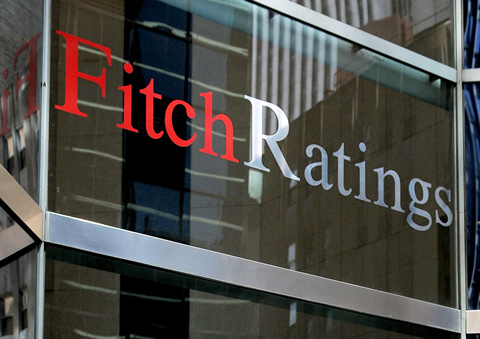
Ghana’s economic recovery has received another major international endorsement after global ratings agency Fitch Ratings upgraded the country’s sovereign credit rating from ‘B-’ to ‘B’, citing strong fiscal consolidation, falling inflation, rising international reserves and improving debt sustainability.
The latest upgrade marks yet another boost to investor confidence in the West African economy following similar positive rating actions by Moody’s and S&P Global Ratings in recent months.
In its latest assessment, Fitch said Ghana’s economic recovery had gained significant momentum after years of severe macroeconomic distress triggered by rising debt levels, high inflation, currency depreciation and loss of access to international capital markets.
The ratings agency said the upgrade reflected “strong fiscal consolidation efforts, easing inflation and progress on debt restructuring,” which together had improved Ghana’s macroeconomic outlook and strengthened confidence in the country’s ability to manage its public finances sustainably.
The agency also maintained a positive outlook on Ghana’s sovereign rating, signalling expectations that fiscal discipline and economic reforms would continue over the medium term.
The latest upgrade comes at a time Ghana is recording some of its strongest macroeconomic indicators in years.
According to Fitch, inflation declined sharply from 23.8% at the end of December 2024 to 5.4% by December 2025 before falling further to 3.2% in March 2026 — the lowest inflation rate recorded in the country since 1999.
Although inflation edged slightly higher to 3.4% in April 2026, Fitch said the broader disinflation trend remained firmly intact.
The ratings agency said the sharp decline in inflation had been supported by tight fiscal and monetary policy measures, improved investor confidence and the dramatic appreciation of the Ghana cedi.
The cedi appreciated by an impressive 40.7% against the United States dollar over the review period, reversing years of severe depreciation that had fuelled inflationary pressures and weakened household purchasing power.
Fitch noted that the stronger currency had significantly improved Ghana’s debt profile because a substantial portion of the country’s debt is denominated in foreign currency.
As a result, Ghana’s public debt fell sharply from 61.8% of Gross Domestic Product (GDP) to 45.3% of GDP in 2025.
The agency projects the debt ratio will remain broadly stable around 46% of GDP by 2027, which would place Ghana below the projected median debt level of 51% for countries within the ‘B’ sovereign ratings category.
Fitch said the debt reduction represented one of the sharpest fiscal improvements among emerging market economies in recent years.
“The decline follows a 21 percentage point fall in 2025, helped by the sharp appreciation of the cedi and strong fiscal consolidation,” the agency stated.
The country’s external position also improved significantly, further supporting the upgrade.
Fitch said Ghana recorded a current account surplus of 8.2% of GDP in 2025 — the highest in the country’s recent history — driven largely by strong gold export earnings and favourable international gold prices.
The agency noted that strong gold exports, improving foreign direct investment inflows and continued support from multilateral institutions were helping rebuild Ghana’s external buffers after years of pressure.
Gross International Reserves increased significantly from US$9.11 billion to US$13.83 billion, while unencumbered reserves alone rose by US$5.4 billion in 2025 to US$12.3 billion.
According to Fitch, Ghana’s reserves are expected to rise further to cover about 4.8 months of external payments by 2027.
The agency said stronger reserves were particularly important because Ghana’s previous economic crisis had been worsened by weak foreign exchange buffers, currency instability and rising external debt servicing obligations.
“Stronger reserves now provide a larger cushion against external shocks and improve confidence in the country’s ability to meet foreign currency obligations,” the report noted.
Fitch also pointed to Ghana’s improving private sector conditions as another sign of economic stabilisation.
Real private sector credit growth, which had remained negative for much of 2024, recovered strongly to 13.1% by December 2025 and further accelerated to 19.93% by March 2026.
The agency said improving credit growth reflected easing inflation, lower borrowing costs and recovering business confidence.
The positive macroeconomic indicators, however, came at a financial cost to the central bank.
According to the report, the cost of stabilisation policies had been reflected on the balance sheet of the Bank of Ghana, while the benefits were now visible in lower inflation, exchange rate stability and improved credit conditions.
On fiscal policy, Fitch said Ghana was expected to maintain strong fiscal discipline over the next two years.
The agency projects Ghana will achieve a primary fiscal surplus of 1.5% of GDP in both 2026 and 2027 after recording a surplus of 2.9% in 2025.
“Ghana has significantly improved public financial management, and this lowers the risk of short-term fiscal slippages,” Fitch stated.
The report acknowledged recent government interventions aimed at cushioning consumers from rising global oil prices following tensions in the Middle East.
Fitch noted that Ghana temporarily reduced taxes and levies on petroleum products from mid-April 2026 to ease pressure on domestic fuel prices.
However, the agency estimated the fiscal cost of the intervention at less than 0.1% of GDP per month, describing it as manageable within the broader fiscal framework.
On monetary policy, Fitch said it expected the Bank of Ghana to remain cautious despite rapidly easing inflation.
The central bank had already cut its policy rate by a cumulative 1,400 basis points between July 2025 and March 2026, bringing the benchmark rate down to 14%.
Fitch said the easing cycle was likely to pause as authorities monitor the potential inflationary impact of rising global oil prices and the gradual fading of exchange rate gains.
The agency nonetheless expects average inflation to remain on a downward trend through 2026 and 2027.
Economic growth prospects also remain strong.
Fitch projected Ghana’s real GDP growth would average about five percent through 2027, supported by expanding gold production, recovering consumer demand, lower inflation and improving financing conditions.
The agency said stronger gold mining prospects and easing fiscal restrictions would continue to support economic activity.
Despite the positive developments, Fitch cautioned that Ghana still faced significant fiscal vulnerabilities.
Interest payments remain elevated, with the country’s interest-to-revenue ratio projected to stay around 20% through 2027 — well above the projected ‘B’ category median of 14%.
Debt servicing obligations are also expected to rise as Eurobond amortisation resumed in January 2026 and Domestic Debt Exchange Programme bonds begin maturing from 2027.
According to Fitch, debt service costs excluding short-term debt are expected to rise from 4.6% of GDP in 2025 to 6.8% of GDP by 2027.
Nevertheless, the agency said Ghana’s improving reserve position and stronger government cash balances should enable the country to meet those obligations comfortably.
Fitch also highlighted Ghana’s gradual return to the domestic capital market as another sign of recovering investor confidence.
In April 2026, Ghana successfully returned to the domestic bond market with a GH¢3.8 billion seven-year bond issuance after relying primarily on Treasury bills following the Domestic Debt Exchange Programme.
The successful bond issuance signalled improving market confidence in the country’s macroeconomic recovery and debt sustainability outlook.
The latest upgrade is expected to further improve investor sentiment towards Ghana, lower future borrowing costs and strengthen the government’s efforts to fully restore economic stability after one of the most difficult periods in the country’s recent economic history.