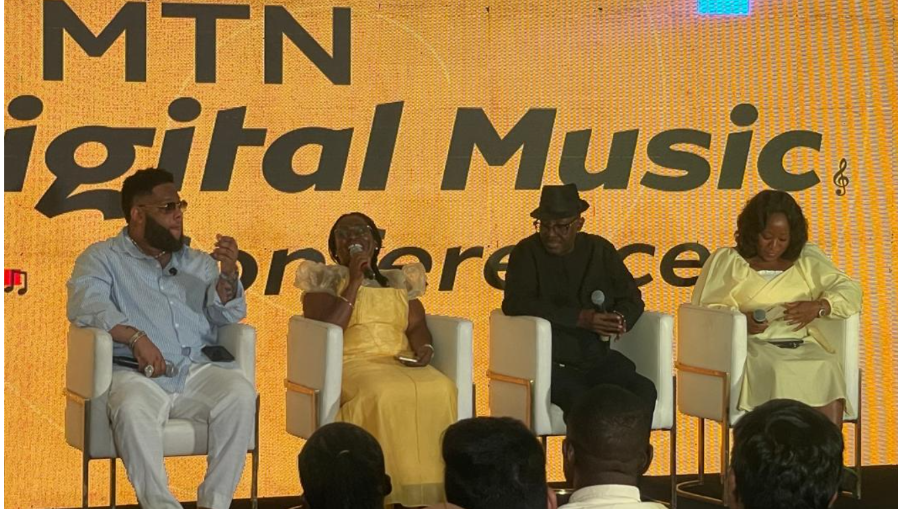
Ghanaian musicians are set to earn more from their works through MTN Ghana’s digital music platforms, particularly the caller ring-back tone (CRBT) service, as the company intensifies efforts to expand revenue opportunities within the industry.
The initiative, according to the company is aimed at creating sustainable income streams for artistes through the use of its digital platforms.
Speaking at the Digital Music Conference held at MTN House in Accra on Thursday, Senior Manager for Products and Services at MTN Ghana, Mr Bless Sefenu Agordjo explained that the forum was designed to bring together key industry players to explore practical pathways for monetising music in the digital age.
“The music conference is to bring the music producers, artistes and stakeholders together to discuss how we can leverage on the MTN platforms that we’ve built in-house and also with our partners,” he said.
Furthermore, he stressed that the focus of MTN Ghana was not only on innovation but also on ensuring that artistes derive tangible financial benefits from their work. He explained that platforms such as caller tunes offered a steady and reliable stream of income when effectively utilised.
“It is about how we can collaborate to give money back to the artistes for their work and how they can sustain their revenue stream through using MTN platforms like the caller tunes platform to generate continuous income and revenue for their work in the future,” he added.
Mr Agordjo also noted the importance of institutional partnerships in strengthening the local music industry.
He pointed out that collaborations with rights organisations would help to create a more structured and transparent system for revenue distribution.
“It is also to be able to leverage this collaboration with music rights organisations like MUSIGA and GAMRO to build a new ecosystem where artistes and all other members can participate to build a fortified union,” he said.
He added that such partnerships would ensure that music works were properly tracked and that royalties were distributed fairly, thereby boosting confidence within the industry.
Other speakers at the conference emphasised the urgent need for stakeholders to embrace digital transformation in order to remain competitive.
They noted that the global music landscape had evolved significantly, with digital platforms now serving as the primary drivers of consumption and revenue generation.
Award-winning artiste and entrepreneur D-Black also underscored the need for artistes to approach their craft as a business. He encouraged young musicians to invest in branding and marketing in order to build sustainable careers.
“Music is a business. You must invest in it, market it and protect it,” he said.
Music executive Baba Sadiq also spoke on the shift in the industry, stressing that artistes who failed to adapt risked being left behind.
“Digital is not the future; it is the present. If you are not positioning yourself properly, you will be left behind,” he said.
Furthermore, veteran gospel musician Diana Hopeson called on artistes to combine their creative talents with discipline and strategic thinking.
She explained that success in the modern music industry required a clear understanding of the business environment.
“We need to understand the business side of what we do and make use of the platforms available to us,” she stated.
President of Bessa Simons, President of MUSIGA pointed to longstanding challenges within the industry, particularly in the areas of copyright enforcement and royalty collection. He noted that weak systems had often deprived artistes of the full value of their work.
According to him, stronger collaboration among stakeholders, including regulators and digital service providers, was necessary to address these issues and ensure fair compensation.