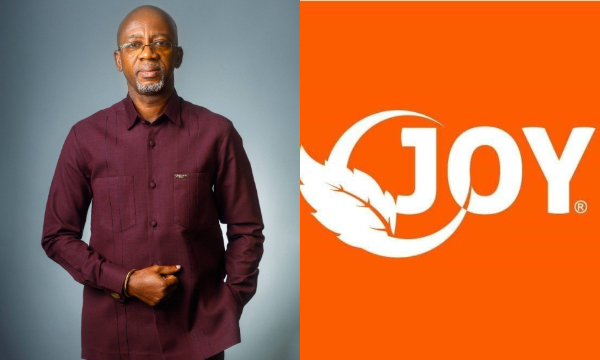
A landmark copyright ruling involving highlife musician Rex Owusu Marfo, popularly known as Rex Omar, and Joy Industries Ltd is serving as a strong caution to creatives and advertisers who seek to commercially exploit musical works without proper authorisation.
The case, which has now become a reference point in Ghana’s intellectual property jurisprudence, centred on whether the defendant infringed the musician’s copyright by using a melody substantially similar to his original song in a commercial advertisement, albeit with different lyrics.
At the heart of the dispute was the legal definition of “reproduction” under copyright law, and whether altering lyrics while retaining a recognisable tune could still constitute infringement.
The court was also invited to determine whether lack of intent or absence of demonstrable financial loss could serve as a defence.
In its analysis, the court applied well-established principles governing copyright protection in musical works.
It held that reproduction occurs when there is objective similarity between two works and a causal connection linking them. Crucially, the similarity must be such that it evokes the original composition in the mind of an ordinary listener.
The court placed significant emphasis on what is widely known as the “melody principle,” stressing that in musical compositions, the melody or tune represents the most distinctive and protectable element.
This means that even where lyrics are altered, the copying of a melody alone can amount to infringement if it substantially mirrors the original work.
Applying these principles to the case, the court conducted a detailed comparison between the plaintiff’s song, presented as Exhibit N, and the defendant’s advertisement, Exhibit Q.
It found that although the words used in the advertisement differed—featuring rearranged syllables such as “Da” and “Di”—the underlying melody remained identical.
Further technical evidence, including musical notation, lyrical progression and structural composition, demonstrated a high degree of similarity between the two works.
The court concluded that the defendant had reproduced, imitated and extracted essential elements of the original composition.
The defence’s argument that the use of different lyrics negated infringement was firmly rejected.
The court held that such a distinction was immaterial where the melody—the core identity of the musical work—had been copied.
Equally significant was the court’s position on intent.
It ruled that copyright infringement is a strict liability offence, meaning that the defendant’s intention, whether innocent or deliberate, is irrelevant once infringement is established.
This underscores the obligation on users of creative content to ensure proper clearance before use.
On the issue of damages, the court reaffirmed that a plaintiff is not required to prove actual financial loss to succeed in a copyright claim.
Once infringement is proven, damages may be awarded as a matter of course.
In this instance, the court awarded Rex Omar GH¢200,000 in damages and an additional GH¢30,000 in costs.
The judgment was subsequently upheld on appeal, reinforcing its authority and cementing its importance within Ghana’s legal landscape.
Legal experts say the ruling sends a clear message to the creative and advertising industries: the commercial use of music—whether in adverts, films or digital content—must be approached with caution and respect for intellectual property rights.
Beyond the immediate parties, the case highlights broader implications for Ghana’s creative economy, where the protection of original works remains essential to encouraging innovation, rewarding talent, and sustaining livelihoods within the arts sector.
Ultimately, the decision underscores a fundamental principle—copying the melody of a song, even with different lyrics, can amount to copyright infringement, and liability arises regardless of intent or proof of financial loss