An independent assessment on the performance of the Office of the special Prosecutor (OSP) has given the embattled anti-corruption agency, a new breath of live as the report indicates that majority of Ghanaians repose confidence in it as the most effective agency to fight corruption in the country.
The report, presented at a national dialogue on the OSP in Accra yesterday, provides a major lifeline for the office at a time it faces existential threat and mounting pressure from some quarters for its abolition.
Presenting the findings, an independent consultant, Mrs Linda Ofori Kwarfo, disclosed that 55.2 per cent of respondents in a survey of 411 people ranked the OSP as the most trusted institution to tackle corruption. The Commission on Human Rights and Administrative Justice (CHRAJ) followed with 36.7 per cent.
The survey further showed that 31.6 per cent of respondents expressed confidence in reporting corruption cases to the OSP, while 37.9 per cent agreed that the work of the office was making public officials more cautious about engaging in corrupt practices.
Performance indicators
On operational performance, the report indicated that the OSP currently has 11 cases under prosecution or already prosecuted.
Out of these, two cases resulted in acquittals, with one under appeal by the OSP. In one case, all six accused persons were convicted through a plea bargain and jointly paid GH¢106,319.64, while in another, a second accused person paid GH¢206,000 to the state after facilitating a GH¢15,000 bribe to a public officer. Seven cases remain ongoing.
In addition to prosecutions, the office has made significant strides in asset recovery, with a total of GH¢35.1 million retrieved. It has also averted potential losses estimated at GH¢7.18 billion.
The report noted that although the early years of the OSP were marked by operational challenges, the institution had stabilised from 2023 and was beginning to demonstrate measurable results.
It stressed that the impact of the OSP should not be judged solely on numerical outcomes, as its pursuit of high-profile cases was contributing to the disruption of entrenched corruption networks.
Structural concerns
Despite the positive assessment, the report identified some critical structural and legal gaps that could undermine the long-term effectiveness of the OSP.
It observed that the office is not a constitutional body but was established by an Act of Parliament , the Office of the Special Prosecutor Act, 2017 (Act 959). Therefore it could be dissolved if the law is repealed, rendering it only partially compliant with international standards such as the Jakarta Principles on anti-corruption agencies.
On appointments, the report noted that the current system, which allows the Executive to initiate and conclude the appointment of the Special Prosecutor subject to parliamentary approval, may not sufficiently guarantee independence and impartiality.
Although the two Special Prosecutors appointed so far have demonstratedsome level independence, the report warned that future appointments could be susceptible to political influence if reforms are not undertaken.
“We need to do something about the appointment process,” Mrs Kwarfo emphasised.
These notwithstanding, the provisions governing the removal of the Special Prosecutor were found to be fully compliant with international standards, as they were up to date with the procedures required for the removal of the Chief Justice.
Resource constraints
The report also drew attention to persistent resource constraints facing the OSP, noting that inadequate and unreliable funding continues to be a major concern in achieving operational efficiency.
While the current Special Prosecutor has acknowledged some improvement in resourcing, the report stressed that the office still falls short of the level required to fully execute its mandate.
It noted that under the Jakarta Principles, anti-corruption agencies are expected to have sufficient, predictable and sustained funding to support their operations, a requirement the OSP is yet to fully meet.
Calls for reforms
The report concluded that while the OSP has made commendable progress and is gradually earning public trust, its long-term success will depend on sustained political commitment, legal reforms and increased investment.
It however cautioned against assessing the office solely on numerical outcomes, stressing that its broader impact was already being felt within the system.
“The OSP’s impact should not be judged by figures alone; its investigations and prosecutions of high-level officials demonstrate a firm approach that is likely disrupting entrenched corruption networks in Ghana,” it said.
The report added that the office could deliver even stronger outcomes if adequately empowered and secured.
“The OSP could be more effective if granted additional critical tools and made permanent. Winning the fight against corruption is possible, but it requires the necessary investment,” it concluded.
Call for Governing Board
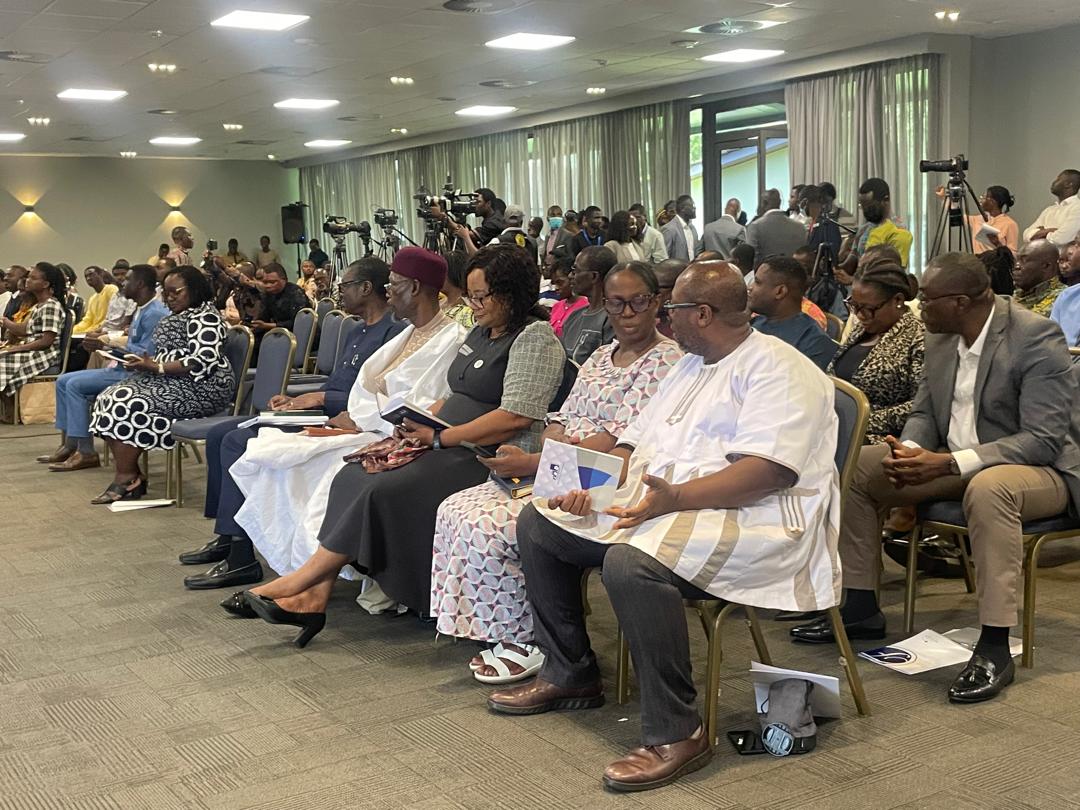
At the dialogue, panelists called for the need to strengthen the institutional framework of the OSP and advocated the immediate establishment of a governing board to guide the strategic direction of the office and shield it from what he described as “clear political marginalisation”.
They stressed that the absence of a board limits the range of strategic decisions the OSP can take and exposes it to avoidable vulnerabilities
In his remarks, Dr Kojo Pumpuni Asante, Director of Policy Engagement at the Centre for Democratic Development (CDD-Ghana), noted that despite its relevance, the OSP had become a subject of contention and sustained attempts to undermine its operations.
“We have not seen the same sustained attack on other anti-corruption agencies like EOCO and the CID,” he stated.
He cautioned that reverting to the pre-2018 arrangement would weaken the country’s anti-corruption framework. “Returning to the pre-2018 arrangement is to send the entire anti-corruption architecture back,” he warned, stressing that “more and more states are recognising the need for specialised agencies to confront corruption.” He added: “The task ahead is to finish what we started.”
For his part, Mr Kweku Obeng, Component Manager at GIZ, said strengthening anti-corruption efforts was critical to maintaining public trust. “If our efforts to fight corruption are not strengthened, it erodes public confidence,” he said.
He acknowledged that although the OSP had faced open opposition, it had delivered results. “The OSP, though it has faced public opposition, has lived up to its mandate with commendable outcomes, however public expectations remain high,” he added.
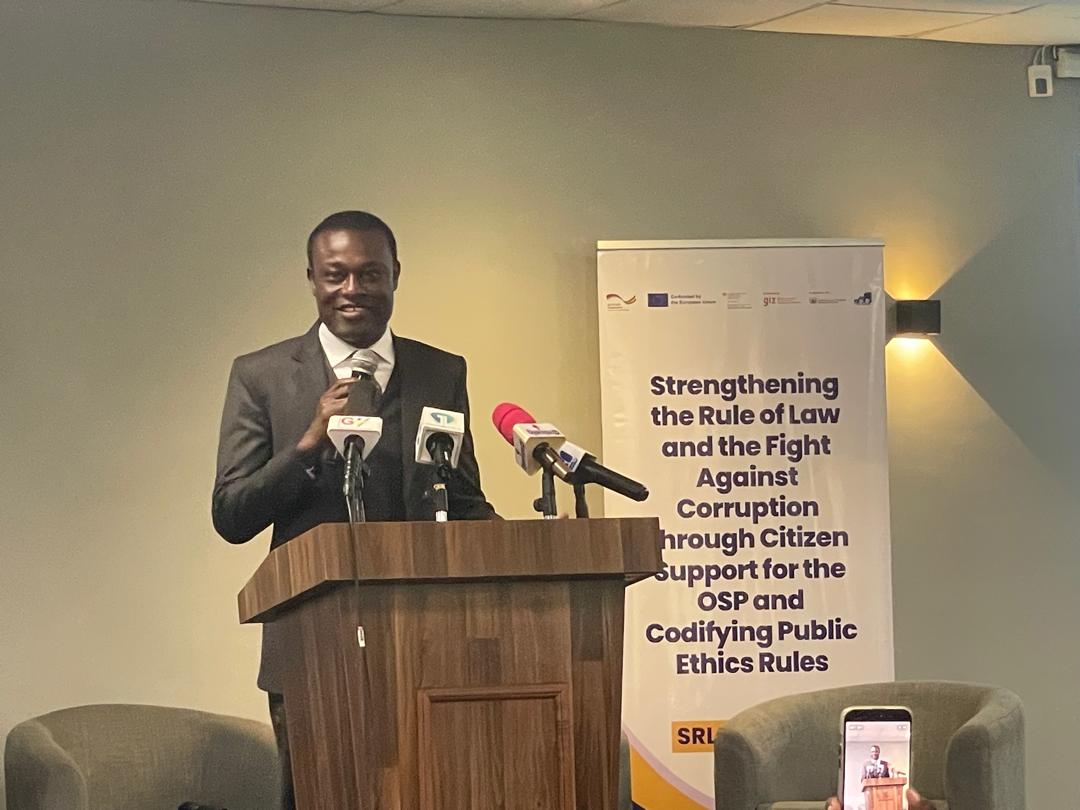
The Special Prosecutor, Mr Kissi Agyebeng, on his part revealed that the office had endured significant existential threats, particularly in 2025.
“Incidentally, it was our best year of performance, but also our worst year of existential troubles,” he said.
He disclosed that the office nearly ceased to exist. “Had there not been the good naturedness of the President, this office would have been scrapped by the end of December 2025 in Parliament,” he stated.
Mr Agyebeng attributed resistance to the OSP’s work to its impact on political actors. “Politicians do not want us around, it is that simple, because we are bad news for them,” he said.
He called on civil society to take ownership of the institution and ensure its survival.
“Civil society forged this office and civil society must preserve it, do not let it die,” he urged.
Mr Agyebeng further stressed the need to secure the OSP through constitutional reforms.
“We should not depend on the goodness of the President. we should build this institution for the ages,” he said, adding that the constitutional review process presented “a glorious opportunity” to firmly entrench the office and safeguard its independence.