The emerging global crises which continues to disrupt traditional energy systems demands that Africa urgently harnesses its own energy resources and accelerate the transition to cleaner energy, lead convener of the International Conference on the Political Economy of the Just Energy Transition and Inequality in Africa, Prof. Abdul Gafaru Abdulai has urged.
He spoke to The Newscenta on the sidelines on the opening of the conference held at the Institute of Statistical, Social and Economic Research (ISSER) of the University of Ghana on Monday.
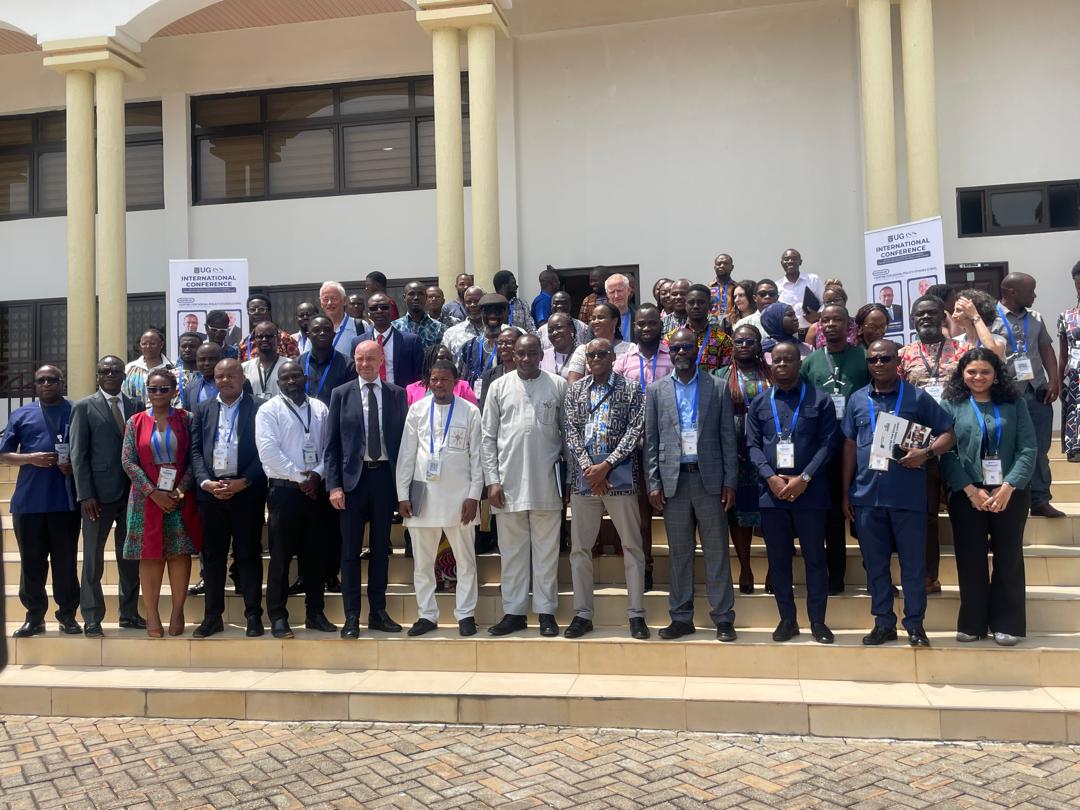
The conference brought together policymakers, academics and development partners to interrogate how Africa can navigate the global energy transition without deepening inequality or undermining economic growth.
Abdul Gafaru Abdulai, said the global shift away from fossil fuels was inevitable, but stressed that Africa must define its own pathway, based on its development needs.
“We are confronted with an inevitable phenomenon, the world is transitioning away from traditional energy sources, and Africa must think critically about what this means for us,” he said.
He described Africa’s position in the global climate discourse as somewhat mixed up, explaining that although the continent contributes the least to climate change, it continues to suffer some of the most severe consequences.
“Our continent occupies a paradoxical position. We contribute the least to climate change, yet we are the ones bearing the brunt of its impact,” he stressed.
He argued that despite the growing urgency of the global energy transition, Africa has largely been absent from shaping the conversation, a situation he described as both worrying and unsustainable.
“There have been a lot of conversations globally around energy transition , unfortunately, much of this conversation has not actually been taking place on the African continent,” he noted.
According to him, the conference was convened to help fill that gap by creating a platform for Africans to interrogate the implications of the transition on their economies, livelihoods and development priorities.
“It is important that we engage in these conversations here to ask-what does energy transition mean for us as Africans? Who bears the burden of the transition? Who benefits? And what are the trade-offs?” he stated.
Prof. Abdulai further linked the issue to ongoing geopolitical tensions, including conflicts in key energy-producing regions, noting that such developments had exposed the vulnerability of countries that depend heavily on external energy sources.
“What we are witnessing globally tells us very clearly that countries must begin to look within, because almost every country is now focusing on its domestic front,” he said.
He emphasised that for Africa, the lesson was clear, that the continent must reduce its dependence on imported energy and instead leverage its abundant natural resources to build resilient and sustainable energy systems.
He acknowledged, however, that the transition presents a complex challenge for many African economies, particularly those that depend heavily on fossil fuels.
“One of the key things African governments need to do is to explore their renewable energy potential and consider using portions of oil revenues to develop greener, more sustainable energy systems,” he advised.
He cautioned that while the transition was unavoidable, it must be carefully managed to avoid destabilising fragile economies.
“The transition is happening whether we like it or not, but it must be pursued at a pace that does not undermine broader domestic development processes,” he said.
Delivering the keynote address, the Deputy Minister for Energy and Green Transition, Richard Gyan-Mensah, also noted the need for a just and inclusive approach to energy reforms, warning that Africa’s transition must not complicate existing inequalities.
“We believe that the energy transition is necessary for both environmental and economic reasons, but it must be just and leave no one behind,” he said.
He noted that although Ghana had made significant strides in expanding access to electricity, challenges remained, particularly in reaching underserved and remote communities.
“Ghana currently enjoys an electricity access rate of almost 90 per cent, yet we remain resolutely committed to achieving universal access by 2030,” he stated.
He emphasised that achieving a successful transition would require strong collaboration between government, the private sector and development partners.
“The government cannot do it alone, and that is why we expect this conference to generate policy ideas that will drive a just energy transition across Africa,” he said.
As part of efforts to accelerate the transition, he mentioned the establishment of the Renewable Energy and Green Transition Fund to support local innovation and attract investment into the sector.
“The Renewable Energy and Green Transition Fund is designed to support local green technologies, attract investment and ultimately reduce electricity tariffs,” he explained.
He added that the initiative would also contribute to industrial growth and job creation.
“This initiative will not only enhance Ghana’s green credentials but also free up power for productive and industrial use to create jobs,” he said.
On attracting private sector participation, the minister disclosed that measures were being implemented to improve transparency and competitiveness in the energy market.
“To attract credible investors, we are developing standardised power purchase agreements and competitive procurement systems for renewable energy,” he said.
He further announced plans to install solar-powered street lights nationwide to address inefficiencies in the current system.
“The installation of solar powered street lights nationwide will reduce the financial burden on citizens and address persistent security concerns,” he said, admitting that many existing street lights were non-functional and costly to maintain.
He stressed further that Ghana’s energy transition strategy was grounded in long-term economic planning.
“Ghana’s energy transition has always been both an economic strategy and a pathway to reducing import dependency and improving energy security,” he stated.
He added that partnerships with international institutions were helping to accelerate progress.
“Through partnerships with institutions such as the World Bank, AfDB and GIZ, we are accelerating progress toward universal electricity access,” he said.
Also speaking at the event, the Danish Ambassador to Ghana, Jacob Linulf, called for sustained commitment to climate action despite global instability.
“We must remain focused on climate action and the green energy transition, no matter the competing pressures in today’s world,” he stated.
He noted that although the global environment was increasingly characterised by conflict and uncertainty, countries must not lose sight of the long-term benefits of sustainable development.
“Change is also good, especially when it is transforming living conditions and improving the lives of millions of people,” he said.